

More news on this day
Travel across Colombia has been severely disrupted after widespread cancellations on Avianca services, with more than 45 flights reportedly grounded and routes to Bogota, Medellin, Cali, San Andres and other key cities facing significant delays and schedule changes.
Get the latest news straight to your inbox!
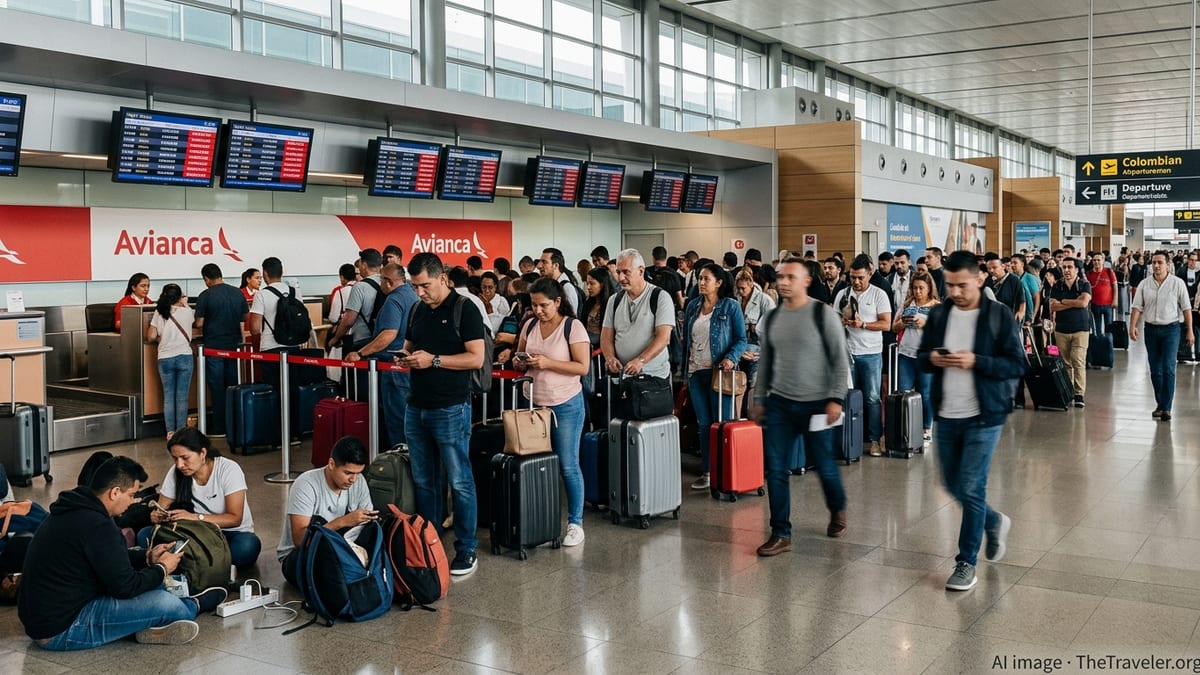
Widespread Disruptions Hit Colombia’s Busiest Routes
Published coverage from Colombian and regional media describes a rapidly evolving disruption in domestic air travel, as Avianca cancels and reschedules dozens of flights serving major hubs. Reports indicate that more than 45 services were withdrawn from schedules in a short window, affecting high-demand routes into Bogota’s El Dorado International Airport as well as connections to Medellin, Cali, Cartagena and the island destination of San Andres.
The pattern of cancellations appears to be concentrated on short-haul domestic sectors, where Avianca is a dominant carrier and capacity reductions are quickly felt. Travelers arriving at airports early in the day have encountered departure boards filled with cancelled or retimed flights, forcing many to improvise with last-minute rebookings, overnight stays or long overland journeys.
Publicly available flight-tracking data and airport information boards show a knock-on effect that goes beyond the initial cancellations. Once aircraft and crew rotations are disrupted on a hub-and-spoke network, subsequent departures and arrivals can also be delayed or consolidated, compounding the impact on passengers through the rest of the day.
Early indications suggest that the disruption is not limited to one or two bases but is instead scattered across Colombia’s main aviation corridors, raising concerns about the stability of domestic connectivity during an already busy travel period.
Passengers Face Missed Connections, Extra Costs and Unclear Options
Travelers caught in the wave of cancellations are reporting a mix of missed connections, unexpected expenses and uncertainty about what support they can expect. Accounts shared on social platforms describe families stranded in Bogota and Medellin after onward legs to coastal and island destinations were withdrawn, as well as business travelers forced to cancel meetings when same-day alternatives were unavailable.
Some passengers indicate they have been offered rebooking on later Avianca flights, but with limited remaining seats on key routes, many options involve long layovers or next-day departures. Others report receiving travel credits instead of cash refunds, a practice that has already drawn criticism in previous disruption episodes involving the airline.
There are also complaints about customer service channels being overwhelmed. Travelers attempting to use call centers, mobile apps or messaging tools report long wait times or difficulties finalizing changes. For those stuck at smaller regional airports with fewer staff and scarce hotel availability, the combination of limited information and rising out-of-pocket costs has intensified frustration.
Consumer advocates note that in Colombia and on many international itineraries, traveler rights can vary depending on the cause of the disruption and whether the flight is domestic or cross-border. Passengers are being urged to keep all receipts for meals, ground transport and accommodation in case they are later able to seek reimbursement.
Operational Strain and a Fragile Domestic Network
While full details on the underlying cause remain limited, industry commentary points to a mix of operational strain and tight scheduling that can leave carriers vulnerable to cascading problems. When aircraft availability, crew rostering, maintenance requirements or weather-related constraints converge, airlines sometimes resort to proactive cancellations to avoid last-minute safety or timing conflicts.
Avianca has spent recent years reshaping its network and cost structure, increasing the use of dense cabin configurations on short-haul routes and emphasizing efficiency. Analysts say such models can deliver lower fares and more frequencies in normal conditions, but they may also reduce operational slack. In that environment, a relatively small disruption can grow quickly into a broader schedule shake-up if there are few spare aircraft or crew available to plug gaps.
The current situation has renewed scrutiny of how robust Colombia’s domestic connectivity is when a leading carrier experiences difficulties. With Avianca carrying a large share of passengers on trunk routes linking Bogota with Medellin, Cali, Barranquilla, Cartagena and San Andres, any reduction in departures can have an outsized effect on tourism, business travel and access to remote regions.
Observers note that other airlines in Colombia operate smaller fleets and often have limited ability to absorb sudden surges in demand from displaced Avianca passengers, which helps explain why alternatives have been scarce on the most affected days.
What Travelers Should Do If Their Flight Is Affected
For passengers with upcoming itineraries on Avianca, travel specialists recommend checking flight status frequently in the hours and days before departure. Mobile apps, airport information screens and general flight-tracking platforms can provide near real-time updates on delays, aircraft changes and cancellations. In many cases, changes appear first in electronic channels before gate announcements are made at the airport.
Travel planners advise that anyone with tight connections, important events or nonrefundable hotel bookings should build in extra time where possible, particularly when routing through Bogota, Medellin or Cali. If a cancellation occurs, travelers are generally encouraged to proceed to the airline’s service desk inside the terminal while simultaneously using digital tools to request alternative options, increasing the chances of securing scarce seats.
Keeping documentation organized can be critical. Boarding passes, e-ticket numbers, confirmation emails and screenshots of cancellation messages may all be useful if passengers later pursue refunds or compensation. In addition, recording the time of notifications and any offers made can help clarify what was proposed and accepted during a stressful disruption.
Those booking new trips in the coming days are being urged to review fare conditions carefully, paying close attention to change and refund rules. Flexible tickets typically cost more upfront but can be easier to adjust when schedules shift unexpectedly, which may be particularly valuable while the situation around Avianca’s operations remains unsettled.
Outlook for Colombia’s Air Travelers in the Coming Days
Looking ahead, the key question for travelers and the wider tourism sector is how quickly Avianca’s network can stabilize. Airline operations often recover progressively after a day of heavy cancellations, as aircraft and crews are repositioned and schedules adjusted. However, if underlying constraints persist, airlines sometimes extend reductions over multiple days to create a more sustainable timetable.
Colombia’s tourism industry, which depends heavily on reliable air links between major cities and leisure destinations such as San Andres and Cartagena, will be watching closely. Hoteliers and tour operators in affected regions are already dealing with last-minute changes and no-shows as visitors struggle to reach island and coastal resorts.
Published information from aviation data providers indicates that airlines globally have faced growing operational pressures in the last two years, including staffing challenges and tight maintenance windows. Colombia has not been immune to these trends, and the latest wave of cancellations on a leading carrier underscores how quickly small vulnerabilities can translate into broad travel disruption.
For now, travelers planning domestic journeys in Colombia are being advised to monitor developments closely, remain flexible where possible and prepare for the possibility that flight times, routes or even travel dates may need to be adjusted at short notice while Avianca works to restore more reliable schedules.