

More news on this day
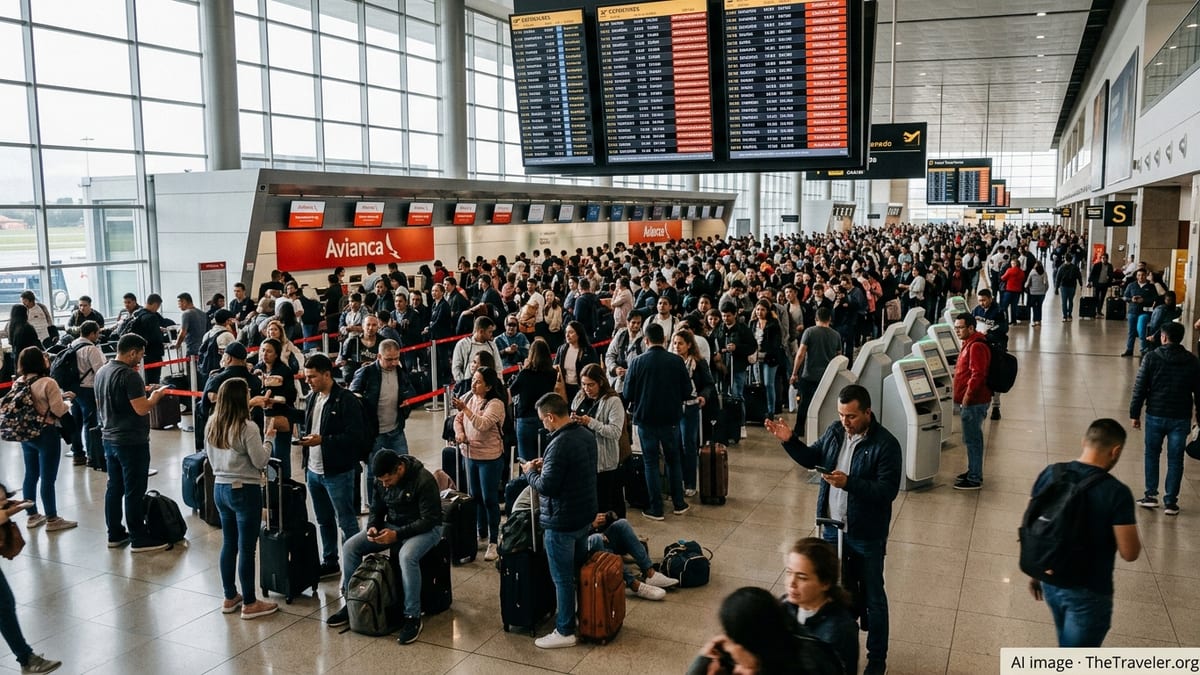
Travel across Colombia faced significant disruption as Avianca canceled around 40 flights and reported more than 100 delays, with major domestic and international routes through Bogotá and Medellín particularly affected, according to early media and social media reports.
Get the latest news straight to your inbox!
Operational Disruptions Ripple Through Key Hubs
Initial reports indicate that the bulk of the cancellations and delays are concentrated at Bogotá’s El Dorado International Airport and Medellín’s José María Córdova International Airport, the backbone of Avianca’s domestic and regional network. These hubs handle a dense schedule of short- and medium-haul flights that connect Colombia’s interior with international gateways, meaning even a limited number of cancellations can rapidly cascade through the system.
Domestic routes linking Bogotá with Medellín, Cali, Cartagena and Barranquilla appear to be among the most affected, with regional services to smaller cities experiencing knock-on impacts as aircraft and crews fall out of their planned rotations. International connections, particularly those timed to feed long-haul services to North and Central America, have also faced delays as passengers miss onward connections or aircraft arrive late from disrupted inbound legs.
Publicly available flight tracking data shows clusters of Avianca services posting departure times well beyond scheduled slots, highlighting the strain on ground operations and resource allocation. The pattern suggests that the airline has been forced to prioritize certain strategic routes and peak-time departures, leaving lower-frequency services more vulnerable to cancellation.
Possible Causes: Weather, Congestion and Operational Strain
While a single, clear cause has not yet been formally detailed in public statements, local aviation coverage points to a combination of factors that may be driving the disruption. Seasonal weather patterns, including heavy rain and low visibility around Bogotá, regularly challenge on-time performance and can quickly reduce runway capacity during peak hours.
At the same time, El Dorado’s role as one of Latin America’s busiest airports means that even modest delays can ripple across the schedule. When air traffic control slows arrivals and departures for safety reasons, airlines often consolidate flights, reassign aircraft, or cancel lower-demand services to protect their most critical routes. This can lead to clustered last-minute cancellations and a surge of displaced passengers seeking rebooking options.
Operational strain within the airline itself may also be contributing. Industry analysts have previously noted that carriers working close to maximum utilization of aircraft and crews are less able to absorb unexpected shocks, such as technical inspections, crew time-limit constraints, or sudden runway restrictions. In such scenarios, multiple small issues can combine into a larger network-wide disruption similar to what travelers in Colombia are experiencing now.
Passenger Experiences: Long Queues and Uncertain Rebookings
Accounts shared on social platforms describe long lines at check-in counters and service desks in Bogotá and Medellín, with travelers seeking information about new departure times, hotel vouchers and alternative routing. Some passengers report receiving notification of cancellations shortly before departure, compounding the challenge of rearranging connections or finding last-minute accommodation in already busy urban centers.
Others highlight difficulties reaching customer service channels, particularly during the busiest periods of the day when many affected flights are scheduled. Travelers attempting to rebook through mobile apps and websites report mixed results, with some able to secure seats on later flights while others face limited availability on popular domestic routes.
For international travelers connecting through Colombia, the disruption has created additional complexity. Missed onward flights to destinations in North and Central America or the Caribbean can trigger visa considerations, changes to hotel reservations and disrupted tours. Travel forums and community groups show a rise in posts from travelers requesting guidance on compensation rules, overnight arrangements and best practices for navigating major disruptions at Colombian airports.
Implications for Domestic and International Connectivity
The wave of cancellations and delays underscores the central role Avianca plays in Colombia’s air transport system. As the country’s largest carrier by market share and a key operator of trunk routes, disruptions in its network can have an outsized impact on overall connectivity, particularly for cities that rely on Bogotá and Medellín for onward connections.
Business travelers commuting between regional centers for meetings and conferences are among those most immediately affected, as day trips become multi-day journeys and carefully timed schedules unravel. Tourism flows are also likely to feel the impact, especially for visitors with tight itineraries that include multiple cities such as Bogotá, Medellín and Cartagena within a single trip.
Industry observers note that repeated episodes of large-scale disruption can influence traveler behavior over time, with some passengers exploring alternative carriers, routes or even ground transport options on shorter city pairs. However, for many destinations within Colombia, Avianca remains one of the few operators offering frequent service, which limits immediate substitution options and increases the pressure on the airline to stabilize operations quickly.
What Travelers Can Do if Their Flight Is Affected
Travel experts recommend that passengers booked on Avianca routes in the coming days closely monitor their flight status through multiple channels, including the airline’s digital platforms and airport departure boards. Checking regularly in the 24 hours leading up to departure can help travelers react more quickly to schedule changes and avoid unnecessary journeys to the airport.
When flights are canceled or heavily delayed, publicly available guidance on Colombian passenger rights indicates that travelers may be entitled to rebooking options, care such as meals and accommodation, or in some cases refunds or vouchers, depending on the length and cause of the disruption. Passengers are often advised to keep receipts and document any additional expenses incurred as a result of changes to their itinerary.
As operations gradually normalize, observers expect schedules at Bogotá and Medellín to remain under pressure while crews and aircraft are repositioned and backlogs are cleared. Travelers with flexible plans may find it advantageous to shift to off-peak departure times or consider alternative airports within Colombia, where available, to reduce exposure to the heaviest congestion at the main hubs.