

More news on this day
Passengers traveling between Colombia and the United States are facing fresh disruptions after Avianca and United Airlines canceled nearly a dozen flights, affecting connections between Houston, Bogotá, Cali, and multiple destinations across the Americas.
Get the latest news straight to your inbox!
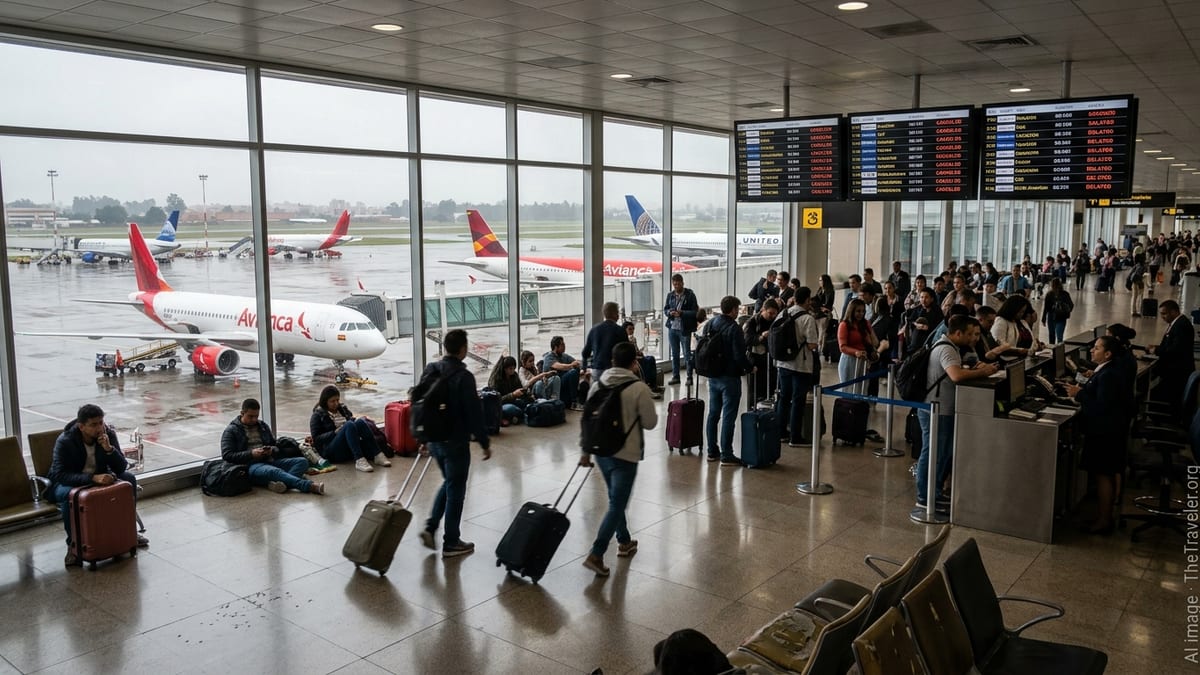
Fresh Wave of Disruptions Hits Colombia–U.S. Corridors
Publicly available flight-tracking data and schedule information for March 23 and March 24 indicate that Avianca and United have scrubbed close to a dozen services on busy routes linking Colombia with Houston and several other hubs in North and Latin America. The latest round of cancellations comes at the start of a heavy spring travel period, stranding some travelers and forcing others into last-minute changes.
Routes most visibly affected include departures from Bogotá and Cali toward Houston, as well as returning services from the United States back to Colombia. Additional cancellations and rolling delays are being reported on regional connections that feed into these long haul corridors, amplifying the disruption for passengers transiting through Colombian gateways.
Monitoring tools show gaps in normally dense schedules and a pattern of aircraft substitutions, suggesting that carriers are adjusting operations on short notice. While the total number of affected flights remains limited compared with the daily volume of services in and out of Colombia, the targeted nature of the cancellations on popular routes has heightened the impact for travelers who rely on these links.
Operational Strain and Weather Combine to Hit Key Hubs
Industry reporting points to a mix of operational constraints and weather-related disruption impacting Houston, one of United’s primary hubs for traffic between the United States and Latin America. A recently issued travel waiver for Houston allows passengers more flexibility to rebook, underscoring that irregular operations at the hub are expected to continue over several days rather than a single storm event.
In this context, United’s schedule adjustments on flights to and from Colombia appear to be part of a wider reshuffling of aircraft and crew resources. When a hub such as Houston experiences extended disruption, airlines often prioritize certain routes while temporarily trimming others, and international services can be among the first to be consolidated.
Avianca, which coordinates a significant share of traffic between Colombian cities and onward destinations across the Americas, is also contending with knock-on effects. When a long haul partner reduces capacity or re-times flights, the Colombian flag carrier may cancel or reschedule some departures in order to maintain workable connections and aircraft utilization across its network.
Impact on Passengers Traveling via Bogotá and Cali
Travelers flying through Bogotá’s El Dorado International Airport and Cali’s Alfonso Bonilla Aragón International Airport have reported abrupt changes to their itineraries, including same-day cancellations and involuntary rebookings for later dates. Some passengers are being routed through alternative hubs in the United States or via other Latin American cities, lengthening overall journey times.
Publicly available information from airline channels and traveler forums shows that rebooking options are generally available, but popular departure times are filling quickly as multiple flights of passengers are consolidated onto fewer services. This has left some travelers with limited choices, such as overnight connections or itineraries involving additional stops.
Passengers with tight onward connections within Colombia are particularly vulnerable to missed flights, as domestic services can depart from different terminals or at times that are difficult to meet after a delayed international arrival. Travel experts typically advise allowing generous connection windows in periods of irregular operations, a recommendation that appears especially relevant given the current pattern of cancellations and rolling delays.
Flexible Policies Offer Some Relief, but Confusion Remains
According to published coverage and airline updates, carriers are activating or extending flexible travel waivers that allow customers to change flights on affected routes without paying additional change fees, provided they travel within specified date ranges and remain in the same cabin and origin-destination pair. Fare differences may still apply if only higher-priced seats are available on the new flight.
Despite these accommodations, some passengers are expressing frustration with overloaded customer service channels and limited self-service tools. Reports shared in public forums describe long waits for assistance, difficulties in processing refunds, and confusion over eligibility for vouchers or fee waivers when a flight is canceled versus significantly delayed.
Consumer guidance published by aviation and travel advocacy organizations emphasizes the importance of documenting all communication with airlines, monitoring reservations frequently for schedule changes, and using airline apps or online accounts to request rebooking where possible. For many travelers, real-time alerts and seat availability displays are proving critical in securing the most convenient alternatives during the disruption.
What Travelers Should Expect in the Coming Days
Industry observers note that Colombia’s air travel market remains robust, with carriers such as Avianca and United continuing to expand regional and long haul links. At the same time, a combination of strong demand, tight aircraft availability, and recurring weather and infrastructure constraints at major hubs is leaving little room for error when irregular operations occur.
In the short term, passengers planning to travel between Colombia and the United States, particularly on routes touching Houston, Bogotá, or Cali, are being urged by travel advisors and airline communications to check flight status repeatedly in the 24 hours before departure. Even flights that appear confirmed can be retimed or consolidated as airlines adjust to evolving operational conditions.
Travel planners suggest that those with essential trips build in additional buffer time, consider travel insurance products that address delays and missed connections, and remain flexible about routings. While the current wave of cancellations involves a relatively small portion of the overall schedule, the concentration on key cross-border routes highlights how quickly disruptions in one hub can ripple across the Americas for days at a time.