

More news on this day
Global aviation leaders are preparing to gather in Cluj-Napoca on March 20 for Aviation-Event 2026 CLJ, a landmark fifth consecutive edition that cements Romania’s Transylvanian hub as a strategic meeting place for Europe’s air transport decision-makers.
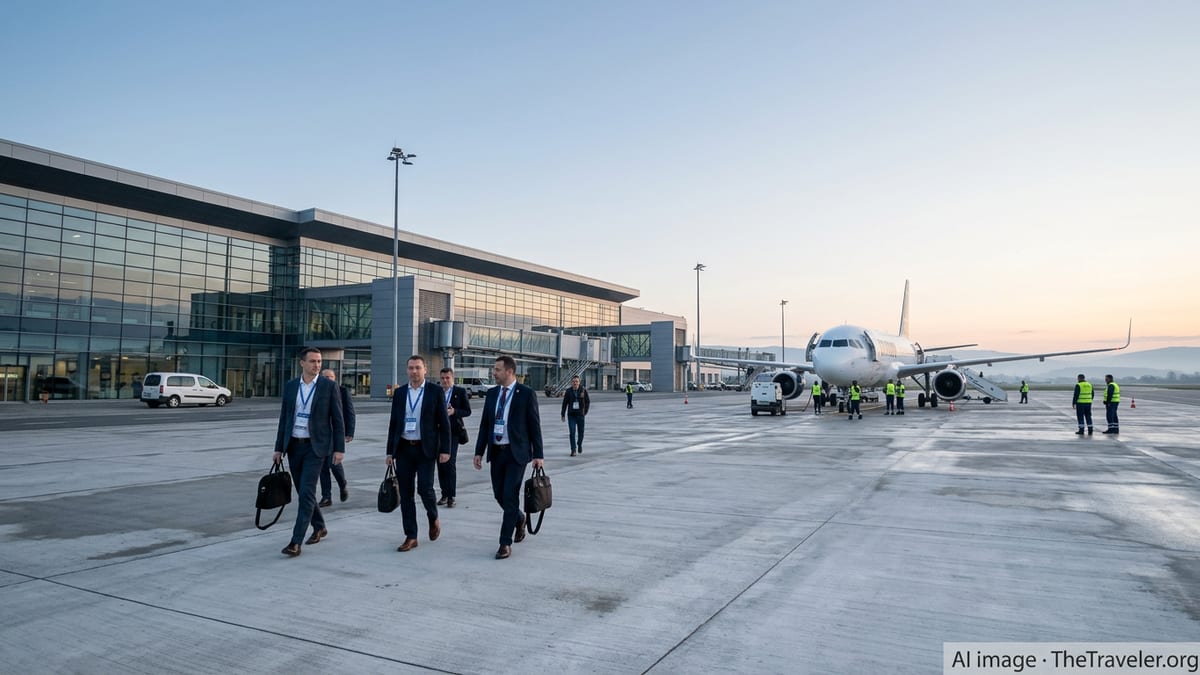
Cluj-Napoca Emerges as a Strategic Aviation Hub
Hosted at Cluj "Avram Iancu" International Airport, Aviation-Event 2026 CLJ marks five years of uninterrupted dialogue between airport executives, airline representatives, regulators and technology providers from across Europe and beyond. The one-day conference, organized in partnership with Aviation-Event and the Cluj County Council, has steadily grown from a regional initiative into a fixture on the European aviation calendar.
Local authorities see the event as both a recognition of Cluj’s rising profile and a lever for further development. The airport has expanded rapidly over the past decade, moving from tens of thousands of passengers in the mid-1990s to more than 3.5 million in 2025, supported by sustained infrastructure investment and a diversified route network. That trajectory has helped position Cluj as the principal air gateway to northwestern Romania and a case study in how regional airports can drive economic growth.
For the global aviation community, the choice of Cluj underscores the sector’s growing focus on secondary hubs that relieve pressure on congested capitals while connecting fast‑developing economic regions. With new conferences, technology forums and environmental events also scheduled in the city in 2026, Cluj-Napoca is increasingly seen as a nexus where discussions on mobility, sustainability and innovation intersect.
Fifth Edition Focus: Competitiveness, Sustainability and Capacity
This year’s Aviation-Event CLJ agenda zeroes in on the strategic challenges and opportunities now shaping European aviation. Panels will examine how airports and airlines can remain competitive as operational costs rise, how they can accelerate decarbonization while maintaining connectivity, and how infrastructure can keep pace with demand without compromising passenger experience.
Sustainability is expected to run through many of the discussions, from the deployment of cleaner ground operations to the scaling up of sustainable aviation fuel, as European policymakers sharpen climate targets and travelers become more carbon-conscious. Executives from airlines and airports are set to debate what can realistically be achieved by 2030, and what forms of regulation and incentive are needed to keep the industry on track toward long-term climate goals.
Another central theme will be capacity and resilience. With passenger numbers across much of Europe now surpassing pre-pandemic levels, speakers are preparing to explore how airports such as Cluj can optimize existing terminals and runways through smarter processes and technology rather than relying solely on costly physical expansion. This includes everything from improved slot coordination to digital tools that predict and smooth passenger flows.
High-Level Speakers and Cross-Border Dialogue
The fifth edition will bring together an array of airport directors, airline managers, civil aviation officials, European policymakers, consultants and media. Organizers describe the event as a high-level dialogue platform, shaped around keynote speeches and tightly moderated panel sessions that encourage frank exchanges on regulation, commercial strategy and regional development.
Cluj airport director David Ciceo has highlighted the conference’s evolution into a reference point for the civil aviation ecosystem, stressing its role in strengthening international cooperation and raising the profile of smaller but fast-growing gateways. Aviation-Event chief executive Marcel Riwalsky has similarly framed the continuation of the series in Romania as a milestone for the brand, pointing to the consistency of the partnership and the appetite among participants to return.
Beyond the formal program, the event is designed for intensive networking, with dedicated spaces and time blocks for bilateral meetings between airport and airline teams, technology suppliers and institutional stakeholders. For many attendees, those informal exchanges are where partnerships are initiated, new routes are discussed and joint initiatives on decarbonization or digitalization are sketched out.
Cluj’s Broader Role in Europe’s Aviation and Innovation Landscape
Aviation-Event 2026 CLJ unfolds in a city that has been steadily building its credentials as both a technology hub and a center for conferences, from environmental science to aerospace innovation. Authorities and organizers say this broader ecosystem helps attract senior decision-makers who see value in combining sector-specific debates with exposure to local universities, research centers and start‑ups.
The event also feeds into Romania’s aspiration to play a more visible role in shaping European transport and climate policy. As the European Union advances packages on sustainable mobility and air transport competitiveness, regional voices from airports such as Cluj are increasingly seeking a seat at the table, arguing that their experiences can inform more balanced regulation and funding priorities.
For the host airport, the conference is as much about listening as it is about showcasing success. With fresh passenger records and ongoing infrastructure projects, Cluj’s managers are expected to use the gathering to test ideas on terminal expansion, route development and digital services, while benchmarking against peers facing similar pressures across Central and Eastern Europe.
Delegates Look Ahead to a Defining Year for European Aviation
Taking place in the first quarter of the year, Aviation-Event 2026 CLJ will help set the tone for a packed calendar of aviation and climate gatherings worldwide. As airlines refine their summer schedules and airports brace for peak season, the Cluj discussions on resilience, sustainability and investment are likely to inform strategies well beyond Romania’s borders.
Industry observers say the fifth edition arrives at a pivotal moment, with aviation caught between strong demand, stricter environmental expectations and evolving geopolitical risks. By convening decision-makers in a dynamic regional hub rather than a traditional capital, the conference aims to surface practical, ground‑level perspectives on how to keep Europe connected, competitive and on track toward long-term climate commitments.
For travelers, the outcomes may eventually be felt in more efficient journeys, a broader mix of destinations from emerging hubs like Cluj-Napoca, and clearer signals on how air travel is adapting to the climate challenge. For the host city and airport, the event is another opportunity to demonstrate that a once‑modest regional gateway can help lead conversations on the future of European flight.