

More news on this day
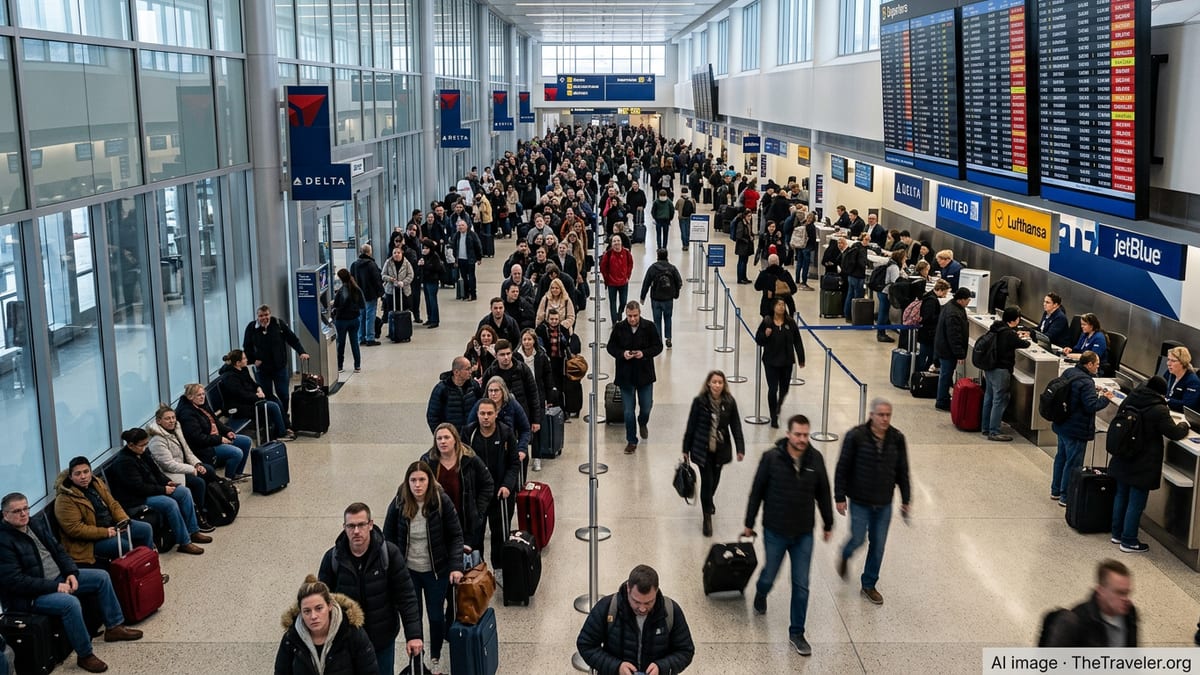
Thousands of airline passengers were stranded across the United States as a fresh wave of aviation gridlock pushed nationwide delays to 4,458 flights, disrupting schedules at the country’s busiest mega-hubs and rippling across the entire domestic network.
Get the latest news straight to your inbox!
Major Hubs Bear the Brunt of a Nationwide Disruption
Publicly available tracking data shows that the latest disruption has concentrated heavily at the largest US hubs, turning already congested terminals into scenes of gridlock. Chicago O’Hare, New York’s LaGuardia, Atlanta, Los Angeles, Denver and Houston George Bush Intercontinental have all recorded some of the highest volumes of delayed departures and arrivals, with O’Hare alone accounting for well over a thousand delayed movements and more than a hundred outright cancellations.
Reports indicate that the impact stretches far beyond those headline airports. Once delays accumulate at large hubs, aircraft and crews struggle to return to position, pushing late departures into secondary markets and regional airports. Travelers connecting through these mega-hubs are especially exposed, as missed connections force last-minute rebookings onto already crowded later flights.
According to published coverage from aviation-focused outlets, the 4,458 delays have been accompanied by more than 250 cancellations, magnifying the disruption for passengers who must now seek hotel rooms, meal vouchers or alternative routings. With load factors already high at many carriers, same-day re-accommodation has become increasingly difficult, especially on popular business and leisure corridors.
The scale of the disruption reflects how tightly scheduled US airline operations have become. Even modest interruptions at a few high-volume airports can quickly cascade into a nationwide event, effectively turning localized congestion into a system-wide shock.
Weather, Congested Skies and Staffing Strains Converge
Recent days have brought a mix of challenging weather conditions, with spring storms and convective activity across the Midwest, Northeast and Florida corridors interacting with already busy airspace. Published storm reports describe bands of heavy rain, low ceilings and strong crosswinds that have required air traffic managers to slow the rate of arrivals and departures into major hubs.
When that happens, the Federal Aviation Administration’s traffic management tools, such as ground delay programs and temporary ground stops, restrict the flow of flights into affected airports. Publicly available FAA data and industry reporting show that these measures, while necessary for safety, give airlines fewer slots to land and depart, forcing crews to hold at origin airports or reroute around congested airspace.
Airlines are simultaneously grappling with persistent staffing and scheduling pressures. Industry analyses over the past year have pointed to shortages of experienced air traffic controllers, ongoing pilot hiring challenges and tight cabin-crew rosters. When crews reach duty-time limits after long delays on the tarmac or in holding patterns, aircraft that are otherwise ready can no longer depart, adding a further layer of disruption.
Academic and policy research on the US network indicates that these operational constraints now interact more sharply than in the past. Security bottlenecks, longer boarding times and heightened maintenance scrutiny can all chip away at the slim buffers built into daily schedules, making it more likely that a storm in one region will translate into widespread delays elsewhere.
Passengers Face Missed Events, Overnight Stays and Rising Costs
For travelers caught in the latest gridlock, the numbers translate into very personal consequences. Missed weddings, lost business meetings and abandoned vacation plans are familiar outcomes whenever the domestic system experiences a disruption of this magnitude. Reports from consumer travel platforms describe long lines at customer service counters, crowded gate areas and difficulty securing seats on replacement flights.
Hotel rooms near major airports are another pressure point. When delays climb into the thousands and cancellations reach into the hundreds, nearby accommodation can sell out quickly. Some passengers are left to search for rooms much farther from the airport, often at higher last-minute rates. Families and travelers on tight budgets may opt to spend the night in terminal seating instead, particularly when disruptions stretch late into the evening.
Rebooking fees and fare differences can also add up, even when airlines waive some penalties during severe events. Travel-insurance policies vary widely in their coverage of weather-related or airspace-related delays, and consumer advocates frequently warn that many basic policies provide limited compensation for missed connections or extra nights on the ground.
The latest gridlock has unfolded against a backdrop of broader traveler frustration with US airport reliability. Recent rankings of stressful airports have highlighted long security lines, chronic departure delays and frequent baggage issues at several of the hubs now experiencing the highest disruption levels, suggesting that many affected passengers are dealing with repeated episodes rather than a one-off inconvenience.
Broader Pattern of System Strain Across US Aviation
The 4,458 delayed flights form part of a wider pattern of strain that has been building across US aviation over multiple seasons. Earlier in 2026, a powerful March storm system was linked in published reports to thousands of cancellations and nearly 10,000 delays nationwide, while a February blizzard in the Northeast disrupted tens of thousands of travelers and pushed airports to declare their snowiest days on record.
In addition to severe weather, recent years have seen disruptions tied to technology failures, airspace restrictions and federal budget turmoil. Coverage of a separate wave of delays in early 2026 pointed to temporary flight restrictions and no-fly zones that forced rerouting around portions of Texas and New Mexico. In 2025, a prolonged federal government shutdown coincided with flight reductions across dozens of high-volume markets, as air traffic controllers and aviation safety personnel operated under intense pressure.
Historical data compiled by federal regulators and independent analysts shows that roughly one in five US flights in a typical year now operates late, with large hubs absorbing a disproportionate share of delays. Late-arriving aircraft remain one of the leading causes, illustrating how one disrupted flight can echo through an airline’s schedule for hours.
Taken together, these factors paint a picture of a complex, tightly coupled system that has little slack to absorb shocks. When weather systems intensify, airspace is constrained or staffing gaps widen, the combined effect can quickly push delays into the thousands, as seen in the latest nationwide gridlock.
How Travelers Can Navigate an Era of Frequent Disruptions
As the US network contends with another day of widespread delays, travel experts and consumer organizations continue to emphasize preparation. While passengers cannot prevent systemic gridlock, publicly available advice repeatedly highlights a few strategies that can mitigate its impact, starting with choosing early-morning departures, which are less likely to be affected by knock-on delays from earlier in the day.
Industry trackers recommend that travelers monitor real-time flight data and airport status tools rather than relying solely on airline notifications, particularly during major weather events. When problems arise, those who act quickly to rebook, whether through apps, call centers or third-party travel agents, generally have more options before later flights fill.
Flexible itineraries also help. Building longer layovers into itineraries that pass through delay-prone hubs can provide a buffer against misconnected flights, while avoiding tight same-day connections across multiple carriers reduces exposure to schedule mismatches. For critical trips such as cruises, destination weddings or important business meetings, many advisers suggest arriving at least a day early.
For now, the latest count of 4,458 delayed flights underscores that aviation gridlock has become a recurring feature of US travel rather than a rare shock event. Until structural issues in staffing, infrastructure and scheduling are addressed, passengers moving through the country’s mega-hubs are likely to face similar episodes of large-scale disruption in the months ahead.