

More news on this day
Thousands of air travelers across the United States faced a day of aviation gridlock as 4,458 flights were delayed nationwide, snarling operations at Chicago, New York, Los Angeles, Denver, Houston and other major hubs and leaving passengers stranded in terminals well into the night.
Get the latest news straight to your inbox!
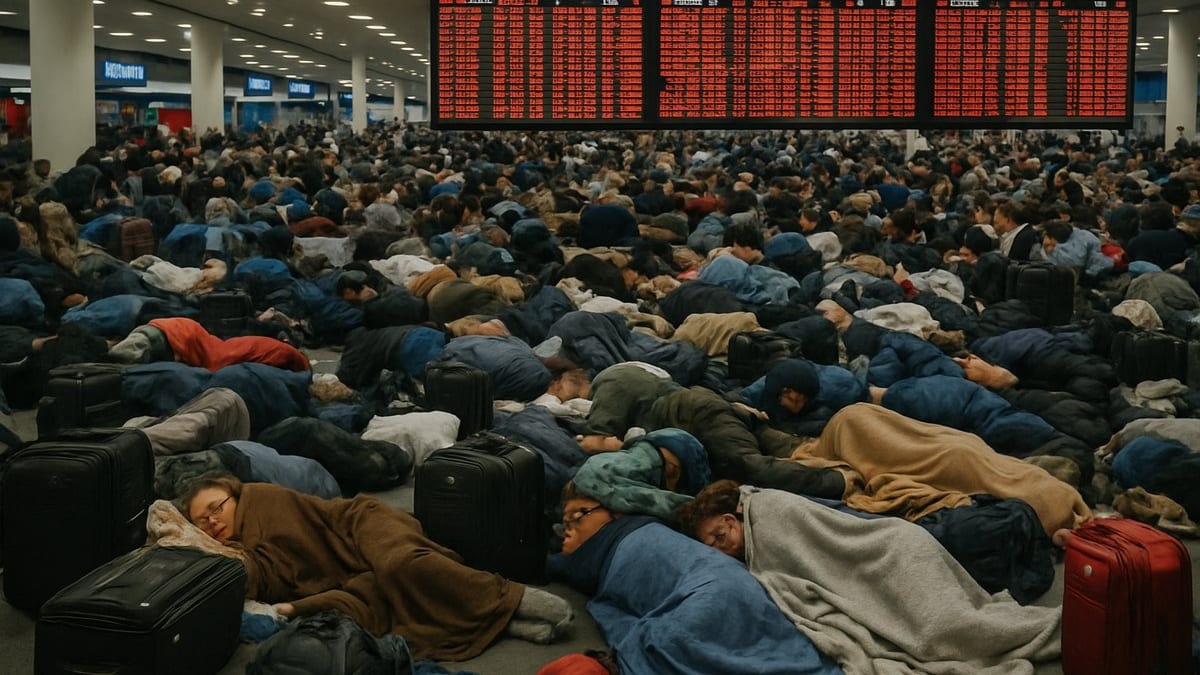
Image by Nomad Lawyer
Delays Mount Across Chicago, New York, Los Angeles and Denver
Publicly available flight-tracking data shows that the latest wave of disruption has concentrated around the country’s busiest connection points. Chicago O’Hare registered well over a thousand delayed departures and arrivals combined, with hundreds more affected at New York’s LaGuardia and other New York area airports. These choke points reverberated across the national network as aircraft and crews arrived late, causing rolling delays on subsequent legs.
Coverage from aviation and travel industry outlets indicates that Los Angeles International and Denver International, both key transcontinental and mountain-gateway hubs, added to the gridlock with more than a hundred delays each. Even when outright cancellations remained comparatively limited, extended pushback queues, aircraft waiting for gates and slower baggage handling compounded the disruption for travelers already on tight connections.
Reports from Washington-area airports show a similar pattern. At Washington Dulles, dozens of delayed flights and a smaller number of cancellations were enough to strand travelers when combined with earlier air-traffic stoppages in the region. The result was a patchwork of missed connections and last minute rebookings that rippled through domestic and international routes.
Because so many of the affected airports function as transfer hubs for Delta Air Lines, American Airlines, United Airlines, Southwest and a web of regional partners, even a single delayed leg could cascade into missed onward flights. Passengers on multi-stop itineraries were particularly vulnerable, often finding that while their mainline flights were still operating, the shorter connecting segments had slipped beyond reach.
Weather, Staffing and Airspace Limits Create a Perfect Storm
The latest day of gridlock has unfolded against a backdrop of persistent operational strain in the US aviation system. Recent weeks have brought severe thunderstorms, regional flooding and late season winter weather that disrupted airports from the Midwest to the Northeast. Each storm system has forced reroutes, ground stops and deicing backlogs, leaving aircraft and crews out of position for days.
At the same time, transportation security checkpoints and air traffic facilities have been grappling with staffing shortfalls. Travel and business coverage describes multi hour security lines at several large airports this March, linked to federal budget disputes and attrition among frontline staff. When security screening slows, departure banks compress and airlines face mounting pressure to board and dispatch multiple waves of flights in a shortened window.
Newly tightened safety procedures are adding further constraints. In Northern California, the Federal Aviation Administration recently cut the maximum number of hourly arrivals at San Francisco International following a review of side by side landing procedures and ongoing runway construction. Local reporting suggests that the change could push roughly one quarter of arriving flights at that airport into delays of at least 30 minutes over the coming months, reducing the margin for absorbing disruptions along the West Coast.
Academic work examining delay patterns across the US network has also highlighted how constraints at a handful of hubs can quickly propagate across dozens of secondary airports. When high volume hubs operate at or near capacity, even small shocks such as brief ground holds or reduced arrival rates can convert into missed crew connections, aircraft rotations out of sequence and late evening flights departing far behind schedule.
Passengers Face Missed Connections, Long Queues and Limited Options
For travelers on the ground, the operational story translates into missed weddings, lost business meetings and unexpected overnight stays. Published accounts from affected airports describe concourses filled with passengers queued at service desks, with some airports advising those with later departures to delay their arrival due to terminal crowding. At transfer heavy hubs such as Chicago and New York, a single delayed inbound leg often means that same day alternatives are scarce or fully booked.
Regional travelers are particularly exposed. Many of the shortest, most lightly served routes into large hubs are operated by smaller regional carriers under major airline brands. These flights can be among the first to face schedule adjustments when congestion builds, narrowing the options for those trying to reach a major hub in time for a transcontinental or international departure. Even when mainline long haul flights depart close to schedule, passengers may already have missed their chance to board.
In addition, earlier disruptions at Washington area radar and control facilities have periodically brought departures to a halt at airports serving the US capital and nearby states. Each evacuation or temporary stoppage has produced rolling waves of delays, as departures resume in compressed blocks that airports and airlines must then process through limited runway and gate capacity.
The result for many travelers is a patchwork day of partial progress: a delayed first leg, an unplanned layover extension and finally a scramble for hotel rooms or meal vouchers when onward options vanish. Travel insurance and flexible tickets can offset some of the financial impact, but they do little to shorten the hours spent in security lines or boarding areas waiting for updated departure times.
Systemic Weaknesses in a High Demand Travel Season
The scale of the latest disruption underscores how little slack remains in the US air travel system at the start of the spring and early summer high season. Airlines have rebuilt schedules close to or above pre pandemic levels, while many airports continue long term construction and runway works intended to improve capacity and safety over the next several years. Until those projects are complete, however, the system is operating with narrower margins.
Travel industry analyses have repeatedly noted that airlines can recover more quickly from isolated weather events or equipment issues when crew reserves and spare aircraft are available. In the current environment, where staffing and fleet utilization levels are tightly calibrated, it is harder to absorb days when storms, airspace restrictions and infrastructure work collide. This makes individual travel days more vulnerable to tipping into widespread delays, as seen in the latest tally of 4,458 affected flights.
Security screening bottlenecks add a further complicating layer. Where wait times stretch to two or three hours, morning departure banks can quickly become misaligned with the number of passengers who actually reach the gates in time, forcing airlines to juggle boarding procedures, standby lists and gate changes. Each adjustment slows the process of closing aircraft doors and pushing back on schedule.
Observers of the aviation sector point out that these pressures do not fall evenly across all carriers. Large network airlines that rely heavily on complex hub and spoke operations can be more sensitive to hub disruptions than ultra low cost carriers with simpler point to point models, while regional operators face their own challenges around crew duty limits and aircraft utilization. On a day with thousands of delays spread across dozens of hubs, however, the traveler experience often looks similar regardless of logo.
What Travelers Can Expect in the Days Ahead
With airports, federal agencies and airlines all signaling continuing operational challenges, the latest burst of delays is unlikely to be the last. Weather forecasts for early April still include pockets of severe storms in parts of the central and eastern United States, while runway and airspace restrictions at key hubs such as San Francisco are expected to remain in place for months.
Travel coverage advises that passengers with itineraries passing through the most delay prone hubs build extra time into connections, particularly when moving from regional to mainline flights. Afternoon and evening departures may face greater risk of knock on delays as the day’s schedule absorbs earlier disruptions, making early morning flights comparatively more resilient when options are available.
Industry observers also note a gradual shift toward more conservative scheduling, with some airlines trimming marginal flights and adding block time to reflect more realistic taxi and congestion conditions at busy airports. While such adjustments can help reduce the perception of chronic lateness, they may also mean fewer available seats on peak days and higher fares on the most in demand routes.
For now, the figure of 4,458 delayed flights in a single nationwide snapshot captures the fragility of a system balancing tight staffing levels, surging demand and infrastructure constraints. As peak travel periods approach, how quickly airports and airlines can adapt to this new operational baseline will determine whether days like this remain the exception or become a recurring feature of US air travel.