

More news on this day
Aviation training companies that specialize in maintenance, repair and overhaul are expanding and upgrading their course portfolios, responding to a tightening labor market, new regulatory requirements and the growing complexity of modern aircraft systems.
Get the latest news straight to your inbox!
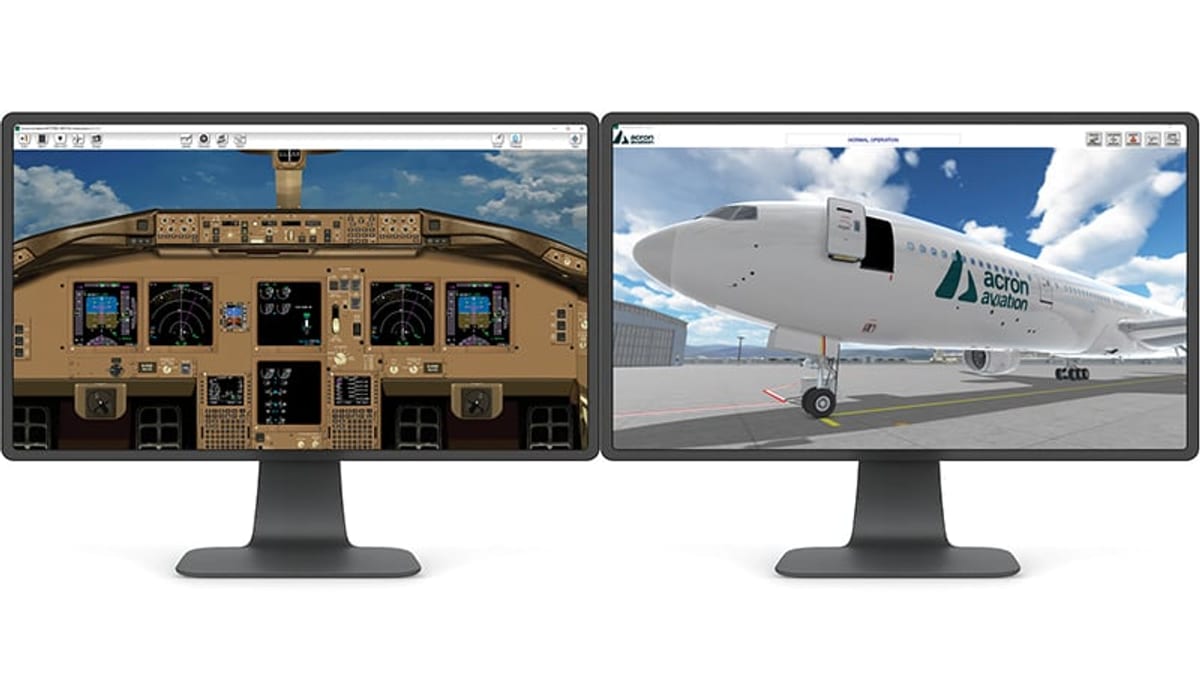
Image by AWN RSS by content source
Specialist Providers Broaden Maintenance Training Portfolios
Across key aviation markets, specialist training organizations are repositioning themselves as end to end partners for maintenance, repair and overhaul, rather than as narrowly focused schools. Academy Aviation Group highlights an expanded portfolio that spans EASA and FAA compliant maintenance programs, alongside dangerous goods and safety training delivered in Europe, the United States, the Middle East and online. Publicly available information shows that the group now structures its global offer through several aligned business units, including Part 147 type training in Europe, FAA construct courses in the United States, a training center in Dubai and a dedicated online platform.
Other MRO focused providers are pursuing similar strategies. AMT Inc. in the United States promotes itself as a dedicated MRO training specialist, positioning its courses around maintenance standards and regulatory compliance for airline and independent repair facilities. In Europe, Iberia Maintenance operates an aeronautical maintenance training center near Madrid that combines aircraft type training, specialist courses and Part 66 basic skills aligned with EASA and Spanish aviation safety requirements. Together, these offerings underscore how training specialists are tightly integrating with the maintenance sector rather than remaining separate academic institutions.
Reports from industry events indicate that this shift is supported by MRO operators themselves, which increasingly see training partners as a way to secure a pipeline of qualified technicians. Some large maintenance groups, including airlines with in house MRO arms, are either expanding their own training units or entering into partnerships with specialist schools to co develop curricula that match real hangar and line maintenance needs.
Digital and Virtual Tools Redefine Technical Instruction
The latest upgrades to MRO training portfolios place heavy emphasis on digital delivery and simulation. Academy Aviation Group promotes flexible online and blended programs for both initial and recurrent maintenance training, including self paced modules for technicians who cannot easily leave shift based roles. Course descriptions highlight interactive content and assessments designed to mirror real documentation and procedures, rather than static lecture formats.
More broadly, the wider aviation training market is adopting virtual maintenance training, a method that uses three dimensional simulations of real aircraft, engines and components to teach inspection and repair tasks. Publicly available reference material describes how these systems can reproduce complex procedures in a digital environment, allowing technicians to practice troubleshooting, disassembly and reassembly without removing an aircraft from revenue service. For MRO providers, this reduces the need to dedicate scarce assets solely for training purposes and allows more consistent exposure to rare fault scenarios.
Technical training units embedded in MRO organizations are also integrating web based learning. Iberia Maintenance, for example, outlines web delivered programs that support flexible schedules and enable technicians to refresh individual concepts as needed. Similar approaches are evident at other maintenance providers that operate Part 145 and Part 147 approvals, where online theory is combined with supervised hands on training in hangars and workshops to maintain regulatory alignment.
Aligning With Global Regulatory and Safety Frameworks
MRO training portfolios are being restructured to keep pace with evolving regulatory expectations across major jurisdictions. Academy Aviation Group organizes its business units around EASA Part 147 and FAA constructs, clearly separating programs designed for European and United States regulatory environments while maintaining common safety and quality baselines. The group’s publicly available materials emphasize adherence to both authorities’ approval processes.
In the Asia Pacific region, providers such as Heston MRO in Australia combine their maintenance approvals with a technical training arm that is recognized under local civil aviation regulations. Heston’s training division is described as a Part 147 and Part 145 school, with course offerings ranging from basic skills to specialized aircraft and engine content, aimed at supporting its own heavy maintenance operations as well as third party customers.
Specialist consultancies are also entering the training space with targeted compliance programs. Avisence, a training and advisory firm, promotes courses covering human factors, Part 145 maintenance and repair, aviation safety, environmental compliance, airport operations and ground handling. Public descriptions stress alignment with FAA, EASA, ICAO and IATA standards, signaling how MRO related training is increasingly framed within a broader operational and regulatory ecosystem rather than as a standalone technical discipline.
Industry Partnerships Target Maintenance Workforce Shortages
The global shortage of licensed and experienced aircraft maintenance technicians remains a key driver of new training initiatives. Partnerships between MRO providers and educational institutions are emerging as a preferred response. Reports on recent collaborations in the United States describe how large maintenance organizations are working with aviation academies to create direct career pathways, including support for obtaining FAA Airframe and Powerplant certification and exposure to widebody heavy maintenance environments.
One example is a partnership between Aspire MRO and US Aviation Academy, under which aircraft maintenance training is delivered across multiple campuses in Texas, Georgia, Minnesota, New York and Missouri. Publicly available information shows that the collaboration is structured to give students clearer routes into MRO roles, positioning the training as a bridge between classroom learning and employment in heavy maintenance, modification and conversion facilities.
Similar models are being followed at regional technical centers and community colleges, where local MROs and engine specialists provide input on curriculum content, equipment needs and internship opportunities. These arrangements aim to grow the number of job ready graduates who can move quickly into line and base maintenance roles, reducing onboarding times and easing pressure on existing staff.
Sustainability, Human Factors and New Competencies Enter the Syllabus
Alongside traditional airframe, engine and avionics content, upgraded MRO training offerings are increasingly incorporating sustainability and human factors modules. Training provider Avisence highlights courses on green MRO and eco friendly maintenance practices, reflecting airline and lessor interest in emissions reduction, waste management and responsible handling of materials. Such modules are designed to connect day to day maintenance decisions with broader environmental performance metrics.
Human factors, safety management and maintenance resource management continue to gain prominence in technical curricula. Materials from various providers outline training that addresses fatigue, communication, error management and safety culture within maintenance teams. These elements are now widely regarded as critical competencies for technicians working in high tempo MRO environments where small mistakes can have disproportionate consequences.
As aircraft systems become more digital and data driven, training specialists are also adding content related to predictive maintenance, electronic technical logs and the use of digital manuals and task management systems. Industry presentations at recent MRO events highlight emerging tools that help technicians navigate complex documentation and trace every action to certified sources, indicating that familiarity with these platforms is likely to become a standard skill for future maintenance professionals.