


American Airlines makes it very easy to add trip insurance as you book a ticket online. A single checkbox promising peace of mind pops up next to your total, often for an extra 6 to 8 percent of the trip cost. For many travelers rushing through checkout, it feels like a small price to pay to “protect your investment.” But that convenience can be expensive, and the protection is narrower than many people realize. By understanding what AA’s partner Allianz actually covers, what American Airlines itself already owes you, and what your credit card may quietly include, you can avoid overpaying for travel insurance you do not really need.
Get the latest updates straight to your inbox!
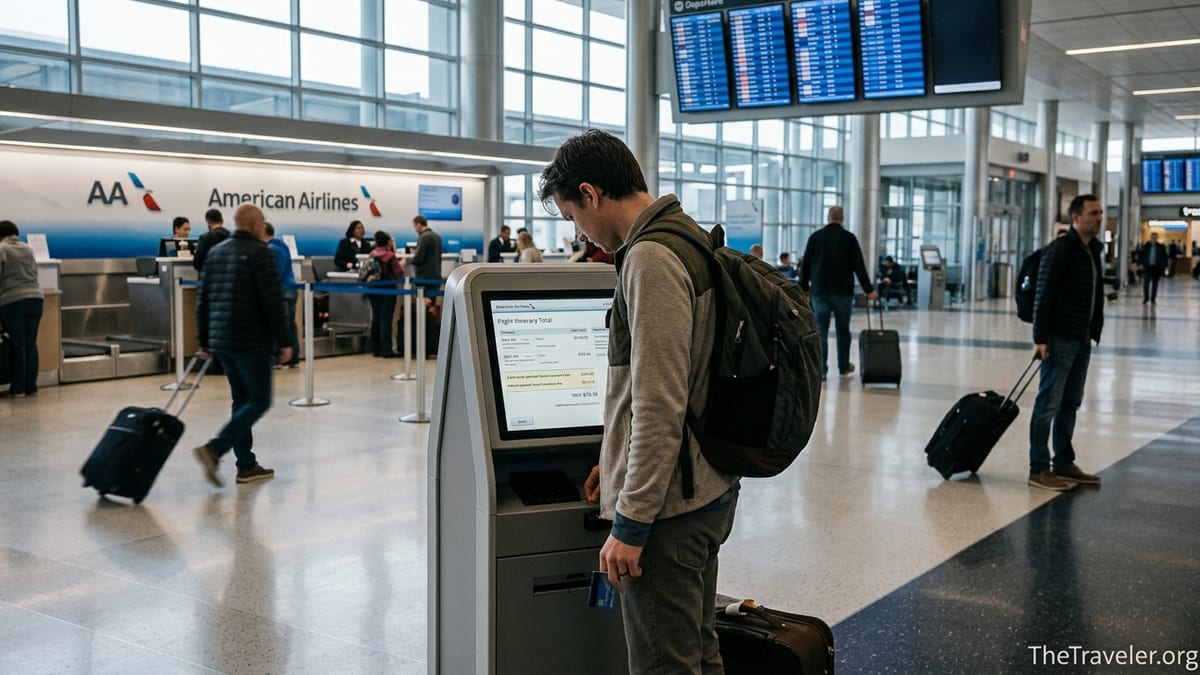
What AA’s Trip Insurance Really Is – And What It Is Not
When you buy “trip insurance” on the American Airlines website, you are not purchasing a policy from American itself. The coverage is offered and administered by Allianz Global Assistance, with benefits underwritten by companies such as Jefferson Insurance Company or BCS Insurance Company. American provides the checkout screen and branding, but the contract you agree to is an Allianz policy with its own limits and exclusions.
The product sold through AA typically bundles familiar protections: trip cancellation and interruption if you get sick or injured, emergency medical and dental coverage, emergency medical transportation, trip delay reimbursement after a long delay, baggage loss or damage, and baggage delay. The airline’s own description highlights these as broad categories rather than promising specific dollar amounts. In practice, limits are relatively modest compared with many independent plans. For example, public plan summaries and independent reviews note emergency medical transportation benefits of around 50,000 dollars on some American Airlines partner plans, while standalone Allianz policies sold directly to consumers can offer 250,000 dollars or more in evacuation coverage for similar trips.
Because this is a named-perils policy, only specific events listed in the certificate of insurance are covered. If your reason for canceling, interrupting, or delaying does not appear clearly in that list, your claim is likely to be denied. Simply worrying about COVID at your destination, deciding to avoid a storm that has not yet closed airports, or canceling because a conference changed dates will usually not qualify. The marketing language can sound broad, but the actual contract language is narrow and technical.
This gap between expectations and reality is where many complaints originate. Travelers assume “trip insurance” means almost any disruption will be reimbursed. In reality, AA’s partner policy is one specific type of coverage, with limits that may be entirely appropriate for some trips and inadequate for others. Understanding that distinction is the first step to avoiding overpaying for a product that does not match your risk.
What American Already Owes You Without Insurance
Before you pay extra for insurance, it is crucial to understand what American Airlines, as a carrier, already provides at no added cost. Like other major U.S. airlines, AA publishes detailed customer service and ticketing policies for delays, cancellations, and schedule changes. These rules are separate from any optional Allianz policy and apply whether or not you purchased insurance.
For example, American allows a 24-hour refund window for most tickets booked directly with the airline, as long as you purchased at least two days before departure. If you change your mind within that period, you can cancel for a full refund without any insurance at all. American also has obligations when flights are delayed or canceled for reasons within the airline’s control, such as crew scheduling or many types of maintenance issues. In those situations, AA may provide meal vouchers, hotel accommodation, or rebooking options at no additional fare, depending on the exact circumstances and route. None of this requires a trip insurance policy.
Suppose your evening flight from Dallas to Los Angeles is canceled due to a mechanical issue, and you are rebooked for the next morning. American might cover a hotel near DFW and give you meal vouchers under its own policies. If you also bought Allianz trip delay coverage through AA, that insurance typically only comes into play for additional out-of-pocket expenses that the airline does not reimburse, and only once a minimum delay threshold is met, such as 6 hours or longer. If AA already paid for your hotel and food, your eligible “extra” costs under the policy might be limited to a few rideshare charges or phone calls. In that case, the dozens of dollars you spent on insurance may not yield significant extra value.
On the other hand, if a winter storm in Chicago leads to widespread cancellations classified as weather events outside the airline’s control, American’s responsibility is more limited. You may only get rebooking on the next available flight and perhaps some basic assistance, but the airline is not required to buy your hotel or meals. In that case, trip delay coverage through Allianz or a credit card could reimburse you for overnight stays, food, and transportation. The key point is that insurance should be evaluated in the context of what the airline already guarantees, especially for controllable disruptions, so you do not pay twice for the same protection.
Real-World Price Comparisons: AA Checkout vs Independent Plans
The easiest way to see whether you are overpaying for American’s partner insurance is to compare its price and coverage with independent options for the same trip. At AA checkout, the Allianz premium is often quoted as a percentage of your total nonrefundable trip cost. Travelers commonly report seeing prices in the range of 6 to 8 percent of their airfare and prepaid hotels when bundled on the airline website.
Imagine you are booking two round-trip tickets from New York to Rome for a family vacation in October, paying about 1,200 dollars per person for flights and 1,600 dollars total in prepaid hotel nights through a separate booking site. Your total nonrefundable outlay is around 4,000 dollars. At AA checkout, you might see a trip insurance offer for roughly 260 dollars, which is about 6.5 percent of that cost. The coverage would usually include cancellation for covered reasons up to 4,000 dollars, emergency medical coverage, baggage protection, and so on, with limits that vary by plan version.
Now compare that with quotes from independent travel insurance aggregators or directly from Allianz’s own website. For the same 4,000 dollar trip, a midrange comprehensive policy from multiple insurers might run around 150 to 220 dollars, depending on traveler age and coverage levels. Some medical-only plans from Allianz or its competitors, which focus on emergency treatment and evacuation without trip cancellation, can cost less than 60 dollars per adult for a week-long European vacation and offer medical evacuation limits of 250,000 dollars or more. Those policies will not reimburse your airfare if you cancel, but they address the financial risk of a serious hospital stay abroad at a much lower premium.
The takeaway from these price comparisons is not that AA’s checkout policy is always bad, but that convenience often comes at a premium. If you are simply clicking through the airline’s offer without checking independent quotes, you may pay more per dollar of coverage than necessary, or buy a policy whose strengths do not align with your greatest risks, such as expensive medical evacuation or pre-existing condition coverage.
Common Coverage Gaps and Surprises in AA’s Partner Policy
Many frustrations with American’s trip insurance partner arise when travelers discover, after a disruption, that an event they assumed was covered is excluded or limited in specific ways. Reading through sample certificates and consumer guides reveals repeating themes: pre-existing medical conditions, “known events,” and change-of-mind cancellations are among the biggest surprises.
Pre-existing conditions are a key example. Allianz policies sold through AA often include a waiver for pre-existing medical conditions only if you purchase coverage soon after your first trip payment and insure the full nonrefundable cost. If you wait until weeks after booking flights to add insurance or do not cover all pre-paid elements, any emergency linked to a pre-existing condition may be excluded. A traveler with well-managed heart disease who suffers complications in Madrid could discover that hospital bills are not covered because of the timing of the policy purchase, despite having paid hundreds of dollars for “trip protection.”
Another frequent surprise involves the definition of covered reasons for trip cancellation or interruption. Losing a job may be covered, but only if your employer meets specific criteria. Strikes or civil unrest are sometimes included but subject to detailed timing rules. Fear of traveling to an area because of rising political tension or a newly reported outbreak is generally not covered unless the government issues certain types of travel restrictions. The fact that your friends decided to move the wedding to a different weekend will certainly not qualify. Policies also typically exclude any event that was “reasonably foreseeable” at the time you purchased insurance, such as a hurricane already named and tracked toward your Caribbean destination.
Coverage limits can also feel undersized in real crises. On some American Airlines partner plans, emergency medical limits may fall in the tens of thousands of dollars, and evacuation benefits may cap at around 50,000 dollars. That might be adequate for minor treatment in many destinations, but a medical airlift from a remote island or a lengthy ICU stay in a private clinic can easily exceed those caps. Travelers who assumed “trip insurance covers everything” may find themselves facing large uncovered bills at exactly the moment they believed they were protected.
When Your Credit Card or Existing Policies Already Have You Covered
One of the most common ways travelers overpay for AA’s checkout insurance is by layering it on top of protections they already have through premium credit cards or employer-sponsored plans. Many popular travel cards from major issuers quietly include trip cancellation, trip interruption, trip delay, baggage loss, and rental car insurance when you pay for your flights with that card. Some also include secondary or primary medical evacuation coverage, or at least coordination with assistance services.
Consider a traveler who books a 900 dollar American Airlines ticket with a mid-tier travel rewards credit card that automatically includes up to 1,500 dollars per person and 6,000 dollars per trip in trip cancellation and interruption coverage, along with 500 dollars in trip delay coverage after a 6-hour delay and 750 dollars for lost or damaged baggage. If that traveler then adds AA’s Allianz policy at checkout for, say, 70 dollars, much of the coverage overlaps. In case of a covered illness that forces a cancellation, either policy might reimburse the same 900 dollars in airfare. Because you generally cannot be “paid twice” for the same loss, you gain little incremental protection for your extra premium.
Real-world examples show how powerful card coverage can be without any airline add-on. Travelers have reported on public forums that American Airlines sometimes takes months to reimburse eligible hotels and expenses after controllable delays or baggage mishandling. In contrast, some card insurers have processed claims for lost bags and long delays within weeks, covering clothes, toiletries, and extra nights that the airline would not. In those cases, the card benefit essentially replaces what many travelers hope an airline-sold policy would provide, without paying anything extra at checkout.
Employer benefits can also overlap. Some corporate travel programs bundle global medical evacuation coverage through firms like International SOS or similar providers, along with insurance for trip interruption on business journeys. If your job requires advance registration of trips, you might already have robust backup for emergency evacuation or urgent hospital care. Adding AA’s partner insurance on top may only make sense if you are mixing business and personal travel or need cancellation protection for nonrefundable vacation add-ons like safaris or cruise segments that fall outside your employer’s policy.
Smart Strategies to Decide If AA Insurance Is Worth It
Deciding whether to accept American’s insurance offer should be a deliberate, not reflexive, choice. The first step is to clarify what you truly need to protect. Ask yourself three questions: how much nonrefundable money is at stake, what is your biggest financial risk if something goes wrong, and what coverage do you already have through cards or existing policies.
If your main concern is losing several thousand dollars in nonrefundable flights and hotels due to a serious illness, accident, or family emergency, then comprehensive trip cancellation and interruption coverage can be valuable. In that case, AA’s partner policy might be convenient, especially if you are comfortable with its limits and can secure a pre-existing condition waiver by buying promptly. For instance, a couple in their sixties booking a 10,000 dollar multi-stop American itinerary with prepaid safari lodges in Kenya might reasonably decide that paying 600 to 700 dollars for robust cancellation and medical evacuation coverage is prudent, whether bought through AA or an independent broker.
If your biggest worry is the cost of overseas medical treatment and evacuation, but your flight and hotel reservations are relatively flexible, a medical-focused policy bought directly from Allianz or another insurer may offer better value than the bundled AA plan. A younger traveler heading to Thailand for three weeks with 1,200 dollars in total nonrefundable expenses might choose a 70 dollar medical and evacuation plan with high limits instead of a 100 dollar comprehensive cancellation policy sold during ticket purchase, especially if they can rebook or credit most of their airfare.
For short domestic trips with modest sunk costs, AA’s checkout insurance is often unnecessary. A weekend flight from Chicago to Denver for 350 dollars, staying at a hotel you can cancel up to 24 hours before arrival, might not warrant a 30 dollar add-on policy. Your main risk is inconvenience rather than catastrophic loss, and your credit card may already provide sufficient coverage for delays and lost bags.
The key strategy is to pause at the insurance screen, take a screenshot or note of the quoted price and basic benefits, and then spend five minutes checking your credit card’s travel protections and an independent insurance quote. That quick comparison often reveals whether the AA-partner plan is competitively priced and filling a true gap, or whether you are about to double-pay for protection you already own.
The Takeaway
American Airlines’ trip insurance, sold in partnership with Allianz, is not inherently good or bad. It is one specific product with clear strengths and limitations. For travelers with high nonrefundable costs, limited existing coverage, and a need for straightforward cancellation and interruption protection, it can be a convenient choice. But the ease of a single click at checkout can tempt you into buying more insurance than you need, or buying the wrong type of protection.
The most effective way to avoid overpaying is to treat AA’s insurance offer as one quote among several. Learn what American already promises you when flights are delayed or canceled. Check your credit card’s travel benefits for overlap on delays, lost bags, and trip interruption. Then compare the price and limits of the AA-partner plan with independent alternatives for your specific trip and medical risk. Those simple steps turn an impulsive add-on into an informed decision, helping you reserve your travel budget for the experiences you actually want rather than redundant coverage you may never use.
FAQ
Q1: Is American Airlines travel insurance actually provided by AA?
American Airlines trip insurance is offered on the AA website but is administered and underwritten by Allianz Global Assistance and its partner insurers, not by American itself.
Q2: How much does AA trip insurance usually cost?
Pricing varies, but travelers often see premiums in the range of 6 to 8 percent of their insured trip cost when purchasing through AA’s checkout screen.
Q3: What does American Airlines trip insurance typically cover?
The policy usually bundles trip cancellation and interruption for covered reasons, emergency medical and dental treatment, emergency medical transportation, trip delay, baggage loss or damage, and baggage delay.
Q4: Does AA trip insurance cover canceling for any reason?
No. Standard AA partner policies are named-perils plans that only cover cancellations for specific listed reasons, such as certain illnesses, injuries, or family emergencies, not simple change of mind.
Q5: If my flight is canceled, will AA trip insurance always pay for my hotel?
Not necessarily. First, American’s own policies may cover hotel and meals for some controllable disruptions. Insurance may reimburse only additional eligible expenses that meet the policy’s delay rules and limits.
Q6: Do I need AA trip insurance if my credit card includes travel protection?
If your credit card already provides strong trip cancellation, delay, and baggage benefits, buying AA’s partner insurance may lead to overlapping coverage and limited extra value, so comparing details is essential.
Q7: How do pre-existing medical conditions affect AA trip insurance?
Coverage for pre-existing conditions is often subject to strict timing rules. You usually must buy the policy soon after your first trip payment and insure the full nonrefundable cost to qualify for a waiver.
Q8: Is AA’s trip insurance enough for expensive medical evacuation abroad?
Some partner plans have evacuation limits around tens of thousands of dollars, which may be lower than independent policies. For remote or high-cost destinations, higher evacuation limits may be advisable.
Q9: Can I buy travel insurance later if I skip AA’s offer during booking?
Yes. You can typically purchase independent travel insurance after booking, though some benefits, especially pre-existing condition waivers, may require buying within a set period after your first trip payment.
Q10: When is AA trip insurance most likely to be worth the cost?
It tends to be most valuable when you have large nonrefundable expenses, lack strong credit card or employer coverage, and face realistic risks of needing to cancel or interrupt your trip for covered reasons.