

More news on this day
Ávoris Corporación Empresarial is restructuring Iberojet’s commercial and tour operations in Spain, introducing a more unified leadership model designed to better align its airline, tour operators and travel agencies in an increasingly competitive leisure market.
Get the latest news straight to your inbox!
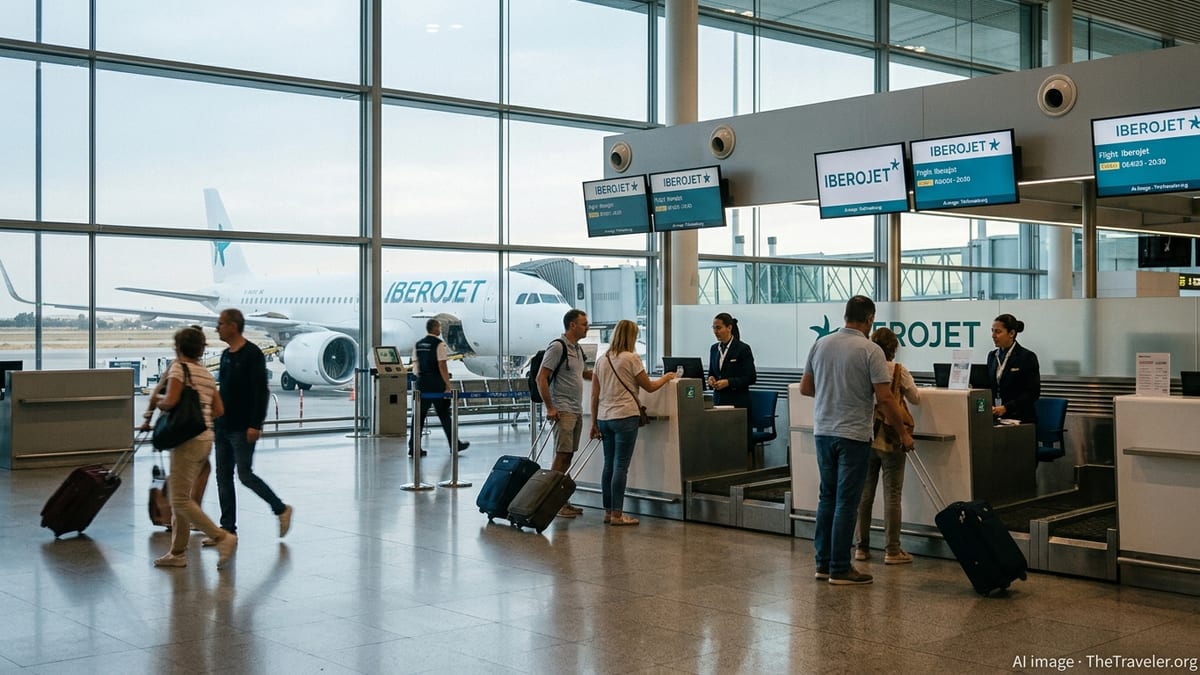
What the Restructuring Involves
According to industry coverage and company disclosures, Ávoris is moving to integrate Iberojet more tightly with its wholesale and retail divisions in Spain. The restructuring centers on bringing flight capacity planning, route development and package design into a single commercial vision, rather than treating Iberojet as a largely standalone carrier feeding multiple brands. The aim is to use Iberojet’s aircraft, scheduling and pricing as a direct lever to strengthen Ávoris package holidays and distribution channels.
The operational shift is expected to touch almost every stage of the customer journey, from how routes are selected to how packages are marketed to Spanish travelers. Iberojet’s long-haul focus to the Caribbean and Latin America is being explicitly tied to Ávoris tour operators that specialize in those regions, improving coordination on departures, allotments and hotel inventory. This should help the group refine its value proposition for sun-and-sand travelers, a segment where Ávoris already has strong positioning through brands such as Travelplan, Catai, Quelonea and Jolidey.
Publicly available material on Ávoris strategy shows a broader push for efficiency and profitability across the group, and the Iberojet move fits into that framework. By reducing overlap between airline and tour-operating decisions, the company is seeking to streamline its cost base while ensuring that high-demand leisure corridors from Spain are supplied with coherent, branded product.
Key Leadership Appointments Behind the New Model
The restructuring relies on a refreshed leadership architecture within Ávoris, building on earlier changes that concentrated executive power across tour operating, distribution and transport. Prior appointments placed a single general management layer over all major business lines, aligning commercial priorities across tour operators, agencies and Iberojet. The current moves in Spain deepen that model at an operational level, allocating clearer responsibility for how airline capacity is used in package design and sales.
At the top of the group, governance information shows that Ávoris is overseen by senior figures from its parent Barceló, including a president who also serves as the group’s chief financial steward and chair of Ávoris. This structure is intended to ensure that strategic and financial decisions for Iberojet are tightly monitored and consistent with the broader Barceló travel division. Within Ávoris, day-to-day authority over commercial strategy rests with a general manager layer that reports into the corporate leadership while coordinating with regional teams across Spain.
As part of the Iberojet-focused reorganization, specialised commercial roles are being elevated to strengthen collaboration between the airline and major tour brands. While the full list of position titles has not been detailed publicly, industry reports indicate expanded responsibilities for managers overseeing long-haul leisure strategy, group contracting and airline-tour alignment. These appointments are meant to break down silos, ensuring that decisions on new routes, aircraft deployment and seasonal frequency are made in tandem with tour-program planning.
How Iberojet Fits in the Ávoris Ecosystem
Iberojet operates as the airline arm of Ávoris, born from the consolidation of carriers such as Evelop and Orbest into a single leisure-focused brand. Within the Ávoris ecosystem, it serves as the core airlift provider for long-haul and some mid-haul package products, flying to Caribbean destinations like Punta Cana and Mexican resort areas such as Riviera Maya, as well as other holiday markets favored by Spanish travelers. Its widebody aircraft and charter-style operations allow Ávoris tour operators to control capacity and schedules more tightly than relying solely on third-party airlines.
Ávoris itself is one of Spain’s largest integrated travel groups, combining retail agencies, wholesale tour operators, an airline, destination management services and other travel products. The group includes prominent brands such as Halcón Viajes and B the travel brand on the retail side, alongside a substantial portfolio of wholesale operators serving both the mass market and premium segments. Iberojet is central to this multi-brand model, functioning as a shared asset that can be tailored to the needs of each tour operator while still presenting a unified flight experience to customers.
By restructuring Iberojet’s commercial and tour operations in Spain, Ávoris is reinforcing this ecosystem logic. The airline is expected to work more closely with internal stakeholders when deciding which seasonal routes to maintain or expand, and which emerging destinations to add. That includes calibrating aircraft type and seating capacity around the requirements of specific tour programs, such as family-focused holidays, adults-only resorts or upmarket itineraries that rely on higher-yield seating.
Implications for Spain’s Leisure Travel Market
The shake-up comes as Spain’s outbound leisure market continues to evolve, with travelers showing strong interest in package holidays that bundle flights, accommodation and experiences under a single brand. Competition from other large travel groups, as well as online platforms that piece together dynamic packages, has intensified pressure on traditional vertically integrated operators. Ávoris is responding by leveraging its in-house airline, retail agencies and tour brands to deliver more coordinated, end-to-end offerings.
For Spanish travelers, the restructuring could translate into more cohesive products using Iberojet flights, particularly to key long-haul beach destinations. With airline and tour teams operating under a more unified structure, the group can refine departure calendars, improve connection times and design packages that make better use of available capacity. This may also allow Ávoris to negotiate stronger terms with hotel partners, given the increased predictability of airlift and passenger volumes on Iberojet-operated routes.
From a competitive standpoint, a more tightly integrated Iberojet could help Ávoris defend and grow its share in routes that are also served by rival European leisure airlines. Enhanced coordination between commercial planning and tour production may enable the group to respond faster to demand shifts, for example by adjusting frequencies on popular routes or quickly introducing charter services for special events and peak travel periods.
What Travelers and Partners Should Watch Next
In the coming seasons, observers of Spain’s travel sector will be watching how the new leadership structure at Ávoris translates into visible changes in the market. Indicators may include the launch of new Iberojet routes or added frequencies from secondary Spanish airports, especially where Ávoris retail agencies have strong local footprints. Another sign will be the level of coordination seen in campaign activity, as tour operators and Iberojet promote joint offers and branded experiences.
Travel agencies and destination partners will also be monitoring how Ávoris uses the restructuring to refine its contracting approach. A clearer chain of command between Iberojet’s commercial decision makers and the tour-operating teams could result in more predictable flight programs and earlier commitments to hotel inventory in destinations such as the Caribbean, North Africa and European island markets. That, in turn, may influence pricing dynamics and availability across the wider Spanish outbound sector.
While the full impact of Ávoris restructuring of Iberojet’s commercial and tour operations in Spain will take time to emerge, the move underscores a broader trend: integrated travel groups are doubling down on internal alignment to compete. For Iberojet, the latest leadership appointments confirm its role as a strategic pillar in Ávoris growth plans, positioning the airline at the center of a more coordinated, package-led strategy aimed squarely at Spain’s resilient leisure traveler.