

More news on this day
Azerbaijan Airlines is deepening ties between Azerbaijan and Kazakhstan with a new Baku–Shymkent route and expanded services that promise to reshape travel, trade and tourism across the Caspian region.
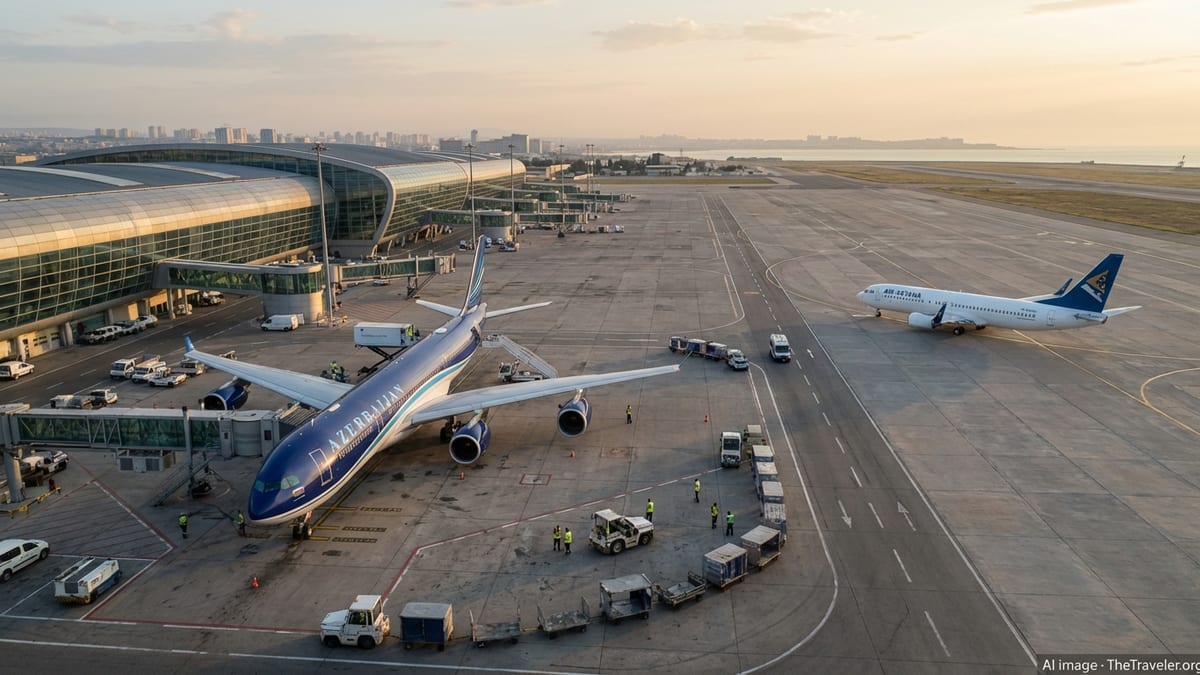
A Fourth Gateway Between Baku and Kazakhstan
Azerbaijan’s flag carrier AZAL is preparing to launch regular flights between Baku and Shymkent, adding a fourth Kazakh destination to its network and significantly strengthening connectivity between the two energy-rich Caspian states. The Baku–Shymkent–Baku service is scheduled to begin in mid-June, with ticket sales already open and demand described by industry observers as robust among both business and leisure travelers.
Under the initial summer schedule, flights will operate twice weekly between June 16 and June 27, departing Baku on Tuesdays and Saturdays and returning from Shymkent on the same days. From June 30, frequencies will rise to three flights a week, with departures from Baku on Tuesdays, Thursdays and Saturdays and return services from Shymkent on Wednesdays, Fridays and Sundays. The stepwise increase signals AZAL’s confidence in the route’s long-term potential.
Shymkent joins Almaty, Astana and Aktau on AZAL’s Kazakhstan map, rounding out a quartet of strategic gateways that together link Azerbaijan to Kazakhstan’s political capital, its biggest commercial hub, a major Caspian port city and now its dynamic southern metropolis. For passengers on both sides of the sea, the new option shortens journey times, cuts the need for connections through third countries and plugs Shymkent directly into AZAL’s expanding global network via Baku.
The launch follows a busy year in which AZAL operated close to 850 regular round-trip flights to Almaty, Astana and Aktau, underscoring how rapidly flows between the two countries are growing. Aviation officials in both Baku and Astana see Shymkent as the next logical step in stitching together a more seamless Caspian air corridor.
Why Shymkent Matters in the Caspian Network
Shymkent, Kazakhstan’s third-largest city, has long been a commercial crossroads between Central Asia and wider Eurasia. With a population of well over one million and a diversified economy spanning industry, trade, education and services, it has been steadily pushing for better direct links to regional hubs. Until now, travelers from Shymkent heading to Baku or beyond often faced multi-stop journeys through Almaty, Astana or foreign hubs such as Istanbul.
By introducing a nonstop Shymkent connection, AZAL is tapping into pent-up demand from entrepreneurs, industrial suppliers, students and tourists moving between southern Kazakhstan and Azerbaijan. Travel agents say interest is especially strong from companies active in construction, logistics and agribusiness, sectors in which both countries are investing heavily. The convenience of a direct evening or daytime service is expected to shift more of this traffic from road and rail to air.
Diplomatically, the route highlights the growing emphasis that Baku and Astana place on subnational ties. While national capitals and big financial centers usually dominate air networks, Shymkent’s inclusion reflects a shared strategy of spreading economic benefits beyond traditional powerhouses. Local authorities in Shymkent have framed the flights as part of a broader effort to position the city as a southern hub for Central Asia, complementing Almaty’s and Astana’s established roles.
For Azerbaijan, which has positioned itself as a bridge between Europe and Asia, gaining direct access to Shymkent also opens the door to deeper engagement with neighboring regions of Uzbekistan and Kyrgyzstan. Business travelers from those countries can reach Baku with a single domestic hop to Shymkent, then connect onwards via AZAL’s growing network across the Middle East, Europe and South Asia.
Boosting Trade, Energy and Logistics Across the Caspian
The new Shymkent flights come at a time when Azerbaijan and Kazakhstan are working to upgrade overland and maritime transport corridors that move oil, grain and containerized goods across the Caspian. While bulk commodities will still travel by ship and rail, faster air connections play a critical supporting role, allowing executives, technical specialists and government delegations to shuttle quickly between projects and partners.
Both countries are key players in the evolving Middle Corridor, the multimodal route that links China and Central Asia to European markets via Kazakhstan, the Caspian Sea, Azerbaijan and the South Caucasus. Direct air services between major nodes along this corridor help accelerate decision-making and coordination, from port expansions on the Kazakh and Azerbaijani coasts to new logistics terminals and customs facilities inland.
In practical terms, the Baku–Shymkent route is likely to be used for everything from rapid shipment of high-value or time-sensitive cargo to last-minute engineering visits and signing ceremonies. Freight capacity in the belly holds of AZAL aircraft is expected to complement existing road and rail links, enabling just-in-time deliveries of machinery parts, electronics, pharmaceuticals and other goods used in Central Asian industrial and infrastructure projects.
With both Azerbaijan and Kazakhstan pursuing ambitious energy-transition strategies while maintaining significant hydrocarbon exports, policymakers also view stronger air connectivity as a tool for attracting foreign investors and hosting specialized conferences. Baku’s recent track record as a venue for major energy and transport forums makes convenient links from hubs like Shymkent a valuable asset.
Tourism Links: From Caspian Coasts to Silk Road Cities
Beyond boardrooms and logistics centers, AZAL’s expanded presence in Kazakhstan is poised to reshape tourism flows between the two countries. Azerbaijan has invested heavily in promoting Baku’s mix of medieval Old City streets and futuristic waterfront architecture, as well as mountain resorts and wine regions, to visitors from Central Asia. Easier access from Shymkent, Almaty, Astana and Aktau makes short leisure breaks and multi-destination trips far more attractive.
For Kazakh travelers, visa-free entry to Azerbaijan and familiar cultural touchpoints, from cuisine to music, help lower the psychological barriers to international travel. Travel agencies in Baku and Shymkent are already preparing packages that bundle city stays in Baku with day trips to Gobustan’s rock art sites, the Absheron peninsula’s historical fire temples and ski or hiking excursions in the Caucasus foothills.
The benefits are mutual. For Azerbaijani tourists, more frequent and diversified flights into Kazakhstan open up the Silk Road cities, mountain landscapes and steppe experiences of Central Asia. Shymkent serves as a springboard to Turkestan, an important spiritual and historical center, as well as to national parks and cross-border itineraries that link Kazakhstan with Uzbekistan and Kyrgyzstan. With AZAL entering the market alongside Kazakh carriers, travelers will have more flexibility on dates and prices than in the past.
Tourism boards on both sides are expected to intensify joint marketing, highlighting twin-center itineraries that combine Caspian beaches or cultural festivals in Baku with historical and nature tourism in southern Kazakhstan. Airlines, airports and hotels see these city-pair promotions as a way to smooth seasonal peaks and fill seats year-round.
AZAL’s Fleet Expansion and Regional Strategy
The new Kazakhstan flights are part of a much wider growth strategy at AZAL. The carrier has announced plans to expand its fleet with more than 30 new-generation aircraft by 2030, a move aimed at improving fuel efficiency, cutting emissions and enabling denser schedules on key regional and long-haul routes. Over the past few years AZAL has nearly doubled its destination count, serving more than 60 cities compared with fewer than 30 in 2022.
Central Asia is emerging as one of the main beneficiaries of this expansion. Kazakhstan features prominently alongside Uzbekistan, Tajikistan and other neighboring markets in AZAL’s plans for a more extensive Eurasian network. By adding secondary cities such as Shymkent, the airline is following a pattern seen among larger global carriers, which increasingly target mid-sized regional centers that generate steady demand but were previously underserved.
Heydar Aliyev International Airport in Baku has supported this push by investing in terminal upgrades, airfield capacity and passenger services. The airport handled flights to more than 70 destinations during the latest spring-summer season, with Central Asian cities including Almaty, Astana and Aktau among the most important regional links. The addition of Shymkent strengthens Baku’s positioning as a primary gateway between the Middle East, Europe and Central Asia.
Industry analysts note that AZAL’s post-2024 strategy has also involved a recalibration of its route map away from certain Russian destinations, where security concerns and airspace issues have disrupted operations. Redirecting aircraft and marketing resources toward safer and fast-growing markets like Kazakhstan aligns with a broader shift in Eurasian aviation patterns.
Competition and Cooperation in the Caspian Skies
AZAL is not alone in seeing opportunity between Azerbaijan and Kazakhstan. Kazakhstan’s national carrier Air Astana and its low-cost affiliate FlyArystan have been steadily reinforcing links to Baku from multiple Kazakh cities. In recent months, Air Astana has launched direct flights on the Atyrau–Baku route, operating three times a week and complementing existing services from Astana and Almaty. FlyArystan has also resumed flights on the Baku–Aktau route, giving budget-conscious travelers additional options.
The result is a denser mesh of routes that, taken together, make movement across the Caspian far more straightforward than just a few years ago. Instead of relying on one or two primary city pairs, travelers now see a network of overlapping services connecting coastal ports, capitals and inland economic centers. Competition between AZAL and Kazakh carriers is driving more choice and occasionally sharper fares, but the airlines also cooperate indirectly by feeding passengers into each other’s domestic and regional networks.
Industry observers describe this as a classic example of competitive cooperation. While each airline seeks to defend and grow its market share, the combined effect is to enlarge the overall aviation market between Azerbaijan and Kazakhstan. As more people discover the convenience of direct routes and same-day connections, total passenger numbers rise, supporting additional frequencies and, potentially, new city pairs in the future.
For airports such as Baku, Almaty, Astana, Aktau and Shymkent, this surge in services reinforces their status as regional hubs. Airport authorities on both sides of the Caspian have been quick to underline the benefits for local employment, inward investment and the development of ancillary services such as cargo handling, maintenance and training.
Navigating a Volatile Regional Aviation Environment
The build-out of routes between Azerbaijan and Kazakhstan comes against a backdrop of volatility in broader Eurasian airspace. Geopolitical tensions and airspace restrictions in parts of Russia and around Iran have prompted numerous airlines, including Indian low-cost carrier IndiGo and several regional operators, to suspend or reroute services that once transited these corridors.
For AZAL and Kazakh carriers, this environment presents both challenges and opportunities. On one hand, they must adapt quickly to shifting overflight permissions, fuel costs and insurance considerations. On the other, the relative stability of the Caspian corridor and the strong political relationship between Baku and Astana make direct east-west and north-south routes across their territories more attractive to passengers wary of potential disruptions elsewhere.
Aviation regulators in both countries have emphasized safety as the guiding principle in route planning and operations. The launch of new services such as Baku–Shymkent has been framed as part of a cautious, data-driven expansion that prioritizes secure flight paths and modern, well-maintained aircraft. For travelers, the message is that while the wider region may be in flux, cross-Caspian links are being strengthened and diversified in a controlled manner.
As the summer season approaches, airlines will be closely monitoring load factors, booking trends and geopolitical developments. If demand holds and the security picture remains manageable, the success of AZAL’s new flights could pave the way for further innovations in how Azerbaijan and Kazakhstan connect, both with each other and with the wider world.