

More news on this day
Azamara Cruises is partnering with Texas-based Milam & Greene Whiskey on an experimental bourbon-aging project at sea, signaling how cruise lines are increasingly using specialty spirits collaborations to stand out in a crowded premium travel market.
Get the latest news straight to your inbox!
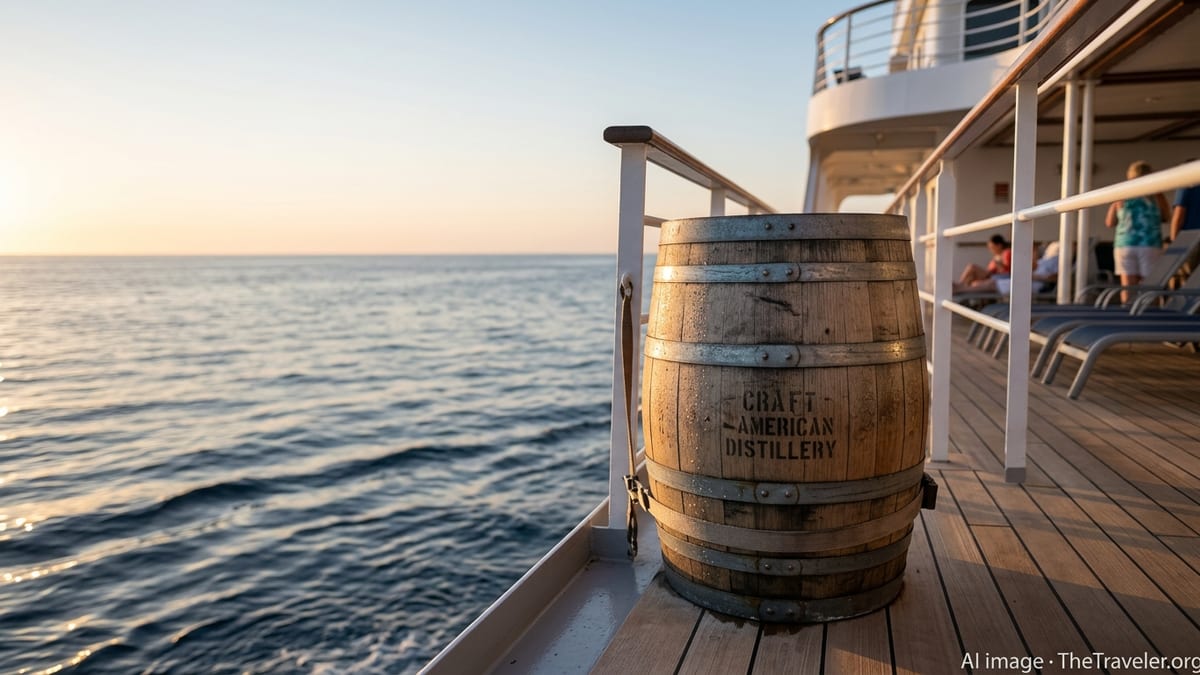
A Small-Batch Bourbon Meets a Small-Ship Cruise Line
The collaboration pairs Azamara’s destination-focused, small-ship fleet with Milam & Greene, an independent American whiskey producer known for climate and maturation experiments. Publicly available information on Milam & Greene’s portfolio highlights its emphasis on blending and aging in varied environments, from traditional Kentucky rickhouses to the intense heat of Texas hill country, an approach that lends itself naturally to testing ocean conditions.
While aging spirits at sea is not entirely new, the Azamara and Milam & Greene project is framed as a research-driven exercise in how constant motion, temperature swings, and salty air might influence a mature bourbon. The cask, identified in whiskey community coverage as a well-aged single barrel selected specifically for its structure, is being monitored as it journeys aboard an Azamara vessel on regular itineraries rather than a dedicated cargo route.
For Azamara, the initiative aligns with its broader push toward more immersive, story-driven experiences that connect shipboard life with the destinations and routes the ships follow. For Milam & Greene, it extends a track record of controlled experiments that compare how different climates and conditions shape whiskey over time, moving that question from land-based warehouses onto open water.
How the Bourbon-at-Sea Experiment Works
The aging experiment centers on a single barrel of Milam & Greene bourbon secured on board an Azamara cruise ship for a prolonged voyage. Reports indicate that the cask is already well matured on land before embarkation, with the sea phase functioning as an extended finishing period rather than the entirety of its aging. This structure reflects how other “aged at sea” projects have been handled in the wider whiskey industry, where time on the water is used to add a final layer of character.
At sea, the barrel is exposed to a near-constant rolling motion, daily temperature variation, and shifting humidity. Industry commentary on similar projects suggests that these elements can increase the frequency with which liquid moves in and out of the charred oak staves, potentially accelerating the extraction of wood compounds and altering flavor in ways that differ from static warehouse aging. The ship’s changing latitude and climate zones add another dimension, with the barrel likely experiencing both cooler, temperate conditions and warmer, more tropical stretches on a typical Azamara route.
Both partners are treating the barrel as a live experiment rather than a guaranteed flavor outcome. Observers note that previous sea-aged whiskeys from other producers have produced polarizing results, with some drinkers detecting brinier, darker profiles and others questioning whether the effect is mainly a novelty. The Azamara and Milam & Greene project is positioned in that context as an open question, promising data points for spirits enthusiasts and cruise guests once the liquid is eventually bottled.
What Cruise Guests Can Expect On Board
Azamara has not framed the barrel as a mass-market bar staple, but rather as a limited, narrative-driven element of its onboard food and beverage program. Cruise industry reporting on similar collaborations suggests that such experimental casks typically translate into small-batch bottlings, focused tastings, and curated bar experiences once the whiskey is ready, rather than open-pour offerings across the fleet.
Guests on the ship carrying the barrel are unlikely to see the cask stored in public spaces for safety and regulatory reasons, yet the story of the bourbon’s journey is expected to show up in menus, enrichment talks, or special events. Azamara already emphasizes longer time in port and local culinary themes as part of its programming; integrating a traveling barrel that has literally followed the itinerary is a natural extension of that narrative.
When the whiskey is eventually bottled, it may be offered first to Azamara guests or loyalty members, with potential allocations through Milam & Greene’s existing retail and direct-to-consumer channels. Pricing has not been widely publicized, but previous limited experiments from the distillery and other sea-aged releases from different brands suggest a premium positioning relative to standard bottlings, justified by scarcity and the cost of an unconventional aging environment.
Why Bourbon Makers Are Fascinated by the Sea
The Azamara and Milam & Greene collaboration reflects a broader trend in American whiskey: producers are increasingly willing to use unusual environments to test how maturation changes outside a traditional warehouse. Milam & Greene in particular has explored climate’s impact on flavor, with documented projects that split the same distillate between states to compare how heat, humidity, and seasonal swings influence proof and profile over several years.
Extending that curiosity to the ocean allows distillers to examine a different kind of variable. Instead of a fixed location with consistent weather patterns, the sea provides a mix of motion and microclimate changes as the ship moves from port to port. Some whiskey commentators argue that this can create more rapid oxidation and intensified oak contact, while others see the effect as subtle compared with the baseline years the bourbon spends aging on land.
Regardless of where experts land on the flavor debate, experiments like this one serve a clear purpose in a crowded premium spirits market. They offer a compelling story, a measure of scientific interest, and a limited release that appeals to collectors and curious travelers alike. For cruise lines trying to differentiate their onboard beverage programs, partnering with an innovation-minded distillery offers a way to anchor tastings and marketing around something truly specific to life at sea.
What Travelers and Whiskey Fans Should Know Before Booking
For travelers considering an Azamara cruise with the bourbon experiment in mind, the key takeaway is that this is a niche project rather than a fleetwide amenity. Availability of any resulting bottling will likely be limited, and guests should not assume that every voyage will feature pours from the sea-aged cask behind standard bar packages. Instead, the collaboration should be viewed as a specialty enhancement layered onto Azamara’s existing focus on destination immersion and elevated dining.
Whiskey enthusiasts weighing whether to seek out the final release may want to keep expectations calibrated to the experimental nature of the project. Even on land, single-barrel expressions from Milam & Greene have shown significant variation, and the added sea finish may or may not deliver dramatic changes in the glass. The value for many buyers will lie in tasting a documented piece of the bourbon’s journey and comparing it with the distillery’s land-aged counterparts, rather than chasing a guaranteed flavor profile.
From a broader travel-news perspective, the partnership underscores how cruise lines are moving beyond generic spirits lists toward curated, story-rich offerings that reflect specific brands and production methods. As other operators introduce rare bourbon programs, custom single barrels, and collaborations with notable distilleries, Azamara’s decision to put an experimental cask to sea suggests that the next wave of cruise beverage trends will lean heavily on provenance, process, and narrative as much as on age statements and proof.