

More news on this day
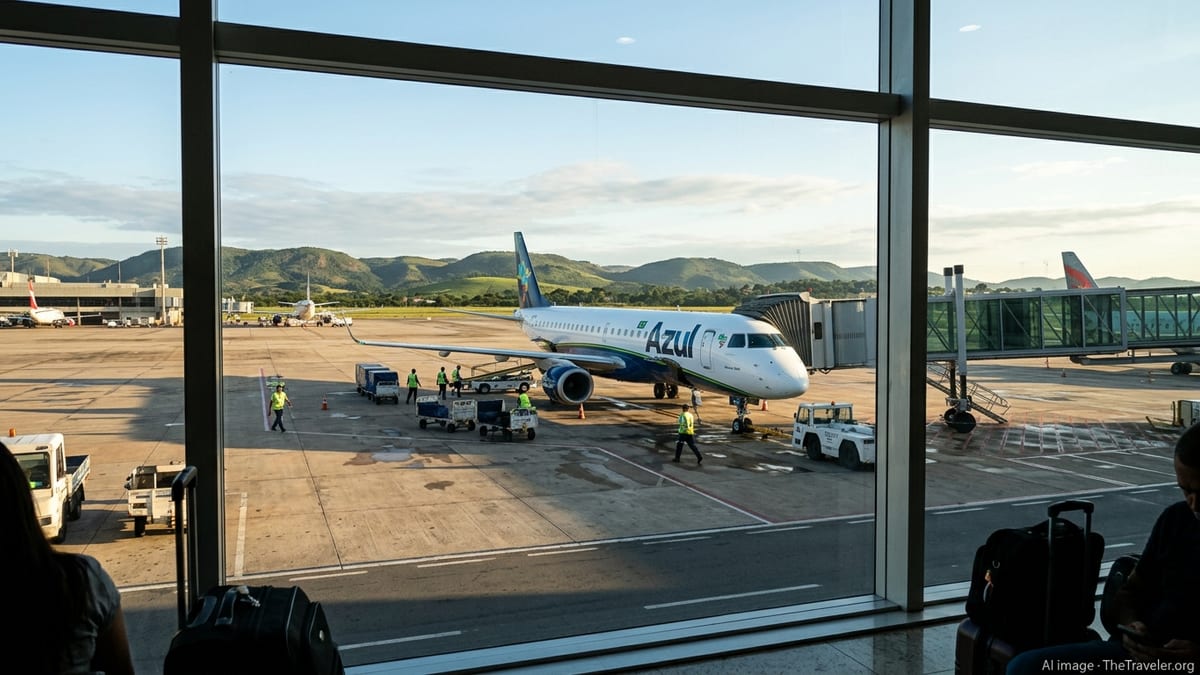
Azul Linhas Aéreas is set to tighten air links between Brazil and Uruguay with the launch of nonstop flights between Belo Horizonte and Montevideo, a new cross-border route that expands options for leisure and business travelers across South America.
Get the latest news straight to your inbox!
New Direct Connection Between Key Regional Hubs
According to information published by Brazilian and Uruguayan airport operators, Azul will begin operating the Belo Horizonte–Montevideo route in early March 2026, creating a direct link between Tancredo Neves International Airport, also known as Confins, and Montevideo’s Carrasco International Airport. Public airport data lists Azul among the carriers serving Montevideo, with Belo Horizonte marked as a new destination starting 4 March 2026.
The new service places Belo Horizonte’s international airport in a stronger position as a connecting platform for southern South America. Confins has grown in recent years as one of Azul’s primary hubs, complementing its traditional base in Campinas and supporting an expanding mix of domestic and international routes.
On the Uruguayan side, Carrasco International Airport continues to broaden its regional network, with Brazil representing one of its most important outbound and inbound markets. A nonstop Belo Horizonte connection adds to existing services with other Brazilian cities and gives travelers in Uruguay more direct access to a major Brazilian metropolitan region.
While detailed schedules and weekly frequency patterns may evolve as the launch date approaches, the listing of the route in official airport information underlines Azul’s intent to anchor itself more firmly in the Brazil–Uruguay corridor and capture a share of pent-up demand for direct flights between the two markets.
Boost for Tourism and Business Travel
The introduction of nonstop service between Belo Horizonte and Montevideo is expected to ease travel for tourists heading in both directions. Uruguay has positioned Montevideo and nearby coastal destinations such as Punta del Este as attractive options for Brazilian visitors, while Minas Gerais offers historical towns, gastronomy and ecotourism that appeal to Uruguayan travelers.
Previously, many passengers moving between the two cities had to connect via other Brazilian hubs or regional gateways, lengthening total travel time. The new direct connection shortens the journey and removes one or more layovers, which industry observers note can be a decisive factor for weekend and short-stay trips.
The route also carries potential benefits for corporate travel and small and medium-sized enterprises. Belo Horizonte is one of Brazil’s largest urban economies, with mining, technology, services and manufacturing activities, while Montevideo serves as Uruguay’s main financial and logistics center. A shorter, more predictable journey may encourage more frequent in-person meetings, trade missions and sector-specific events between the two cities.
Travel analysts suggest that cross-border routes of this kind often stimulate new demand rather than simply redistributing existing passengers, as easier access can lead to additional trips that previously seemed too complex or time-consuming.
Strengthening Azul’s Strategy in Belo Horizonte
Publicly available information on Azul’s network shows that the airline has been steadily deepening its presence in Belo Horizonte in recent years, adding domestic connections and select international links as part of a multi-hub strategy. The Belo Horizonte–Montevideo route fits that pattern by using the Minas Gerais capital as a springboard for international expansion.
By feeding passengers from secondary Brazilian cities into Confins, Azul can channel traffic onto regional international flights such as the planned Montevideo service. This approach may help sustain the new route year-round by drawing travelers from beyond the immediate Belo Horizonte catchment area, including other parts of Minas Gerais and neighboring states.
The move also diversifies Azul’s South American portfolio, which already includes flights to other countries in the region. Industry commentary notes that the carrier has been exploring opportunities that can be served economically with its fleet of narrow-body and regional aircraft, aligning capacity with demand on medium-haul routes like Belo Horizonte–Montevideo.
As competition intensifies on key domestic trunk routes within Brazil, additional international services from Belo Horizonte may offer Azul new revenue streams and greater brand visibility among travelers across the Southern Cone.
Implications for Regional Connectivity and Passengers
The launch of the Belo Horizonte–Montevideo route contributes to a broader trend of airlines rebuilding and recalibrating regional networks in South America. Industry reports highlight that carriers are increasingly targeting medium-sized city pairs that have sufficient demand for point-to-point services but were previously reliant on connections through traditional mega-hubs.
For passengers, the main advantages of the new link include reduced total travel time, fewer connections and the possibility of more convenient departure and arrival times tailored to leisure and business needs. Travelers connecting from other Brazilian cities into Belo Horizonte may also find improved itineraries to Uruguay, particularly if schedules are coordinated to minimize layovers at Confins.
From a tourism perspective, officials and local stakeholders in both countries are likely to view the route as an additional tool for promoting cross-border travel. Easier access can support hotel occupancy, restaurant activity and cultural attractions in Belo Horizonte, Montevideo and surrounding regions, especially during peak holiday and event periods.
As airlines across South America refine their post-pandemic strategies, the Belo Horizonte–Montevideo service stands as an example of how targeted route launches can enhance regional connectivity while offering travelers new nonstop options between two growing urban centers.