

More news on this day
Azul Linhas Aéreas Brasileiras has launched legal action against TAP Air Portugal over an alleged unpaid debt, while Air Belgium has retired its last Airbus A330 freighter, two developments that underscore how legacy financial disputes and evolving fleet strategies are reshaping parts of the global aviation landscape.
Get the latest news straight to your inbox!
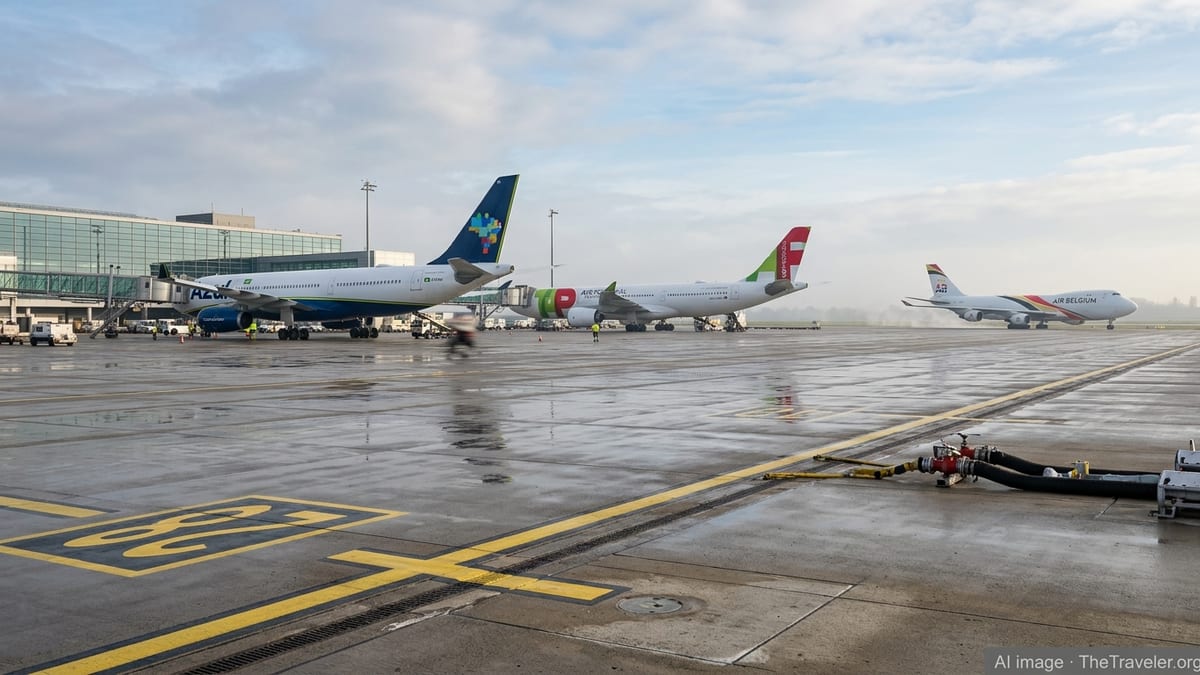
Azul Seeks to Recover Legacy TAP Investment
Publicly available information indicates that Azul’s lawsuit centers on a disputed obligation dating back to the Brazilian carrier’s former shareholding in TAP Air Portugal. Azul became a shareholder in TAP in 2016, helping to support the Portuguese airline’s then-privatization and restructuring. In return, Azul extended a shareholder loan reportedly valued in the tens of millions of euros, with expectations that the amount would be treated as senior debt and eventually repaid.
Subsequent changes in TAP’s ownership structure and the Portuguese state’s intervention during the pandemic left Azul holding a claim that it argues has not been honored. Reports in the Portuguese business press describe Azul’s current legal move as an effort to enforce repayment of that legacy financing, now significantly higher when accumulated interest is included. The case highlights the complex financial web created when airlines swap equity and loans during restructuring efforts.
According to published coverage, Azul is seeking redress in Portuguese courts, arguing that the state-backed rescue of TAP unfairly sidelined its rights as a creditor. TAP has previously faced scrutiny over the handling of state aid and legacy liabilities, and the new legal challenge introduces an additional layer of uncertainty around how remaining private claims will be resolved. While the precise timeline and sums are subject to legal determination, the dispute illustrates how transactions agreed a decade ago can still reverberate through airline balance sheets today.
Industry analysts note that Azul’s move comes at a time when the Brazilian carrier is working to strengthen its own financial position after the pandemic, making the recovery of any significant outstanding sums from TAP strategically important. For TAP, which has reported a gradual improvement in operating performance, the lawsuit represents an unwelcome reminder that legacy capital structures can cast a long shadow even as traffic and revenue rebound.
Broader Implications for TAP’s Restructuring Path
The legal confrontation with Azul lands at a sensitive moment for TAP Air Portugal. The airline has been implementing a state-backed restructuring plan aimed at restoring long-term viability after substantial pandemic-era losses. That program has involved cost-cutting measures, capacity adjustments, and negotiations with employees and creditors, with the stated aim of returning TAP to sustainable profitability and paving the way for a potential future privatization.
Reports indicate that European regulators have closely monitored TAP’s restructuring, particularly in relation to the competitive impact of state aid in the European Union market. Any additional claims from former shareholders or private lenders risk complicating that narrative. Publicly available financial disclosures show that TAP has worked to reduce debt and improve margins, but lingering disputes over past financing could influence how investors view the airline’s risk profile.
The Azul lawsuit may also affect perceptions of Portugal’s handling of foreign investment in its aviation sector. When Azul initially backed TAP, the partnership was presented as a bridge between South America and Europe, aligning networks across the Atlantic. The deterioration of that relationship into litigation underscores how fragile strategic alliances can become when financial expectations diverge from political or regulatory decisions.
For travelers, there is no immediate operational impact reported from the legal action. TAP continues to serve its long-haul and European networks, and Azul remains a key player in Brazil’s domestic and regional markets. However, the outcome of the case could influence both airlines’ balance sheet strength, potentially shaping future fleet investment, network growth, and alliance decisions.
Air Belgium Closes the Chapter on A330 Freighters
While Azul and TAP battle in court, another European carrier is drawing a line under its own A330 story. Air Belgium has retired its last Airbus A330 freighter, according to aviation databases and specialist fleet trackers, marking the end of a chapter that saw the airline lean heavily on the type during its transition from passenger to cargo operations.
Ch-aviation data and subsequent industry coverage show that Air Belgium withdrew its final A330-200F in 2023, winding down the operation of four ex-Qatar Airways freighters that had been flown under a capacity deal for French logistics group CMA CGM. Later, the airline pivoted to Airbus A330-200 passenger-to-freighter conversions, using the flexible twinjet to support long-haul cargo services from Belgium as its scheduled passenger flights were gradually discontinued.([ch-aviation.com](https://www.ch-aviation.com/news/134306-air-belgium-retires-last-a330-200f?utm_source=openai))
By late 2023, Air Belgium had exited regular passenger service and concentrated on wet-lease and cargo work. As the cargo market cooled from its pandemic peak and as the airline’s financial challenges deepened, management began reshaping the fleet around larger aircraft with higher payloads. Reports from specialized aviation outlets describe a phased exit from A330 converted freighters in favor of Boeing 747-8F aircraft operated under ACMI and cargo contracts.([ch-aviation.com](https://www.ch-aviation.com/news/156092-air-belgium-to-exit-a330-converted-freighters-ceo?utm_source=openai))
The retirement of the last A330 freighter is part of a broader restructuring that has seen Air Belgium taken over by CMA CGM and repositioned as a cargo-only operator. Updated fleet lists indicate that the carrier now focuses on a small number of high-capacity 747-8F aircraft, leaving its former A330 passenger, freighter, and neo fleet behind. For Airbus, the withdrawal removes one European operator from the A330 freighter customer base, even as the type remains popular in cargo fleets worldwide.([avitrader.com](https://avitrader.com/2025/05/01/cma-cgm-air-cargo-finalises-acquisition-of-air-belgium/?utm_source=openai))
Shifting Strategies in the Air Cargo Market
The combination of Azul’s legal claim against TAP and Air Belgium’s fleet reshaping highlights two sides of the same coin in modern aviation: capital structure on one hand and asset deployment on the other. Airlines increasingly depend on complex financial arrangements, from shareholder loans to state-backed recapitalizations, while simultaneously making high-stakes choices about which aircraft to operate in a volatile market.
On the cargo side, Air Belgium’s decision to move away from medium-payload A330 freighters toward larger 747-8F jets signals a bet on high-volume lanes and contract flying for major logistics customers. Industry observers note that, after the sharp spike in demand during the pandemic, the dedicated freighter market has normalized, favoring operators with scale, efficient utilization, and the right mix of aircraft size and range. Returning leased A330 freighters to lessors reduces Air Belgium’s capital commitments but also narrows its flexibility to serve thinner routes with smaller widebodies.([ch-aviation.com](https://www.ch-aviation.com/news/156092-air-belgium-to-exit-a330-converted-freighters-ceo?utm_source=openai))
For passenger airlines such as TAP and Azul that also carry cargo in the bellyholds of their fleets, ongoing disputes over legacy financing may indirectly influence cargo capacity decisions. A more leveraged balance sheet can delay or constrain investment in new-generation widebodies that offer improved cargo capabilities. Conversely, a successful recovery of funds, as Azul is seeking through its lawsuit, could support fleet renewal and network expansion in markets where cargo and passenger demand are closely linked.
Global aviation trends suggest that the boundary between passenger and cargo strategies continues to blur. Logistics groups like CMA CGM, which has deepened its role in air freight through the acquisition of Air Belgium’s cargo arm, are taking a more direct hand in aircraft deployment. At the same time, airlines are navigating long-tail issues from past restructurings, as illustrated by Azul’s legal action over its historic involvement in TAP.([avitrader.com](https://avitrader.com/2025/05/01/cma-cgm-air-cargo-finalises-acquisition-of-air-belgium/?utm_source=openai))
Together, these developments demonstrate how decisions made years earlier about investments, partnerships, and fleet types can resurface in the form of lawsuits and retirements. For the traveling public and shippers alike, the visible changes may be subtle, but behind the scenes, airlines and logistics players are redrawing financial and operational maps in response to shifting market realities.