

More news on this day
British Airways is preparing a significant long-haul push for the northern winter 2026 season, with publicly available information indicating plans for a new connection to Melbourne and the resumption of services to Colombo, moves that could reshape options for travellers between Europe, Asia and Australia.
Get the latest news straight to your inbox!
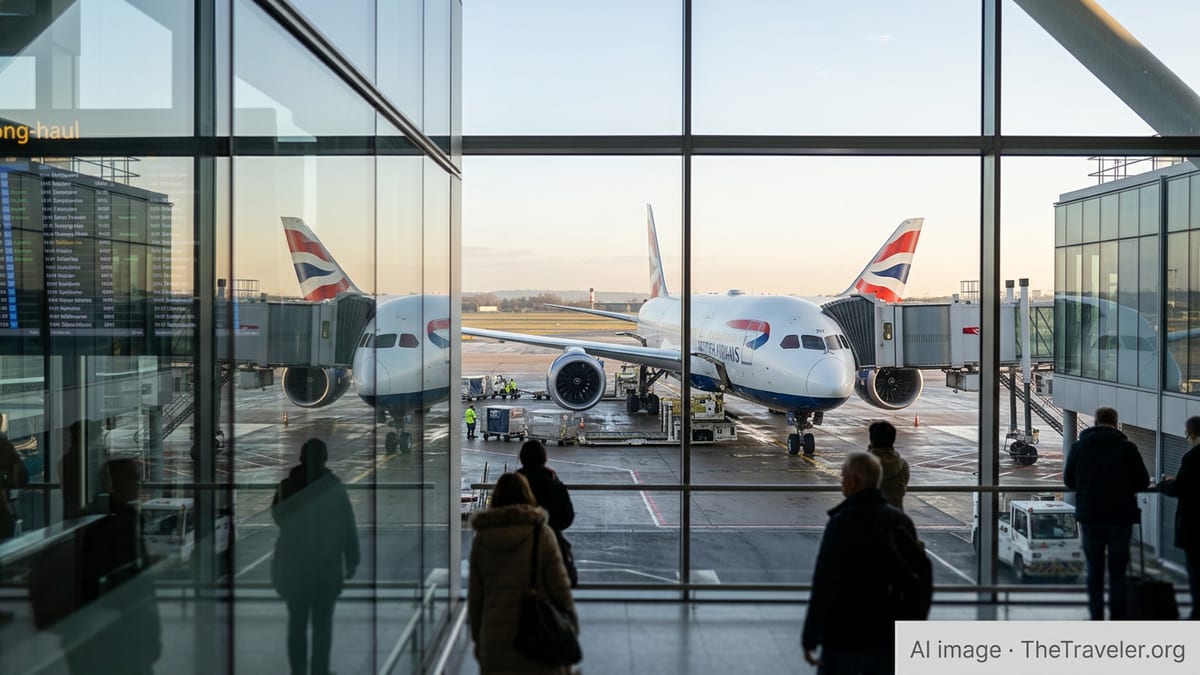
Winter 2026 Marks a New Phase in British Airways’ Network Strategy
British Airways has been steadily rebuilding and reshaping its global network since long-haul traffic began to recover, and the northern winter 2026 schedule is emerging as a pivotal moment in that strategy. Industry data and published route information for 2025 and 2026 show the airline tilting more capacity toward long-haul leisure and visiting-friends-and-relatives markets, while reinforcing its position on key trunk routes linking Europe with Asia and Australia.
The planned addition of a new Melbourne service would represent a major reinforcement of the so-called Kangaroo Route, complementing the carrier’s existing London–Singapore–Sydney operation. For Australia-bound travellers, this would restore a second British Airways-branded option into the country’s east-coast market, in competition with Middle Eastern and Asian hub carriers that currently dominate the London–Australia corridor.
At the same time, the scheduled return of Colombo as a British Airways destination in late October 2026 highlights the carrier’s renewed interest in South Asia. Industry databases listing British Airways destinations show Bandaranaike International Airport near Colombo marked to resume in October 2026 as part of the airline’s global network. Together, Melbourne and Colombo are set to anchor a broader winter 2026 expansion that also includes capacity growth on established Asian and Middle Eastern routes.
New Melbourne Link Reinforces the Historic Kangaroo Corridor
Australia has long been one of the most competitive long-haul markets from the United Kingdom, and British Airways’ planned move into Melbourne during the winter 2026 period is expected to be closely watched by both travellers and rival airlines. While the carrier already connects London to Sydney via Singapore, re-entering the Melbourne market would give it a stronger foothold in Australia’s second-largest city, a key gateway for both tourism and business travel.
Published schedule material for winter 2026 points to fresh British Airways services touching Melbourne, aligning with a broader wave of Europe–Australia expansion that also includes new routes from other European carriers. For British Airways, a Melbourne service would re-establish a branded presence in a market that has traditionally seen heavy reliance on partner connections via hubs such as Singapore and Kuala Lumpur.
For passengers, the added link is expected to translate into more one-stop options between the United Kingdom and southern Australia, as well as improved connectivity to secondary cities via Australian domestic partners. Travel industry reporting suggests sustained demand on the UK–Australia corridor, with premium leisure and long-stay traffic driving bookings, particularly over the northern winter when many European travellers seek summer conditions in the southern hemisphere.
In commercial terms, Melbourne adds depth to British Airways’ long-haul portfolio at a time when capacity is being redistributed from some underperforming short-haul and transatlantic routes. Analysts following the carrier’s network decisions have noted that long sectors with strong year-round demand can help balance seasonal fluctuations elsewhere in the system.
Gatwick–Colombo: A Strategic Return to Sri Lanka
The resumption of services to Colombo from October 2026 marks another important element of British Airways’ winter 2026 expansion. According to widely referenced destination lists and timetable data, Colombo is scheduled to return to the airline’s network from 23 October 2026, with flights operating from London Gatwick to Bandaranaike International Airport.
The choice of Gatwick positions the route squarely in the leisure and visiting-friends-and-relatives segment, aligning Colombo with other long-haul destinations served from the airport. Sri Lanka’s tourism sector has been rebuilding, and a nonstop British Airways link from London is expected to appeal to both UK holidaymakers seeking beach and cultural itineraries and to the sizeable Sri Lankan diaspora in Britain.
Industry coverage indicates that the Gatwick–Colombo route is planned to operate several times per week in the initial phase, slotting into British Airways’ broader pattern of adding selective, high-interest leisure destinations to its portfolio. By using Gatwick rather than Heathrow, the airline can make use of available slots while also tapping a catchment area south of London that already supports a range of long-haul leisure services.
The Colombo return also restores a historic link between the UK and Sri Lanka at a time when competition on the route largely comes from carriers routing passengers via the Gulf or other Asian hubs. A nonstop option from London is expected to shorten journey times and simplify itineraries for travellers who might otherwise face at least one additional connection.
Connecting Europe, Asia and Australia Through Strengthened Hubs
The new Melbourne and Gatwick–Colombo routes sit within a wider pattern of British Airways strengthening eastbound connectivity through London. Over the 2025 and 2026 seasons, the airline has already announced increased frequencies to Bangkok and multiple Middle Eastern hubs, as well as new or returning services in Asia. Published schedules for summer 2026 show higher frequencies on routes such as London–Bangkok and London–Miami, signalling a willingness to invest in markets with robust long-haul demand.
These capacity moves are designed to reinforce London Heathrow and Gatwick as key transfer points for traffic flowing between North America, Europe, Asia and Australia. With Melbourne and Colombo added to the map, British Airways can offer more one-stop itineraries to passengers originating in the United States or continental Europe who are connecting through London on the same ticket.
Publicly available analysis from aviation and travel publications suggests that carriers are increasingly focusing on “triangle” flows that link three world regions, rather than simple point-to-point traffic between two. For British Airways, bolstering eastbound long-haul routes allows it to capture travellers heading from North America to Asia or Australia by offering competitive connection times and seamless baggage and ticketing arrangements.
The winter 2026 schedule changes also coincide with a broader fleet renewal and cabin-upgrade program at the airline, with new long-haul aircraft and reconfigured cabins gradually entering service. While specific aircraft allocations for the Melbourne and Colombo routes have not yet been widely detailed, the trend toward deploying modern widebody jets on longer sectors points to an emphasis on comfort and fuel efficiency.
Implications for Global Travellers and Competitive Dynamics
For travellers, the British Airways winter 2026 expansion promises more choice, particularly for itineraries that have historically required multiple connections. Nonstop Gatwick–Colombo flights reduce journey complexity for UK-based passengers, while a new Melbourne service would give those heading to southern Australia an additional branded option alongside existing combinations via Asian and Middle Eastern hubs.
In practical terms, the changes could also influence pricing and availability. Additional capacity into both Sri Lanka and Australia has the potential to ease peak-season pressure, while travellers using loyalty points may find more opportunities to redeem for long-haul journeys when new routes and frequencies are introduced. Travel trade reporting already highlights strong interest in Australia and South Asia for late 2025 and 2026 departures, suggesting that added capacity is likely to be met with solid demand.
For the wider market, British Airways’ moves illustrate how European network carriers are repositioning themselves in a post-pandemic environment. Rather than focusing solely on traditional business-heavy routes, airlines are increasingly targeting high-yield leisure and mixed traffic flows that can sustain year-round operations. The twin additions of Melbourne and Colombo for winter 2026 underscore this shift, pointing to a model in which long-haul leisure destinations play a central role in network planning.
As schedules for winter 2026 continue to firm up, global travellers looking ahead to that period can expect British Airways to feature more prominently in searches for flights to Sri Lanka and Australia. The combination of expanded eastbound capacity, a strengthened London hub and renewed focus on long-haul leisure markets positions the carrier as a key player in the next phase of international travel recovery.