

More news on this day
Passengers across the UK and France faced hours of disruption as British Airways and Air France delayed 183 flights and cancelled eight more, stranding travellers in Paris, Edinburgh, London, Nice and other major cities at the height of a busy winter travel period.
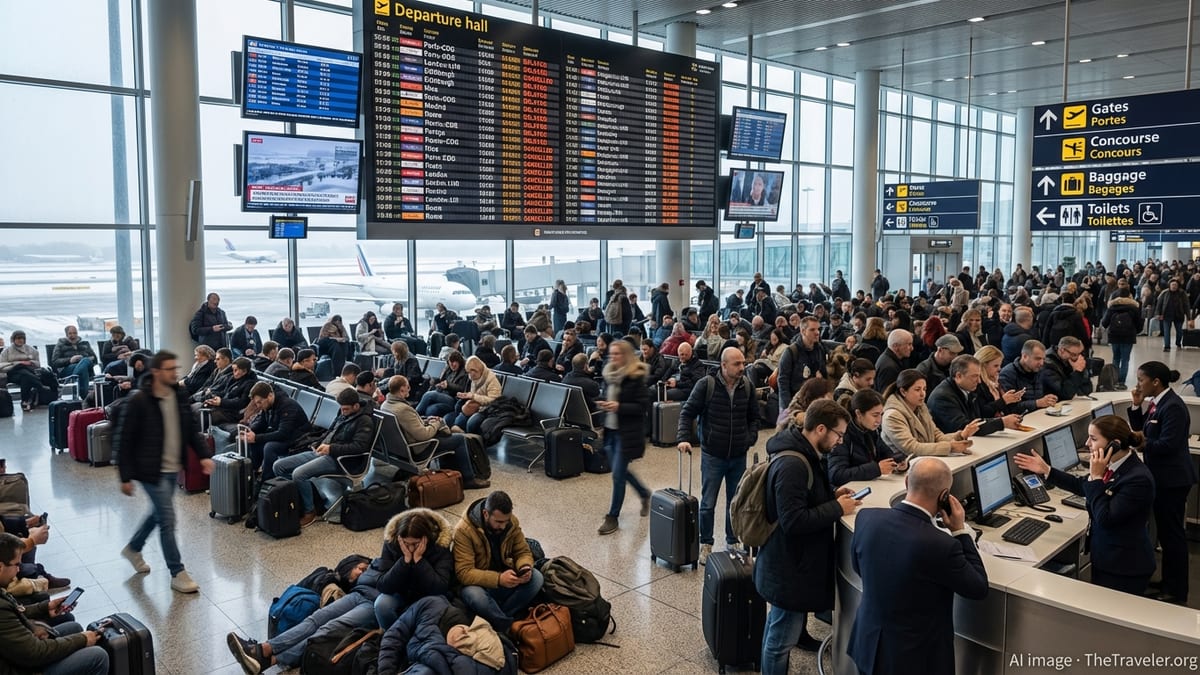
Wave of Disruptions Hits Key European Hubs
The latest bout of disruption struck as airports and airlines were already under pressure from heavy winter traffic, lingering weather issues and tight staffing levels. British Airways and Air France together delayed 183 flights and cancelled eight, according to operational data compiled from major hubs in the UK and France. The impact rippled well beyond the affected departures, as missed connections and aircraft out of position triggered knock-on delays throughout the day.
In France, operations at Paris Charles de Gaulle and Orly were heavily affected, with long queues forming at departure halls as passengers waited for updated departure times. On the UK side, London Heathrow and London City saw large clusters of delayed services, while Edinburgh reported extended waits for both domestic and European flights. Smaller hubs served by the two carriers also reported delays as aircraft and crews were diverted to protect long-haul and priority routes.
While the precise causes varied by route, airline and airport sources cited a familiar cocktail of factors: weather-related restrictions earlier in the week, crew and ground-handling shortages, and tight aircraft rotations that left little margin when schedules slipped. For passengers watching departure boards fill with red “delayed” and “cancelled” notifications, the nuances mattered less than the mounting uncertainty over when, and even whether, they would travel.
Operational experts noted that such clusters of disruption have become more frequent in recent seasons, as airlines operate fuller schedules with leaner buffers in a bid to maximise aircraft utilisation. In practice, that means that a relatively small number of initial delays can quickly grow into a system-wide snarl, particularly at hub airports like Heathrow and Charles de Gaulle where a single aircraft may be scheduled to operate several legs in a single day.
Scenes of Confusion in Paris and Nice
At Paris Charles de Gaulle, one of Europe’s busiest hubs, passengers described early morning departures slipping into the afternoon as aircraft arrived late from previous legs or were held for crew. Families bound for school-holiday breaks and business travellers on tight schedules shared crowded seating areas, with some forced to sit on the floor or cluster around scarce power outlets to keep phones charged for rebooking and updates.
In Nice, delays to Air France services sparked queues that stretched through the terminal as ground staff attempted to process rebookings and meal vouchers. Domestic flights to Paris and connections to Northern European cities were particularly affected, as the airline juggled available aircraft to maintain at least limited long-haul connectivity. Some passengers reported being offered routing via alternative hubs or overnight stays in airport hotels when same-day options were exhausted.
The atmosphere oscillated between resigned frustration and flashes of anger. With many flights initially pushed back in 30- or 60-minute increments before being further delayed, travellers complained that it was difficult to make informed decisions about whether to stay airside, attempt to rebook on competing carriers or abandon trips altogether. Public-address announcements struggled to keep pace with fast-changing schedules, pushing many passengers to rely instead on airline apps and social media for updates.
For local tourism and hospitality businesses along the French Riviera, the disruption was a double blow. Not only did inbound visitors arrive late or not at all, but outbound residents found themselves stuck at the airport rather than checking in at ski resorts or city-break destinations. Hoteliers in Nice reported a rush of last-minute bookings from stranded passengers unwilling to spend the night on terminal benches.
British Travellers Face Gridlock in London and Edinburgh
Across the Channel, British Airways customers experienced similar scenes at London’s main airports. At Heathrow, a long line of delayed departures to European capitals and domestic destinations formed through the morning and early afternoon, while a smaller number of outright cancellations forced passengers onto later flights or alternative routes. Many short-haul services were held as the airline sought to reset its operation and prioritise transatlantic and other long-haul departures.
At London City, which primarily serves business travellers, even relatively short delays had outsized consequences. Morning flights that would normally carry commuters to meetings in European financial centres departed late enough to render same-day round trips impractical, causing missed appointments and hastily arranged video calls in crowded departure lounges. Travellers reported difficulty reaching call centres and expressed frustration at limited same-day alternatives from the compact, single-runway airport.
In Edinburgh, passengers bound for London, Paris and other European cities reported queues snaking around check-in areas as delayed inbound aircraft disrupted onward schedules. As aircraft and crew arrived late from earlier legs, turnaround times lengthened and airport capacity tightened, leaving some departures significantly behind schedule. With limited alternative services late in the day, those on evening flights faced a heightened risk of overnight disruption if delays continued to accumulate.
Rail options offered some relief to domestic travellers within the UK, but for those with time-sensitive connections to long-haul flights or onward journeys beyond Europe, the sudden breakdown in flight schedules left few practical alternatives. Travel agents and corporate travel managers worked overtime to piece together new itineraries, often relying on remaining seats at premium prices on competing carriers.
Knock-On Effects Beyond Main Hubs
Although the most visible scenes of disruption were at headline airports in Paris, London, Nice and Edinburgh, secondary cities across the UK and France felt the impact. Regional airports that depend heavily on a small number of daily services from British Airways or Air France saw local departures slide behind schedule or disappear from the board altogether when aircraft were redeployed to cover core routes.
In some cases, passengers at smaller airports reported learning of cancellations only after multiple rolling delays, as operations teams waited to see whether aircraft and crews could be repositioned. When final cancellations were confirmed, options for rebooking were limited, with the next available flight sometimes several days away during a peak travel period. For leisure travellers, that often meant lost nights at hotels or resorts, while business travellers missed conferences or contract-critical meetings.
Ground transport networks also absorbed some of the fallout. Intercity trains between major French and UK cities reported higher-than-usual demand as travellers abandoned delayed flights and sought more predictable alternatives. Car rental desks at affected airports saw a run on vehicles as some passengers opted to drive several hours to reach larger hubs with better rebooking options or to salvage parts of their itineraries by road.
The ripple effects extended into cargo operations as well. Bellyhold freight on affected passenger flights was delayed or rerouted, disrupting just-in-time supply chains that rely on regular airlift for time-sensitive goods. Logistics companies reported having to re-plan overnight flows to compensate for missing capacity on key routes between the UK and continental Europe.
Weather, Staffing and Tight Schedules Under Scrutiny
While neither British Airways nor Air France immediately attributed the day’s disruption to a single cause, operational analysts pointed to a combination of weather hangovers, staffing gaps and very tight aircraft scheduling. Earlier in the week, storms and low-visibility conditions across parts of Europe had triggered air traffic control restrictions, forcing airlines to trim schedules and delay flights. Even after skies cleared, the resulting misalignment of aircraft and crews continued to affect operations.
Staffing shortages remain a persistent challenge for many carriers, particularly in ground-handling, maintenance and customer-service roles. When overnight rotations run late and crews reach their legal duty-time limits, airlines can be left with aircraft on the ground and no qualified team available to operate the next sector. In an environment where aircraft spend most of the day in the air with minimal ground buffer, even modest hiccups can lead to cascading delays.
Industry observers note that both British Airways and Air France, like many of their peers, are still fine-tuning post-pandemic schedules to balance high demand with operational resilience. Operating close to capacity with limited spare aircraft and few standby crews can produce strong short-term financial results, but at the cost of agility when conditions turn against the operation. Travellers, in turn, experience that fragility directly when a single morning delay translates into missed evening connections.
Recent academic work on airline routing and delay management has highlighted the importance of building resilience directly into aircraft assignment and turnaround planning. Techniques that prioritise buffers at critical hubs and along congested routes may reduce overall utilisation slightly, but can materially lower the risk of mass disruption events that affect thousands of passengers in a single day.
Stranded Passengers Seek Information and Support
For stranded passengers, the immediate priority was not systemic resilience but practical information and support. Long lines formed at airline service desks in Paris, London, Nice and Edinburgh as travellers sought new itineraries, meal vouchers and hotel accommodation. With many flights heavily booked, front-line staff often had limited flexibility, leaving some passengers to wait hours before learning whether they would travel the same day.
Digital tools partially eased the burden. Many British Airways and Air France customers received push notifications about delays, rebooked flights and boarding gate changes through airline apps and text messages. However, several passengers noted that app updates sometimes lagged behind terminal announcements or displayed conflicting information, adding to confusion. Those without smartphones or with limited data access were at a particular disadvantage.
Families with young children, elderly passengers and those with reduced mobility were among the hardest hit. Extended waits in crowded terminals tested patience and stamina, while last-minute changes of gate or departure time posed additional challenges. Volunteer assistance teams and airport staff worked to prioritise vulnerable travellers, but passenger advocates said more consistent protocols are needed to ensure that support reaches those who need it most during major disruption events.
Social media platforms filled with images of long queues, crowded departure halls and departure boards filled with red delay indicators. While some posts praised individual staff members for their efforts under pressure, many criticised what they saw as poor planning, limited transparency and inconsistent handling of compensation and care obligations.
Passenger Rights and Compensation in Focus
The chaos reignited debate over passenger rights and compensation regimes in both the UK and the European Union. Under existing European rules mirrored in UK law, travellers whose flights are cancelled or severely delayed may be entitled to assistance, rerouting or refunds, and in some cases to fixed-sum compensation if the disruption is deemed to be within the airline’s control. However, the interpretation of those rules can be complex and often hinges on the specific reasons given for each delay.
Consumer groups in France pointed to recently tightened national procedures intended to make it easier for passengers to pursue compensation claims and to encourage mediation before court action. They argued that days like this illustrate why clear, accessible information at the airport and online is essential, so that travellers understand when they can claim and what documentation they should keep. Similar calls were heard from UK consumer advocates, who want airlines and airports to standardise how they communicate rights and remedies during mass disruptions.
Legal specialists cautioned that not all affected passengers would qualify for monetary compensation, particularly if airlines can demonstrate that adverse weather or air traffic control restrictions played a decisive role. Nonetheless, they stressed that carriers must still provide basic care, including refreshments, communication facilities and accommodation where required, regardless of the ultimate cause of the disruption.
For many travellers, however, the immediate concern was less about legal rights than about salvaging holidays, family visits or urgent work trips. Queues at currency-exchange counters, pharmacy kiosks and airport shops underscored how quickly an overnight delay can turn a short flight into an unplanned layover, complete with extra expenses that are not always fully reimbursed.
Airlines Pledge Operational Reviews as Peak Season Continues
As operations gradually stabilised through the evening, both airlines began the process of recovering aircraft and crew positions in preparation for the following day’s schedules. Additional standby crews were reportedly called in at key hubs, while some non-essential flights were trimmed or consolidated to free capacity for disrupted passengers. Airport authorities emphasised that they were working closely with carriers and air traffic managers to smooth traffic flows and minimise further knock-on effects.
Industry insiders say episodes like this typically trigger internal post-mortems within airlines, examining where planning assumptions failed, how communication performed under stress and what changes might reduce the likelihood of a repeat. Options can include adjusting turnaround times on vulnerable routes, increasing the number of reserve aircraft and crews, or rebalancing schedules to avoid very tight connections at peak times.
With the European winter travel season still in full swing, attention now turns to how quickly British Airways and Air France can rebuild passenger confidence. Frequent flyers and corporate clients, in particular, will be watching closely to see whether the disruption is treated as an unavoidable blip or as a catalyst for more robust planning. Travel managers are likely to press airlines for clearer contingency protocols and better real-time information tools that can help them support employees on the road.
For the thousands of passengers who spent unexpected hours or nights in terminals from Paris to Edinburgh and London to Nice, the hope is that today’s chaos will at least prompt changes that make future journeys smoother. Until then, travel experts continue to advise holidaymakers and business travellers alike to build in extra buffer time, monitor flight status closely and understand their rights before they arrive at the airport.