

More news on this day
British Airways and Lufthansa are sharply cutting global flight schedules after a cascading collapse of Middle East airspace turned one of the world’s busiest aviation crossroads into a sprawling no-go zone, disrupting journeys between Europe, Asia, Africa and the Americas.
Get the latest news straight to your inbox!
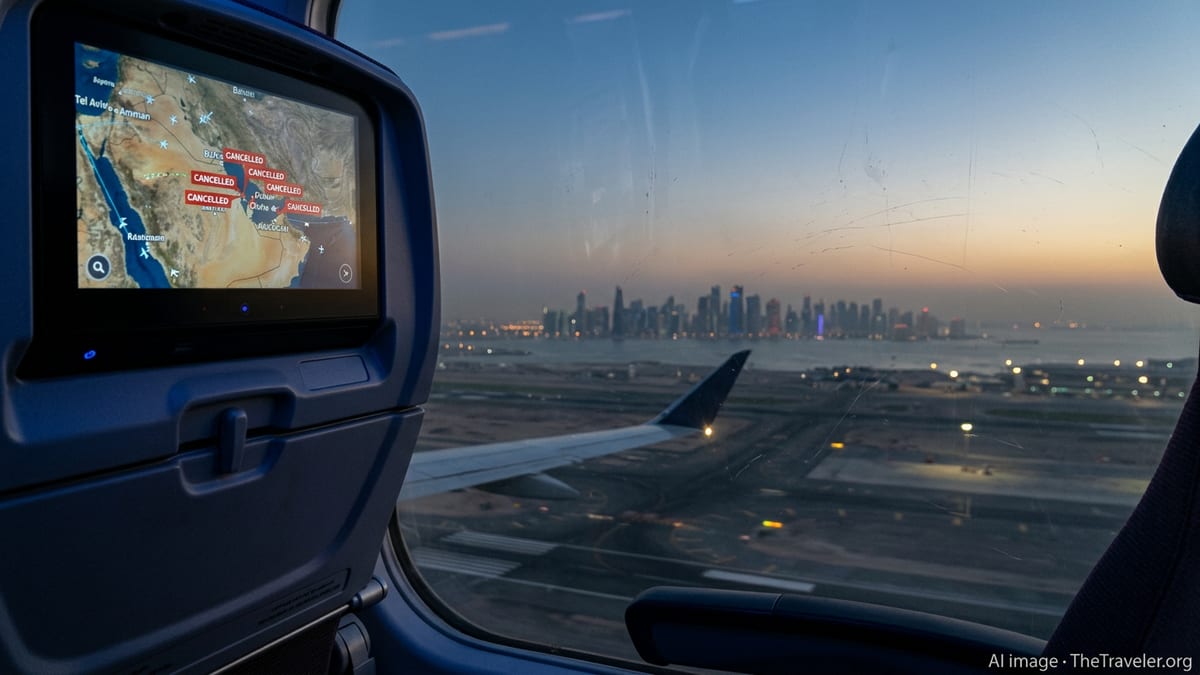
Airspace Lockdowns Ripple Across Global Networks
The latest round of cuts by the two European giants follows sweeping airspace closures triggered by United States and Israeli strikes on Iran on 28 February 2026 and subsequent regional escalation. Publicly available information shows that large portions of the skies over Iran, Iraq, Israel, Syria, Kuwait and parts of the Gulf remain effectively shut to routine commercial traffic, forcing airlines either to cancel flights outright or adopt lengthy detours.
According to recent industry analyses, more than 4,000 flights per day were being canceled at the height of the crisis as airspace over key hubs was withdrawn and major airports, including in the United Arab Emirates and Iran, suffered direct damage or security shutdowns. Travel advisories and airport data indicate that Iran’s main international gateway near Tehran is now without regular commercial service, with international carriers pulling out as the conflict intensified.
These closures come on top of earlier constraints over Russia and parts of Pakistan, turning traditional Europe to Asia corridors into a constantly shifting maze of exclusions. For network carriers such as British Airways and Lufthansa, which rely on Middle Eastern airspace for profitable long-haul links, the loss of these corridors has quickly translated into large-scale schedule cuts and a fundamental rethink of route planning.
Security briefings aimed at corporate and government clients in early March noted that airlines were prioritizing risk avoidance and operational resilience over timetable efficiency, with route planners instructed to keep aircraft well clear of potential flashpoints even where overflight technically remains possible.
British Airways Pulls Back from Gulf and Levant
British Airways has become one of the most visible symbols of the new disruption. Recent schedules and travel bulletins show that the carrier has suspended all flights to Dubai, Amman, Bahrain and Tel Aviv through at least 31 May 2026, with Abu Dhabi services halted for an even longer period. Coverage in specialist travel outlets indicates that the airline executed an initial wave of cancellations in late February, then moved to a broader blackout of Gulf routes as airspace closures widened.
Consumer-facing guidance for affected passengers shows Dubai at the heart of the British Airways retrenchment. The airline has now frozen London to Dubai operations through the end of May, after a series of Iranian strikes and intermittent closures of United Arab Emirates airspace made reliable scheduling impossible. Reports note that earlier suspensions of services to Doha, Bahrain and Tel Aviv have been extended and folded into a single Gulf and Levant shutdown.
The impact reaches beyond point to point traffic between Britain and the Middle East. Passenger accounts and aviation discussion forums describe long-haul journeys from South Asia and Australasia to London being rerouted away from Middle Eastern waypoints, with some itineraries canceled altogether where alternative routings were not commercially viable. One UK-based update compiled in March highlighted that even flights starting outside the region were being scrapped when planners could not find a safe and efficient path around the closed skies.
Despite the scale of the disruption, publicly available corporate statements emphasize that safety and the evolving airspace picture remain the primary determinants of British Airways scheduling decisions. Industry observers suggest that the carrier is likely to keep a rolling review in place, restoring flights in phases only once overflight permissions and airport operations in the Gulf clearly stabilize.
Lufthansa Group Tightens Middle East and Transit Operations
The Lufthansa Group has responded with a similar mix of outright suspensions and complex rerouting. Security and logistics newsletters circulated in March reported that Lufthansa, along with group airlines such as SWISS, Austrian Airlines and Brussels Airlines, suspended flights to several Middle Eastern destinations, including Tel Aviv, Beirut and cities in the Gulf, and halted operations at times to Dubai following the escalation.
Airport and government briefings in Europe and the Middle East show that Lufthansa’s flights to Tehran had already been suspended through late March, but the broader airspace collapse extended that caution across much of the region. Coverage from regional business outlets indicates that the group is now evaluating only a gradual reactivation of routes such as Dubai, Riyadh and Doha, with no firm dates for a full return to pre-crisis schedules.
At the same time, Lufthansa’s long-haul network has been forced into substantial detours. Public flight-tracking data and traveler reports show that services between Germany and India, for example, are now arcing north over Central Asia and the Black Sea instead of crossing Iran and Iraq. These routings add hours of flight time, increase fuel burn and squeeze aircraft and crew utilization, creating knock-on schedule reductions across the global network.
Industry briefings suggest that Lufthansa and other European carriers are attempting to offset some of these pressures by using alternative corridors through Egypt and North Africa where possible. Cairo, in particular, has emerged as a key transit point between Europe and Asia as airlines seek to thread paths between closed airspace blocks, but available reporting indicates that capacity on these substitute routes is limited and cannot fully replace the lost Middle Eastern bridge.
Longer Flights, Higher Costs and Stranded Passengers
The collapse of Middle Eastern airspace has delivered an immediate shock to travelers and airline finances alike. Aviation analytics referenced in recent coverage of the crisis describe more than 52,000 flights grounded in the weeks following the first strikes on Iran, with millions of passengers facing cancellations, extended layovers and improvised routings through secondary hubs in Europe, Africa and Central Asia.
For passengers, the most obvious effect is longer journeys and reduced choice. Reports from travel media and social platforms describe flights between Europe and Asia now taking two to five hours longer, with some itineraries requiring additional technical stops for refueling. Limited aircraft availability and regulatory duty limits for crew have contributed to last minute cancellations, particularly on routes that were already operating at thin margins.
For airlines, operating around the closed skies comes at a high price. Detours over Central Asia or the southern Indian Ocean mean higher fuel consumption at a time when jet fuel costs are already under pressure from the broader Strait of Hormuz crisis and volatility in global energy markets. Financial assessments of the 2026 Iran conflict note that carriers are facing a new round of cost escalation reminiscent of the early phases of the Russia-Ukraine war, only now compounded by simultaneous closures across multiple regions.
Travel insurers and consumer advocates have warned that refund and rebooking systems are struggling to keep pace with the scale of disruption. With airlines like British Airways and Lufthansa implementing multi-week suspensions on key routes, passengers are often being pushed onto less direct alternatives or offered vouchers for future travel. Observers say that while emergency schedules are slowly becoming more predictable, travelers should expect ongoing disruption well into the northern summer season.
New Corridors and a Rewired Global Map
As British Airways and Lufthansa slash direct services through the Middle East, alternative corridors are rapidly gaining strategic importance. Recent reporting from regional media highlights Egypt’s airspace as a critical link between Europe and Asia, with Cairo International Airport handling increased numbers of transit passengers as airlines seek to bypass Iranian and Gulf routes. Airlines are also leaning more heavily on southern pathways via East Africa and the Indian Ocean, despite the time penalty these routes impose.
Analysts note that the current crisis builds on previous structural shifts in global aviation, including long-term avoidance of Russian skies and episodic closures over Pakistan. The combined effect is a wholesale redrawing of global flight patterns in which traditional nonstops are replaced by multi-leg journeys and historic hubs lose traffic to secondary airports that sit outside conflict zones.
For legacy network carriers such as British Airways and Lufthansa, the upheaval is accelerating strategic debates that were already under way about fleet deployment, alliance partnerships and the balance between point to point and hub-and-spoke models. Some public commentary suggests that, if Middle Eastern airspace remains unreliable, European airlines may deepen cooperation with African and Mediterranean partners to create new bridgeheads between continents.
In the near term, published schedules and operational updates indicate that both carriers are likely to maintain trimmed networks and conservative overflight policies, even if limited reopenings occur. With the Strait of Hormuz crisis and the broader Iran war still unresolved, route planners across the industry appear to be working on the assumption that the era of predictable, high-frequency European links through the Gulf is over, at least for now.