

More news on this day
Three British Airways cabin crew members working the London–Los Angeles route were hospitalized in California after consuming gummies believed to contain extremely high doses of THC, reportedly gifted to them by a passenger as a post-flight thank-you, in an incident that has triggered serious questions about drug risks, duty-of-care and safety culture in long-haul aviation.
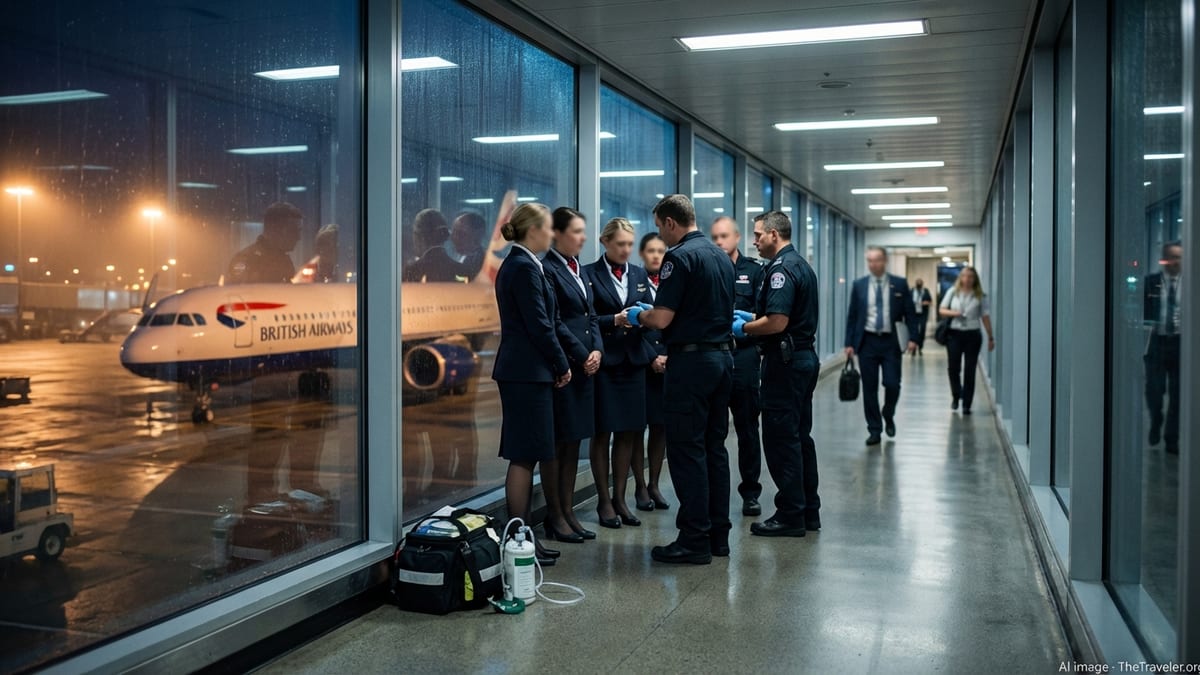
Transatlantic Layover Turns Into Medical Emergency
The incident unfolded following a recent British Airways flight from London Heathrow to Los Angeles, when several crew members reportedly accepted a bag of gummies from a passenger who described them as a gesture of appreciation for the long overnight service. According to multiple media reports citing airline and hospital sources, the sweets were not consumed during the flight but later, while the off-duty staff were en route to their layover hotel and shortly after arrival.
Within a short period, three crew members began to feel acutely unwell, experiencing disorientation, anxiety and what one source described as "out of body" sensations. As their symptoms intensified, colleagues raised the alarm and the airline arranged urgent medical assistance. The affected crew were taken to a Los Angeles hospital, where doctors are understood to have treated them for suspected cannabis intoxication.
British Airways has confirmed that a “small number” of crew members reported feeling unwell at their hotel and that all have since recovered. The carrier said a replacement crew was dispatched to operate the return flight to London, ensuring no disruption for passengers booked on the transatlantic service back to Heathrow.
High-Dose THC at the Center of the Scare
While toxicology details have not been publicly released, several outlets citing internal briefings and sources close to the investigation report that the gummies may have contained up to 300 milligrams of THC each, a level far beyond a typical recreational dose. In many regulated markets, edible cannabis products are commonly sold in 5 to 10 milligram portions per serving, with 100 milligrams often the legal maximum for an entire package rather than a single piece.
For individuals unaccustomed to cannabis, such a concentrated dose can provoke intense and destabilizing effects, ranging from severe panic attacks and altered perception to confusion, nausea and rapid heart rate. In a safety-critical profession like commercial aviation, even low-level impairment is incompatible with duty, and the reported strength of the gummies has amplified concern within the industry over how close this incident came to presenting an in-flight hazard.
It is understood that the crew ate the sweets only after landing, while they were off duty, which likely prevented a far more serious scenario. Aviation safety experts point out that if similar products were consumed at cruising altitude, especially by an entire team responsible for passenger care and emergency response, the consequences could have been catastrophic.
Airline Launches Internal Inquiry and Traces Passenger
British Airways has begun an internal investigation into the circumstances surrounding the event, focusing both on the crew’s adherence to company policy and, critically, on the actions of the passenger who brought the gummies onboard. The airline has not publicly disclosed the traveler’s identity, but sources say efforts are underway to trace the individual through booking records and onboard incident reports.
The key question facing investigators is intent. It remains unclear whether the passenger knowingly handed over cannabis-laced sweets, or whether they believed they were offering a legal, harmless product purchased from a dispensary in a jurisdiction where marijuana is regulated. Some reports suggest that the gummies were presented as a lighthearted thank-you gift, without any explicit warning about potency or content.
If authorities determine that the passenger knowingly gave intoxicating substances to on-duty transportation workers, they could face multiple charges under both US federal law and UK aviation regulations. Even if no malicious intent is proven, the case is likely to serve as a legal test of responsibility in a rapidly evolving landscape of cannabis normalization and patchwork legalization.
Policy on Passenger Gifts and Crew Conduct Under Scrutiny
While it is not uncommon for grateful passengers to offer chocolate, sweets or small gifts to cabin crew on long-haul flights, many carriers already advise or quietly instruct staff to exercise caution when accepting and consuming anything provided by travelers. In some airlines’ operating manuals, pilots and flight attendants are explicitly prohibited from eating passenger-provided food or drink, a rule designed to minimize the risk of food poisoning, allergic reactions or tampering.
This latest British Airways episode is putting fresh pressure on airlines to formalize and strictly enforce such policies. Industry insiders say that although informal gifts are generally seen as a morale boost for front-line staff who work long and demanding shifts, what was once considered a harmless courtesy now intersects with the complex reality of modern drug laws and the proliferation of potent edible products that can be difficult to distinguish from ordinary confectionery.
Labor representatives and safety advocates are also raising questions about crew education. They argue that as cannabis edibles, CBD snacks and other infused products become more widely available in destinations like California, front-line staff need clear, repeated guidance: do not accept or consume any unverified products from passengers or strangers, whether on board, in the terminal or during layovers.
Global Cannabis Laws Collide With International Aviation
The British Airways case underscores a widening gap between national cannabis regulations on the ground and the strict zero-tolerance environment that governs international air travel. In the United States, marijuana remains illegal at the federal level, including at airports and on aircraft, even as numerous states, including California, have legalized its recreational use and sale within their borders.
Airlines generally adopt the most restrictive applicable rules, meaning that cannabis products are prohibited on most commercial flights, regardless of the laws at either end of the route. That prohibition typically extends to crew, who are subject to stringent codes of conduct, periodic drug testing and, in some jurisdictions, criminal liability if found to be impaired while performing safety-sensitive duties.
Yet the booming market for edibles and infused snacks has muddied the waters. Products often resemble standard candies or gummies, come in colorful packaging and may use branding that is only subtly distinct from non-infused treats. For travelers and crew alike, the risk of misidentification or underestimating potency is growing, especially on routes serving regions where cannabis tourism has become part of the broader visitor economy.
What Investigators Will Be Looking At
Beyond tracing the passenger and confirming the exact composition and dosage of the gummies, investigators are expected to review multiple layers of procedure surrounding the London–Los Angeles service in question. That is likely to include training records, crew briefings, and any internal communications about accepting items from customers, as well as statements from all crew members present on the flight and during the subsequent layover.
Regulators and the airline’s own safety teams may also examine whether the staff were aware of existing rules against consuming passenger-provided products, if such rules were in place, and whether there were any prior warnings or similar incidents. The aim will be not only to apportion responsibility but to identify gaps in policy, communication or culture that allowed the situation to occur.
Separate from internal inquiries, law enforcement in both the United States and the United Kingdom could become involved if there is evidence that a criminal offense took place. That might range from the unlawful distribution of controlled substances to endangering the safety of an aircraft operation, depending on what is ultimately established about the passenger’s knowledge and intent.
Reputational Pressures for British Airways and the Wider Industry
For British Airways, the episode arrives against a backdrop of heightened scrutiny of crew professionalism and airline safety culture, including previous high-profile cases involving intoxication or suspected drug use by aviation staff. While there is no suggestion that the crew in this instance knowingly broke the law or violated company rules, the optics of uniformed employees being hospitalized after consuming cannabis-laced sweets are sensitive for a national flag carrier that trades heavily on its image of reliability and restraint.
Travelers booking long-haul flights between hubs such as London and Los Angeles are increasingly attentive to reputational signals about safety, training and oversight. Industry analysts note that even isolated incidents, if poorly handled, can erode public confidence and fuel online narratives about declining standards. British Airways’ swift decision to stand down the original team, dispatch a replacement crew and confirm there was no impact on customers appears aimed at reassuring both regulators and the traveling public.
Other airlines will be watching closely. If this event accelerates a wider industry shift toward explicit bans on accepting passenger gifts, or prompts new guidance from civil aviation authorities on intoxicants and crew conduct, carriers across transatlantic and transcontinental markets may need to adjust training, manuals and internal messaging in the months ahead.
Implications for Travelers on the Los Angeles–London Corridor
The Los Angeles–London corridor is one of the world’s busiest and most strategically important long-haul routes, linking a major European hub with a US gateway state that has been at the forefront of cannabis legalization. That combination makes it a focal point for the tensions highlighted by this case: liberalized attitudes and local dispensary culture on one side, and uncompromising international aviation law on the other.
For passengers, the British Airways incident serves as a pointed reminder that what may be legal or socially acceptable on the streets of Los Angeles can still be strictly forbidden once they enter the airport or step onto an aircraft. Even well-intentioned gestures, such as offering treats or gifts to crew, can carry unintended consequences if those items contain controlled substances or ingredients whose effects and legality are not fully understood.
Travel experts advise that travelers on this and similar routes refrain from gifting any food, drink or ingestible products to pilots or cabin crew, and instead opt for written notes, positive feedback or post-flight compliments submitted through official channels if they wish to recognize exceptional service. This approach avoids placing staff in a conflicted position and reduces the risk of repeat incidents.
Calls for Clearer Communication and Education
In the wake of the scare, voices across the aviation and travel sectors are calling for clearer, more visible communication about the intersection of cannabis products and air travel. That could include updated pre-flight announcements, signage at check-in and boarding gates, and more explicit warnings during security screening at airports in jurisdictions where legal cannabis is widely sold.
For crew members, unions and safety trainers are likely to push for renewed briefings, scenario-based training and practical guidance that acknowledges the realities of modern travel. Rather than relying on informal norms, airlines may move toward codified instructions: never consume items gifted by passengers, assume that any unlabelled sweets or snacks could contain intoxicants, and immediately report any offer that seems ambiguous or suspicious.
As the investigation into the British Airways gummies incident continues, the episode is emerging as a cautionary tale that stretches beyond a single Los Angeles–London rotation. It highlights how small, familiar gestures in the cabin environment can mask unfamiliar risks, and how the global aviation system is still adapting to a world where cannabis-infused products can look, feel and taste like everyday travel treats, yet carry consequences that extend from personal health to regulatory enforcement and international safety norms.