

More news on this day
A British Airways cabin crew operating a thirteen-hour long-haul service into London Heathrow is being widely praised after calmly and compassionately managing a bereavement situation on board, according to accounts circulating among frequent flyers and aviation enthusiasts.
Get the latest news straight to your inbox!
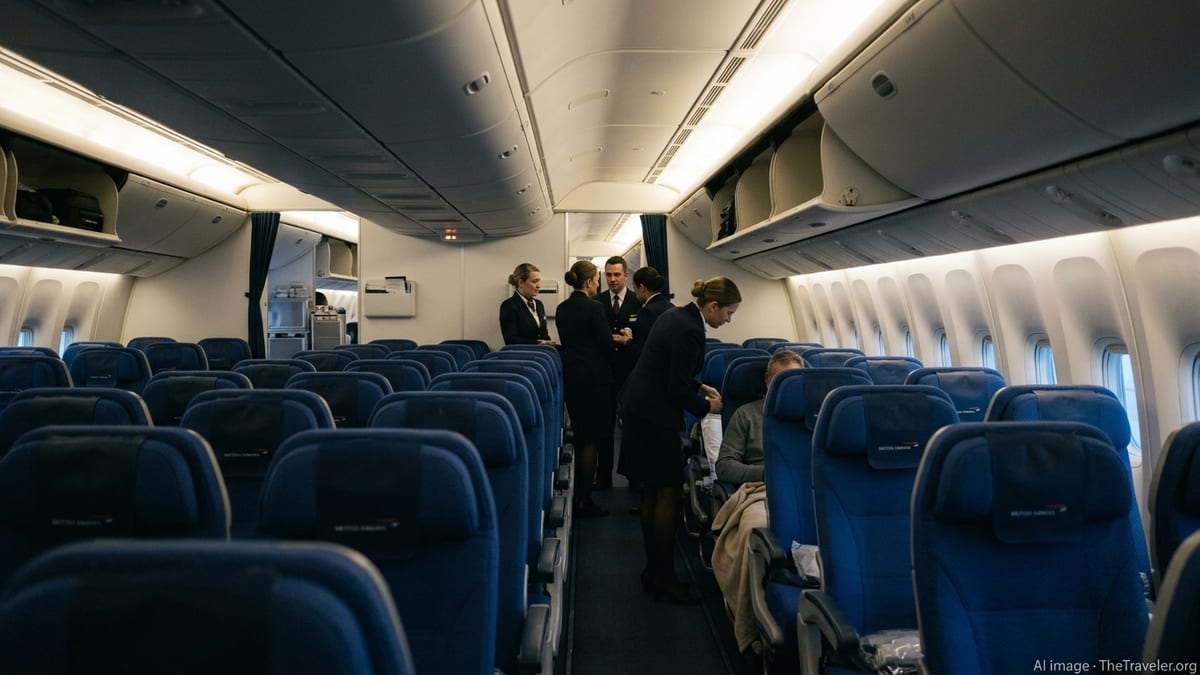
Reports highlight composed response during long-haul sector
Details emerging from passenger accounts indicate that the incident unfolded mid-flight on an overnight sector bound for London Heathrow, when a traveler was informed of a death in the family during the journey. The flight, understood to be a long-haul service of around thirteen hours, continued to its scheduled arrival while crew shifted quietly into what aviation training manuals describe as a compassionate care response.
Publicly available commentary from travelers suggests the crew moved quickly to create a discreet, calm environment around the affected passenger, adjusting service patterns in the nearby cabin area and coordinating quietly with colleagues to reduce noise and congestion. Witnesses describe standard in-flight routines, such as meal and beverage rounds, being subtly reorganized to give the passenger space and privacy.
Reports indicate that other travelers on board were initially unaware of the reason for the change in atmosphere, with announcements kept to routine operational updates. Only after landing at Heathrow did fuller details begin to circulate among the wider travel community, as passengers shared their experiences on social platforms and airline-focused forums.
The low-key handling has been noted by aviation observers as consistent with guidance frequently given to long-haul crews, where the emphasis is on shielding individuals in distress from unwanted attention while ensuring safety and regulatory procedures continue uninterrupted.
Training in bereavement and inflight care under scrutiny
The episode has renewed attention on how major international airlines prepare front-line staff for emotionally complex scenarios at altitude, particularly during flights lasting over ten hours. Industry training material typically includes modules on communicating difficult news, managing visible grief, and balancing the needs of the wider cabin with the needs of a single passenger in crisis.
According to published guidance cited in consumer-facing travel documents, British Airways and other large carriers brief crews on how to identify signs of acute distress and when to escalate to on-board senior crew or ground-based support teams. In cases involving bereavement, emphasis is placed on privacy, clear but gentle communication, and avoiding assumptions about how an individual may wish to grieve.
Aviation safety and service experts note that such situations can be particularly challenging on long-haul services, where passengers are confined for many hours and the cabin environment can heighten emotional reactions. Crew are expected to navigate not only the emotional needs of the individual directly affected but also any secondary impact on fellow travelers seated nearby, all while maintaining the rhythm of a complex, time-bound operation.
The latest accounts from the Heathrow arrival suggest that these procedures were applied in a way that felt unobtrusive to most passengers, a factor that has contributed to the positive reaction within the frequent flyer community.
Heathrow arrival procedures adapted to support distressed passenger
As the aircraft approached London, reports indicate that cabin crew began coordinating with ground teams to arrange additional support on arrival. While airlines rarely disclose specific details about individual cases, standard practice at Heathrow and other major hubs typically allows for discreet assistance at the gate or at the aircraft door for passengers experiencing medical or emotional emergencies.
Travelers familiar with long-haul operations suggest that crew are often able to request a quiet, private area in the terminal for a distressed passenger to gather themselves before proceeding through immigration and baggage claim. In cases involving bereavement, this can include the presence of customer care staff trained to handle sensitive conversations and, where appropriate, to discuss onward travel or rebooking options.
Accounts shared after the flight point to a notably calm disembarkation process, with no visible disruption to arrival timings. This has been highlighted as evidence that the crew were able to integrate additional care measures into the standard Heathrow arrival sequence without creating unnecessary anxiety among other passengers.
Aviation observers say such coordination between cabin crew and ground staff is critical when dealing with emotional emergencies, particularly at busy international hubs where gate changes, connecting flights and tight transfer windows can easily amplify stress for travelers.
Passenger praise adds to wider conversation about crew professionalism
The positive reaction to the Heathrow incident has been amplified by frequent flyers who have contrasted the crew’s handling of the bereavement with more routine frustrations over delays, cancellations and ground-side customer service. Many of the comments now circulating focus on the human element of long-haul travel, emphasizing that, beyond timetables and loyalty programs, the people working in the cabin often shape the overall experience most profoundly.
Publicly accessible traveler accounts frequently describe British Airways long-haul crews as professional and empathetic, even when facing challenging circumstances such as medical emergencies, severe turbulence or disruptive behavior. The latest praise for the handling of an on-board bereavement is being cited as another example of how experienced crew can stabilize tense situations, reassure fellow passengers and provide compassionate care at short notice.
Analysts following airline reputation trends say that such stories can have an outsize impact on brand perception, particularly at a time when many travelers are weighing schedule reliability and customer service more heavily in their choice of carrier. Examples of calm, humane responses in extreme situations tend to circulate widely across social media, travel forums and loyalty communities, shaping how prospective customers perceive an airline’s culture.
The Heathrow arrival is now being discussed alongside other recent accounts of calm responses to inflight medical events and personal emergencies, reinforcing the view among many long-haul travelers that cabin crew professionalism remains a critical differentiator in an increasingly competitive transcontinental market.
Emotional realities of long-haul travel in focus
Beyond the specifics of the latest Heathrow incident, travel psychologists and aviation commentators note that long-haul journeys increasingly serve as backdrops for major life moments, from reunions and relocations to medical trips and funerals. Bereavement-related travel, in particular, places passengers under intense emotional strain even before they board, a dynamic that can become more visible during extended flights.
Industry-facing guidance documents emphasize that airlines are gradually acknowledging this reality through changes in training, customer care protocols and, in some cases, policy on compassionate fares or flexible rebooking for those travelling in connection with a death or serious illness. While such policies vary by carrier and are not always widely advertised, they form part of a broader trend toward recognizing the emotional as well as logistical demands of modern air travel.
The widely shared praise for the British Airways crew on the recent thirteen-hour flight into Heathrow has brought those themes into sharper relief. For many in the travel community, the incident illustrates how nuanced, person-centred responses from front-line staff can make an enormous difference at some of the most difficult moments in a passenger’s life.
As global travel continues to recover and long-haul networks expand, aviation watchers expect more scrutiny of how airlines prepare crews for such scenarios, and how consistently compassionate care is delivered across fleets and routes. For now, the accounts emerging from this particular Heathrow arrival have added a rare, quietly positive note to the conversation around air travel, service and the complex realities of flying in times of grief.