

More news on this day
British Airways has suspended flights to Amman, Bahrain, Dubai, Tel Aviv and Doha as widening airspace closures and military escalation around Iran push the United Arab Emirates, Qatar, Saudi Arabia, the United States, Iran, Israel and other key nations into one of the most severe travel disruptions the Middle East has seen in decades.
Get the latest news straight to your inbox!
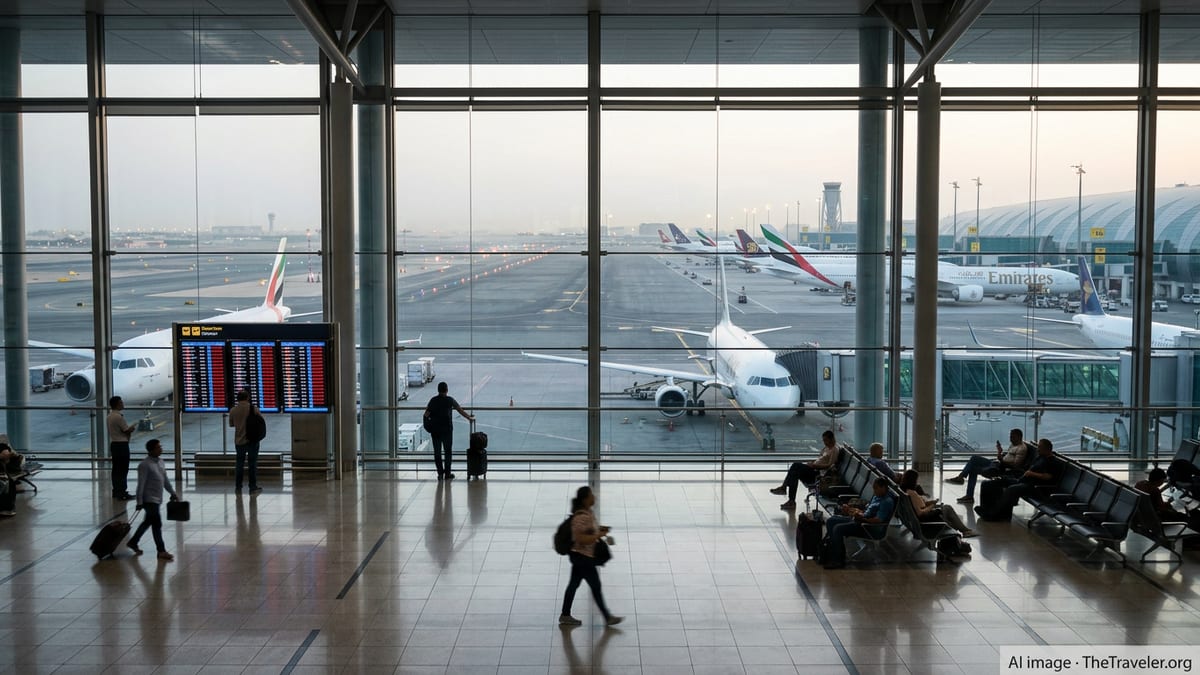
British Airways Pulls Back From Key Middle East Gateways
According to publicly available operational notices and industry briefings, British Airways has cancelled services to Dubai, Abu Dhabi, Amman, Bahrain, Doha and Tel Aviv as the security environment over much of the Gulf and Levant deteriorates. The latest wave of suspensions, reported by aviation trackers and passenger advisories in mid March 2026, extends earlier cancellations that had already affected Tel Aviv and Bahrain, and now sweeps in additional hubs served from London.
Flight data and airline communications indicate that the carrier’s Middle East network is effectively on pause, with some routes suspended into the summer season and others listed as cancelled until further notice. Passengers connecting through the region on itineraries linking Europe, Asia and Africa have reported widespread rebookings, missed connections and extended layovers as London-bound traffic is forced onto indirect routings.
Industry analysis suggests the decision is driven less by isolated airport closures than by a combination of restricted airspace, shifting no-fly zones and the need for longer diversion routes around Iran, Iraq, Israel and parts of the Gulf. These constraints significantly raise costs, limit schedule reliability and complicate crew planning, prompting network airlines such as British Airways to consolidate capacity on alternative corridors deemed safer or more predictable.
Reports from travel management companies show that British Airways is offering flexible rebooking and refunds for affected itineraries, but capacity on remaining routes via southern Europe, North Africa or central Asia remains tight as demand is funneled away from the traditional Gulf hubs.
UAE and Gulf States Join Wave of Airspace Restrictions
Published government notices and air traffic bulletins reviewed this month show that the United Arab Emirates has joined Bahrain, Qatar, Israel, Iran and other regional states in imposing significant restrictions on portions of its airspace after a series of missile and drone incidents linked to the Iran war. The measures have ranged from full closures at certain altitudes to tight corridor controls that only permit limited traffic under special approval.
Operational updates circulated to corporate travelers on March 2 indicated that airspace across the UAE, Bahrain, Qatar, Israel, Iran and Iraq remained restricted, leading to widespread cancellations and the temporary suspension of many regional operations. Emirates halted all movements to and from Dubai for a period, while Etihad in Abu Dhabi and Qatar Airways in Doha reduced schedules and relied on ad hoc authorizations to operate select evacuation and cargo services.
These restrictions have had immediate knock-on effects across the wider network. With core Gulf airspace constrained, airlines have been forced to thread narrow routing corridors over the Arabian Sea, the Red Sea or Turkey, adding hours to some long-haul sectors. For point-to-point passengers into Dubai, Abu Dhabi or Doha, the disruption has meant repeated schedule changes; for transfer travelers, it has undermined the time-saving rationale that made Gulf mega-hubs so attractive in the first place.
Aviation analysts note that while partial reopenings have occurred at times, the operating environment remains volatile. Carriers are therefore planning timetables week by week rather than for full seasons, which results in rolling waves of cancellations that are particularly challenging for leisure travelers and small businesses that rely on advance planning.
Iran Conflict Sends Shockwaves Through Global Travel
The current disruption stems from a rapid escalation that began in late February 2026, when joint United States and Israeli strikes on Iran were followed by large-scale Iranian missile and drone attacks on U.S. assets and allied states across the region. Publicly available chronologies describe hundreds of projectiles launched at targets in the UAE, Bahrain, Qatar, Saudi Arabia and Israel, as well as at international airports and energy facilities.
Economic assessments of the conflict’s impact on aviation indicate that Bahrain, Iraq, Israel, Kuwait, Qatar, Syria and the UAE all closed or heavily restricted their airspace at various points as the attacks unfolded. Those closures, combined with airline-level decisions to avoid specific flight information regions, have produced thousands of daily cancellations and diversions across both passenger and cargo traffic.
Major European and Asian network carriers have joined regional airlines in suspending flights to key Middle Eastern destinations, either temporarily or for the remainder of the winter 2025–26 season. Some have rerouted services via longer but less exposed paths, while others have suspended entire city pairs that are no longer commercially or operationally viable under current constraints.
Travel industry reporting suggests that the ripple effects stretch far beyond the Gulf. Routes linking Europe to southern and eastern Africa, South Asia, Australasia and parts of East Asia are experiencing increased flight times, tighter aircraft utilization and reduced frequency as airlines rework their global schedules around the evolving conflict zone.
Qatar, Saudi Arabia, the US and Israel Tighten Travel Measures
Qatar’s civil aviation authority has played a central role in managing the crisis around Doha, one of the region’s most important connecting hubs. Public statements and media coverage show that Qatari airspace was closed for standard commercial operations for several days at the height of the tensions, with Hamad International Airport limited to emergency and evacuation traffic under special conditions. Limited repatriation flights have since operated on specific dates to key European capitals, while regular long-haul passenger services remain curtailed.
Saudi Arabia, which controls a vast expanse of airspace bridging Europe, Asia and Africa, has also tightened restrictions, prompting multiple airlines to reroute around its eastern sectors or to suspend certain Gulf-bound services. Some carriers have concentrated remaining flights through Jeddah or other western gateways that are further removed from the primary conflict areas, at the cost of additional flight time and complexity.
The United States has introduced new advisories affecting commercial operations by U.S. carriers and code-share partners in the region, according to regulatory notices and embassy communications. These measures include restrictions on overflights of Iran, Iraq and nearby airspace, as well as the ordered departure of non-emergency government personnel from diplomatic posts in several Gulf and Levant states. Such steps have amplified demand for evacuation and repatriation flights even as overall capacity tightens.
Israel, already under long-running aviation constraints due to security concerns, has faced some of the most direct impacts. Published accounts describe extensive flight cancellations at Ben Gurion Airport, with international airlines suspending Tel Aviv services and local carriers struggling to maintain a limited network using adjusted routings. The combined effect has been to further isolate Israel by air at a time of heightened regional tension.
Travelers Face Prolonged Uncertainty and Complex Workarounds
For travelers, the suspension of British Airways flights to Amman, Bahrain, Dubai, Tel Aviv and Doha is part of a wider pattern of shrinking options across the Middle East. Airline notices, online booking platforms and passenger reports all point to a landscape where routes that were heavily served just weeks ago are now completely absent from schedules or appear only intermittently.
Some passengers have been able to reroute via alternative hubs such as Istanbul, Cairo, Muscat or European gateways that still maintain limited links into the region under revised routings. Others have turned to overland travel between Gulf states where borders remain open, piecing together journeys that combine short regional flights with long road transfers to reach functioning airports.
Travel management companies are advising clients to expect extended trip times, higher fares and last-minute changes through at least the second half of March 2026. Many are recommending that non-essential travel to the Gulf and Levant be deferred, and that essential trips build in substantial buffers for missed connections and unexpected overnight stays.
For now, publicly available information suggests there is no clear timeline for the full restoration of British Airways’ suspended routes or for the wider normalization of airspace across the UAE, Qatar, Saudi Arabia, Israel and Iran. With geopolitical dynamics still shifting, airlines and travelers alike are bracing for the possibility that this period of disruption could mark a longer-term reshaping of how global traffic flows through the Middle East’s once-dominant hubs.