

More news on this day
British Airways’ emergency flights from Muscat to London on March 5, 6 and 7 have reached full capacity, as thousands of travellers displaced by the Middle East airspace crisis scramble for scarce seats out of Oman’s capital.
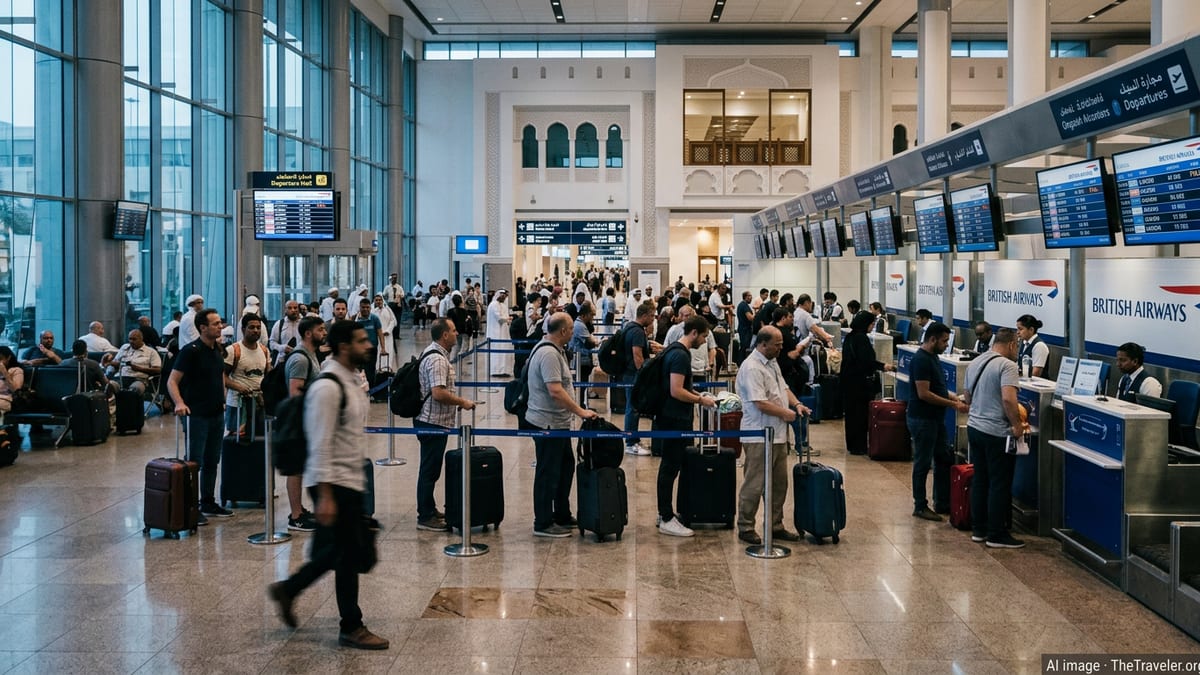
Conflict Fallout Sends Demand for Muscat Flights Soaring
The unprecedented demand follows days of disruption across the Gulf, where widespread airspace closures after strikes involving Iran, the US and Israel have forced airlines to cancel or reroute services. With several major hubs still operating reduced schedules, Muscat has rapidly become a crucial staging point for travellers trying to reach Europe.
British Airways, which does not normally operate a regular schedule from Muscat, secured temporary approval to mount special services to London Heathrow. The carrier initially announced a 02:30 departure on March 5, then added further operations on March 6 and 7 as the scale of the backlog became clear, according to industry and government briefings.
Seats on these flights have now been allocated primarily to existing British Airways customers who were diverted to Oman when services were halted elsewhere in the region, as well as to some travellers who reached Muscat overland from neighbouring states. Travel agents in the city report that economy and premium cabins sold out within hours of tickets appearing in global reservation systems.
The squeeze on capacity has been intensified by the UK government’s decision to charter separate repatriation services from Muscat for vulnerable British nationals. While those flights are managed through diplomatic channels rather than public ticket sales, they draw on the same limited pool of aircraft, crew and take off slots.
What “Fully Booked” Really Means for Travellers
For passengers still hoping to leave Oman between March 5 and 7, British Airways’ declaration that these services are fully booked does not automatically rule out every option. Airlines frequently adjust loads up to the last minute, especially during crisis operations, and some seats can reappear if passengers are reprotected onto other carriers or accept refunds.
However, aviation officials in Muscat caution that those possibilities are likely to be extremely limited over the next 72 hours. Safety restrictions on flight paths, strict crew duty limits and heavy demand from multiple governments for evacuation slots mean airlines have little flexibility to add capacity without significant notice.
In practical terms, travellers should assume that standard online booking channels will show no availability on British Airways’ Muscat departures through March 7. Any seat that does appear is likely to be snapped up immediately by those already on waiting lists or in contact with the airline. The situation remains fluid, but industry sources say they expect load factors close to 100 percent on every outbound movement to London.
Officials also stress that many of the passengers onboard will not be originating in Oman itself, but are part of a wider regional evacuation effort focused on getting stranded tourists, business travellers and residents out of affected Gulf states via the safest available corridor.
How to Improve Your Chances of Getting on a BA Flight
For travellers who already hold a British Airways ticket to or from the Middle East and are now in Oman, the airline is urging direct contact. Call centre staff can verify eligibility for rebooking onto any additional Muscat services that may be authorised, or onto later dates once the wider regional operation stabilises. Customers should have booking references, passport details and current contact information ready before calling.
Passengers without an existing British Airways booking face a steeper challenge. Industry experts recommend registering interest with reputable local travel agencies in Muscat, who receive real time inventory updates and can move quickly if any commercial seats open up on March 6 or 7 because of cancellations or government reallocations.
Those able to demonstrate urgent humanitarian, medical or family reasons for travel may also wish to contact their embassy or consulate in Oman. While diplomatic missions cannot sell seats on British Airways flights, they are in close coordination with UK officials and airline operations teams and may be able to advise if further capacity is likely and how priority is being determined.
Above all, authorities in both London and Muscat are telling travellers not to go to the airport without a confirmed booking or explicit instruction to do so. With heightened security, limited terminal space and ongoing government operations, turning up in the hope of a last minute seat is likely to end in frustration.
Alternative Routes and Carriers Out of Oman
With British Airways flights effectively sold out through March 7, many travellers are looking to Oman’s national carrier and other Gulf airlines for a way home. Oman Air continues to operate parts of its international network from Muscat, although its schedules to several nearby hubs remain curtailed. Seats on services to European and Asian destinations are in strong demand but may still offer an escape route for those flexible on their final destination.
Other regional and European airlines are also running limited operations, some of them structured as de facto rescue flights. Industry reports indicate that carriers including Emirates, Etihad and various European flag airlines have increased frequencies on certain corridors as airspace and security assessments permit. Connections via cities beyond the immediate conflict zone, such as Istanbul or select European hubs, may provide more availability than direct flights to London in the short term.
Travel analysts warn that fares on any remaining commercial routes are likely to be significantly higher than normal, reflecting both strong demand and constrained capacity. Travellers should be prepared for indirect routings, overnight layovers and short notice schedule changes as airlines adapt to evolving restrictions and safety guidance.
Given the volatility, passengers are advised to monitor airline apps and text alerts closely, keep travel documentation easily accessible and ensure they have enough funds and essential medication to cope with potential delays of several days.
Government Repatriation Efforts and Who Qualifies
Alongside commercial operations, the UK government has begun operating its own charter flights from Muscat to London. These services are primarily aimed at British nationals deemed vulnerable, including those with medical needs, families with young children and individuals without the means to secure commercial tickets.
Officials have stressed that seats on these government charters cannot be booked through airlines or travel agents. Instead, British nationals who have registered their presence in the region with the Foreign Office are being contacted directly and given instructions if they are selected for a flight. Dependants who are not British citizens may be eligible provided they hold valid visas or permission to enter the UK.
For those not classed as vulnerable, the government message remains clear: commercial flights, including British Airways’ special services from Muscat, will continue to be the primary way out. As a result, competition for seats is intense and many travellers are likely to face longer waits than they had expected when they began their journeys.
Diplomats in London and Muscat say they are working with multiple airlines to secure more capacity in the coming days, but caution that the situation across the Middle East is evolving hour by hour. Until airspace and security conditions improve, every newly added flight from Muscat will carry a long queue of hopeful passengers, with British Airways’ fully booked March 5, 6 and 7 departures only the first wave in a complex and ongoing airlift.