

More news on this day
A mid-flight disagreement over a simple bottle of water on a British Airways service has spilled far beyond the aircraft cabin, igniting a wider debate about changing airline service standards in the United Kingdom and resonating strongly in Estonia, one of Europe’s rising aviation and tourism hubs.
A Routine Request That Lit Up Social Media
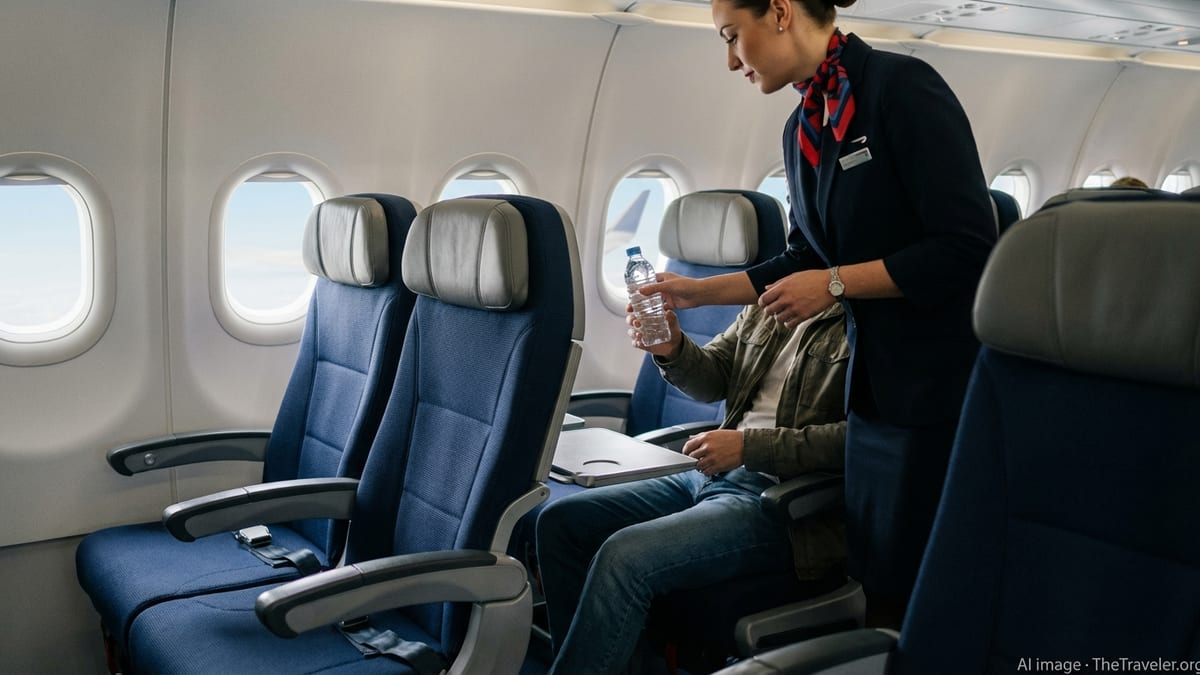
The latest flashpoint began as a seemingly minor exchange. A British Airways passenger shared a video on social media describing how a flight attendant reacted when she asked for help opening a complimentary water bottle. According to her account, the crew member responded with visible irritation and a pointed comment about the simplicity of the task, leaving the traveler feeling belittled and prompting her to question whether she was wrong to ask in the first place.
The clip, which quickly circulated across TikTok and Instagram, struck a nerve with frequent flyers who say they have watched a steady erosion of service across European skies. Commenters were less interested in the mechanical act of opening a bottle and more focused on the perceived attitude, using the episode as a case study in what many describe as a growing gap between the price of a ticket and the quality of treatment on board.
British Airways has not publicly commented on this specific interaction, which appears to involve a single crew member and a single passenger. Yet the debate has widened into a referendum on the carrier’s broader approach to hospitality at a time when it is attempting to position itself as a premium choice both for British travelers and for visitors connecting through London from destinations such as Tallinn.
The incident also landed in the context of an already sensitive conversation about in-flight water offerings, after recent operational decisions temporarily reduced bottled water availability on some British Airways services from London, provoking strong reactions from passengers concerned about comfort and hygiene.
From Bottles to Basics: British Airways Under Scrutiny
British Airways has been under intensifying scrutiny over how it manages small but symbolically powerful elements of the onboard experience. Last year, the airline confirmed that some short haul flights departing London Heathrow, Gatwick and City would temporarily operate without individual bottled water because of supply disruptions, with crews instead pouring drinking water from the aircraft’s system into cups. While the carrier emphasized that tap water met safety standards, many passengers were uncomfortable with the change and saw it as another quiet retreat from what they once regarded as full-service flying.
The backlash put a spotlight on how something as basic as water can become a flashpoint for trust. Bottled water, for many passengers, is not merely a beverage but a signal that an airline understands the discomforts of air travel and is willing to invest in small conveniences that make a journey feel humane. When that symbol is withdrawn, even temporarily, it raises sharper questions about where else cost-cutting might be taking place out of sight.
For British Airways, the mid-flight water bottle dispute arrives at a delicate moment in its post-pandemic recovery. The carrier has been working to modernize cabins and improve reliability after several summers of disruption, while also navigating the same inflationary pressures that have driven airlines worldwide to reexamine catering, staffing and service routines. The perception that front-line crew are under pressure to ration something as inexpensive as water, or to minimize the time spent on small passenger requests, runs counter to the premium image the airline is trying to rebuild.
Industry analysts note that individual customer service lapses are inevitable in any large operation, but warn that when they align with a pattern of perceived downgrades, they can crystallize into a compelling narrative. Social media, especially short video platforms, has amplified those narratives, allowing a single contentious interaction over a bottle of water to shape public impressions across entire markets.
UK Travelers Reassess What “Full Service” Really Means
In the United Kingdom, the water bottle saga has fueled a broader reassessment of what full service means in the modern European short haul market. British travelers once drew a clear distinction between low cost carriers and legacy airlines such as British Airways, counting on the latter for complimentary refreshments, more generous baggage allowances and softer touches from cabin crew. That line has blurred in recent years as traditional airlines have pared back inclusive offerings, introduced more unbundled fares and tightened onboard catering.
Regular flyers interviewed by travel forums and British media describe a sense of dissonance. Ticket prices on key intra-European routes have climbed compared with pre-pandemic levels, but the tangible service elements they associate with a national carrier often feel thinner. A free bottle of water that used to appear without question is now sometimes replaced by a cup poured sparingly from a galley jug, or, in rare cases during supply disruptions, by a suggestion that passengers should simply hydrate before boarding.
The result is a more transactional atmosphere at 38,000 feet. Cabin crew are increasingly expected to manage tightly scripted service flows, sell buy-on-board items and juggle operational constraints, leaving less time and latitude for small gestures that once defined good hospitality. Travelers who remember hot towels, second drink rounds and unhurried conversations with crew now sometimes find themselves debating whether asking for help with a water bottle might be interpreted as an imposition.
At the same time, consumer expectations are shifting rather than disappearing. Many UK travelers say they are willing to pay extra for comfort and service on key routes, but only if the upgrade is clearly visible. That tension is especially pronounced on flights connecting the UK with emerging tourism hotspots like Estonia, where visitors are keenly aware of how different airlines treat them during the short but highly symbolic journey to and from their destination.
Estonia’s Growing Role in Europe’s Aviation Map
Estonia finds itself unexpectedly spotlighted in this debate, both as a destination served by British Airways and other major carriers and as a country actively rethinking its own aviation strategy. Tallinn, the compact, cobblestoned capital, has become a favored short break for British travelers drawn by its medieval Old Town, Baltic seaside light and burgeoning tech scene. Flight schedules connecting London with Tallinn Lennart Meri Airport have expanded in recent years, supported by a mix of full service and low cost operators.
The Estonian government, however, has taken a cautious view of airline partnerships. Last year it declined an offer to purchase a minority stake in Latvian carrier airBaltic, citing concerns over financial uncertainty while emphasizing that it remained committed to ensuring good connectivity for residents and visitors. The decision underscored Estonia’s preference for flexibility and competition over deep entanglement with a single regional airline, a stance that keeps the door open to carriers such as British Airways, Finnair and various budget operators.
For Estonia, reliable and respectable air service is not a mere convenience but a pillar of its tourism and digital economy. British visitors who encounter frugal or brusque service on the journey may arrive with softened enthusiasm, especially if they feel they have paid premium fares. Conversely, when the in-flight experience aligns with the country’s reputation for efficiency, modest warmth and clean design, it becomes a subtle extension of Estonia’s national brand.
Local tourism boards and hospitality businesses watch airline perceptions closely. As the British Airways water bottle story spread, Estonian hoteliers and tour operators noted that travelers increasingly treat the entire journey, from security queue to cabin service, as part of their evaluation of a destination. While national tourism offices have little direct control over foreign carriers’ service standards, they are acutely aware that a viral cabin crew misstep can influence how potential guests imagine the start of their weekend in Tallinn.
Passenger Rights, Expectations and the Hydration Question
Behind the online controversy lies a more practical question for travelers: what exactly are airlines obliged to provide when it comes to drinking water, and what can passengers reasonably expect? In European airspace, regulations require carriers to make potable water available, particularly on longer flights, and most airlines, including British Airways, do so free of charge, regardless of whether it is poured from a tap or handed out in sealed bottles.
Passenger advocates stress that access to water is not a luxury but a health matter, especially during summer heatwaves and on flights where cabin humidity is low. They argue that while individual bottles are not legally guaranteed, carriers that market themselves as premium brands take a reputational risk when they cut back visible, reassuring forms of hydration. The optics of appearing reluctant to hand over a second bottle or to assist with something as simple as a cap can be damaging.
At the same time, airline staff describe a different reality behind the galley curtain. Crews must work within strict weight, waste and loading constraints, and supply disruptions can leave them short on bottled water through no fault of their own. Many say they feel caught between trying to conserve limited stock for the entire flight and accommodating repeated individual requests, all while serving a cabin filled with passengers armed with cameras and global audiences.
The British Airways incident has therefore become a touchstone in conversations about empathy on both sides of the aisle. Travelers are being reminded to consider that crew may be operating under pressures they cannot disclose, while airlines are being urged to recognize that small allowances and courteous language cost little compared with the reputational damage of a viral clip that appears to show indifference to a basic need.
Service Culture Clash: British Directness Meets Baltic Reserve
The dispute has also highlighted subtle cultural dynamics between the UK and Estonia that play out at 11,000 meters. British service culture in the air historically leaned on a combination of formality and understated warmth, with politeness phrases doing as much work as the actual items offered. Recent years of strain on the aviation workforce have, in the view of some passengers, chipped away at that polish, revealing interactions that feel brisk or even sharp.
Estonian service style, by contrast, tends to be quieter and more restrained, something first time visitors from the UK sometimes misinterpret as aloofness until they adjust. In Tallinn’s hotels, restaurants and cafes, attentive service is often delivered with minimal small talk and an emphasis on efficiency. When British travelers step from a flight where a crew member appears annoyed at a basic request into a city where the default mode is calm and uncluttered, the contrast can be striking.
Tourism experts say this contrast does not need to be a source of friction. In fact, it can become part of the appeal if airlines and destination marketers frame it thoughtfully. A London to Tallinn journey that begins with clear communication, abundant water and a simple, courteous acknowledgment of passenger needs can set the stage for an experience that feels refreshingly straightforward on arrival, rather than emotionally draining.
In this light, the water bottle dispute is less about etiquette on a single British Airways flight and more about how service cultures intersect in an age when every interaction can be broadcast. Airlines serving Estonia and other emerging city break destinations are being reminded that travelers increasingly expect the tone of their journey to complement, not contradict, the character of the places they are visiting.
How Airlines Are Responding to a New Era of Public Scrutiny
Across Europe, carriers are watching the British Airways episode as part of a broader pattern in which small in-flight conflicts quickly become public relations challenges. Training programs that once focused primarily on safety and basic hospitality now include modules on social media awareness, conflict de-escalation and the importance of neutral, non-inflammatory language even when passengers’ requests seem trivial.
Industry consultants say that, in practical terms, this can mean reminding crew that it is often better to comply with a simple request for assistance, such as opening a cap, than to question its necessity in front of a cabin full of potential spectators. It also means giving staff the support and resources they need to avoid feeling that every bottle of water or extra cup represents a personal burden. When employees feel respected and equipped, they are less likely to project frustration onto passengers.
Some airlines have quietly reviewed their water service policies after previous controversies, increasing the standard stock of bottled water on board certain routes, tweaking tray layouts or encouraging proactive refills on longer flights. Others have sought to differentiate themselves by explicitly highlighting free hydration as part of their marketing, a tactic that resonates in warm weather and on routes popular with leisure travelers.
For British Airways, which operates a crucial bridge between the UK and destinations like Estonia, the lesson may be that small gestures carry outsized weight. As airlines compete not only on fares and schedules but on how their service moments look when filmed, a bottle of water handed over with unhurried courtesy can be as powerful a brand asset as a new business class seat.
What This Means for Travelers Between the UK and Estonia
For passengers flying between the United Kingdom and Estonia in the coming seasons, the immediate implications of the water bottle dispute are subtle but real. Travelers are likely to be more attuned to how airlines communicate about basic amenities, and more inclined to compare notes about which carriers treat hydration and small requests as central to care rather than as expendable extras.
On routes linking London with Tallinn, the competition between full service and low cost operators already hinges on details such as flexibility, punctuality and cabin comfort. Service style is increasingly part of that equation. British visitors heading to Estonia for weekend breaks, conferences or digital nomad stints are not necessarily expecting lavish frills, but they are looking for a sense that their well-being matters, even on short flights.
Destination promoters on both sides see an opportunity in the current debate. By encouraging airlines to view these routes not simply as another short haul rotation but as gateways between two outward-looking, technology-savvy societies, they hope to nudge service standards upward. That could mean clearer pre-flight communication about what is included, more visible efforts to keep cabins stocked with water and a renewed emphasis on basic civility when small frustrations arise.
As British Airways and its competitors reflect on the fallout from a single contentious interaction, one thing is clear for travelers moving between the UK and Estonia: in the tightly packed, highly scrutinized world of modern air travel, even the most ordinary objects, such as a plastic bottle of water, can shape how an entire journey is remembered.