

More news on this day
The seaside enclave of Babbacombe on Devon’s English Riviera is drawing renewed attention as one of the United Kingdom’s most idyllic staycation spots, with its sheltered bays, heritage cliff railway and literary ties positioning it as a particularly appealing escape for Agatha Christie enthusiasts.
Get the latest news straight to your inbox!
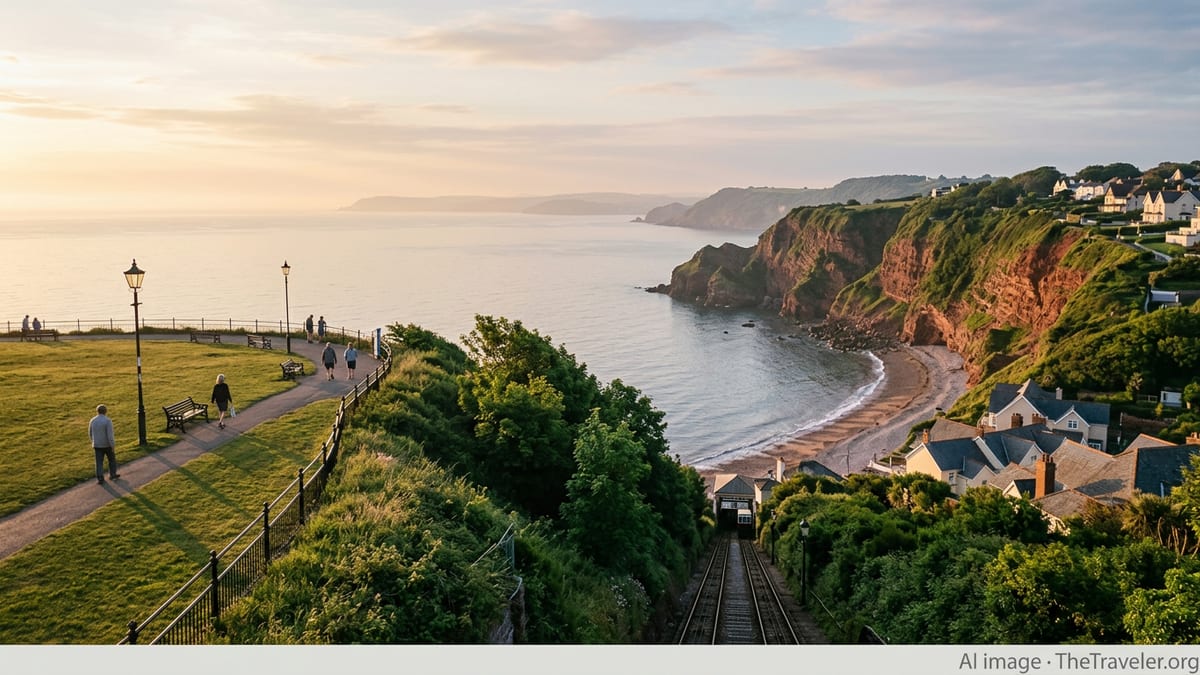
An English Riviera Hideaway Above Red Cliffs and Sheltered Coves
Perched on the northern edge of Torquay, Babbacombe combines cliff‑top drama with a quietly traditional seaside atmosphere that contrasts with busier UK resorts. Publicly available tourism information highlights its broad grassy promenade, Babbacombe Downs, which offers long views over Lyme Bay and the red sandstone cliffs that frame the coastline below.
Below the downs lie Babbacombe Beach and nearby Oddicombe Beach, a compact arc of shingle backed by striking breccia cliffs that has repeatedly secured Blue Flag recognition for water quality and visitor facilities. Accessed via steep paths or the historic cliff railway, the sheltered bay has become a draw for paddleboarding, kayaking and swimming in calmer weather, while remaining small enough to feel secluded even in high season.
Babbacombe itself retains a low‑rise village feel despite its proximity to Torquay. Attractions such as the long‑running Babbacombe Theatre and the Babbacombe Model Village, together with traditional guesthouses and small hotels on and around the downs, lend the area the atmosphere of an old‑fashioned holiday resort in miniature, focused more on sea views, walks and local hospitality than large‑scale entertainment complexes.
Geographically, the district forms part of the English Riviera UNESCO Global Geopark, an area recognised for its unusual geology, sea cliffs and coves. Walking routes around Babbacombe Cliffs connect downs, woodland and shoreline, adding to the appeal for visitors seeking scenic coastal paths as part of a slow‑paced UK break.
Cliff Railway Heritage and a Classic Seaside Experience
Central to Babbacombe’s identity is the Babbacombe Cliff Railway, a funicular that has linked the clifftop to Oddicombe Beach since the 1920s. Heritage listings and local guides describe it as a rare surviving English cliff railway, still operating with original charm and providing a short but atmospheric descent through the wooded cliff to the shore.
The railway’s restored lower station sits steps from the beach, where seasonal cafes, beach hut rentals and small‑scale water sports create a traditional seaside scene. Reports from recent visitor reviews point to its popularity with families and day‑trippers, while also noting that the sheltered setting and limited through traffic keep the bay relatively peaceful compared with more commercialised promenades elsewhere on the south coast.
On the clifftop, Babbacombe Downs functions as the area’s informal social centre, with benches, tearooms and hotel terraces overlooking the sea. In good weather, the greens host casual picnics and outdoor events, while in cooler months the downs remain a vantage point for coastal walks and storm‑watching.
For UK travellers seeking a staycation that feels rooted in local history without extensive travel, the combination of preserved infrastructure, walkable scenery and modest scale is contributing to Babbacombe’s positioning as an “idyllic” alternative to bigger-name coastal towns.
A Coastline Steeped in Agatha Christie Connections
Beyond scenery, Babbacombe’s location on the outskirts of Torquay places it at the heart of what regional tourism bodies promote as “Agatha Christie country.” Torquay is widely documented as the birthplace of the crime writer, and the wider English Riviera, including Babbacombe and nearby coves, is credited with inspiring settings, atmospheres and specific locations in her fiction.
Local heritage material notes that Anstey’s Cove, a rocky inlet close to Babbacombe, and Kents Cavern, part of the same coastal landscape, are associated with Christie’s stories, with the caves cited in travel features as an inspiration for the fictional “Hampsley Cavern” in The Man in the Brown Suit. Literary trail information also links beaches and headlands around Torquay and Babbacombe to scenes of seaside hotels, hidden paths and dramatic cliff edges that recur across Christie’s work.
Torquay Museum, situated on Babbacombe Road a short journey from the downs, houses a permanent Agatha Christie gallery displaying personal items, editions and memorabilia related to the author. According to published coverage and visitor accounts, the collection includes set pieces from television adaptations and curated exhibits exploring how the local area fed into Christie’s plotting and character creation.
Each September, the International Agatha Christie Festival based on the English Riviera draws fans from the UK and beyond for walks, talks and themed events across Torbay. While the programme shifts annually, trails and excursions regularly feature coastal locations within easy reach of Babbacombe, making the district a practical base for festival‑goers who prefer a quieter overnight setting away from the harbourfront.
Staycation Appeal for Mystery Lovers and Coastal Walkers
As domestic tourism remains strong across the UK, Babbacombe’s blend of gentle resort character and literary resonance is prompting travel operators and regional campaigns to spotlight it as a staycation option tailored to niche interests. Package itineraries marketed for mystery readers, for example, increasingly combine cliff‑top hotels in or near Babbacombe with guided visits to Christie landmarks across Torbay and the River Dart.
For independent travellers, the area’s compact layout allows days that mix book‑related exploration with simple seaside routines. A typical itinerary might combine a morning ride on the cliff railway and a swim at Oddicombe, an afternoon at Torquay Museum’s Christie gallery or on an English Riviera literary trail, and an evening performance at Babbacombe Theatre, before returning to a small hotel or guesthouse overlooking the bay.
Public transport links via Torquay and local buses up to Babbacombe mean that visitors can reach the area without a car, which recent sustainability‑focused travel coverage has highlighted as a positive factor. The availability of coastal paths and local attractions within walking distance further strengthens its appeal to travellers prioritising low‑impact, slow travel within the UK.
For Agatha Christie fans in particular, staying in Babbacombe offers the chance to experience the quieter side of the landscape that shaped many of her stories, from secluded coves and wooded cliffs to promenades that still echo the interwar seaside atmosphere of her early life.
Practical Considerations for Visiting Babbacombe
Travel information from regional tourism organisations indicates that Babbacombe is reached most easily via Torquay, which is connected by rail to Exeter, Plymouth and other major hubs. From Torquay, local buses and taxis cover the short distance up to Babbacombe Downs, while drivers find on‑street parking and small public car parks serving the clifftop and model village.
Accommodation options in and around Babbacombe range from traditional seafront hotels and guesthouses to self‑catering apartments tucked behind the downs. Many properties trade on sea views and easy access to the cliff railway or coastal paths, with availability and pricing varying sharply between peak summer, shoulder seasons and quieter winter months.
Visitors planning a Christie‑themed stay are advised by published festival and museum information to check opening times for attractions such as Torquay Museum and Greenway in advance, as well as dates for the International Agatha Christie Festival, which typically clusters key events into a single week in September. Outside festival periods, year‑round literary trails, guided walks and self‑guided itineraries still provide substantial material for fans.
With its layered appeal to both coastal walkers and readers of classic detective fiction, Babbacombe is emerging from the shadow of its better-known neighbours as a distinct destination in its own right, and one that aligns closely with current UK staycation trends favouring heritage, landscape and slower rhythms of travel.