

More news on this day
Travelers connecting through Baghdad International Airport on March 29 and 30 faced mounting uncertainty as Gulf Air and Royal Jordanian registered three cancellations, disrupting links with Bahrain, Jordan and onward global routes.
Get the latest news straight to your inbox!
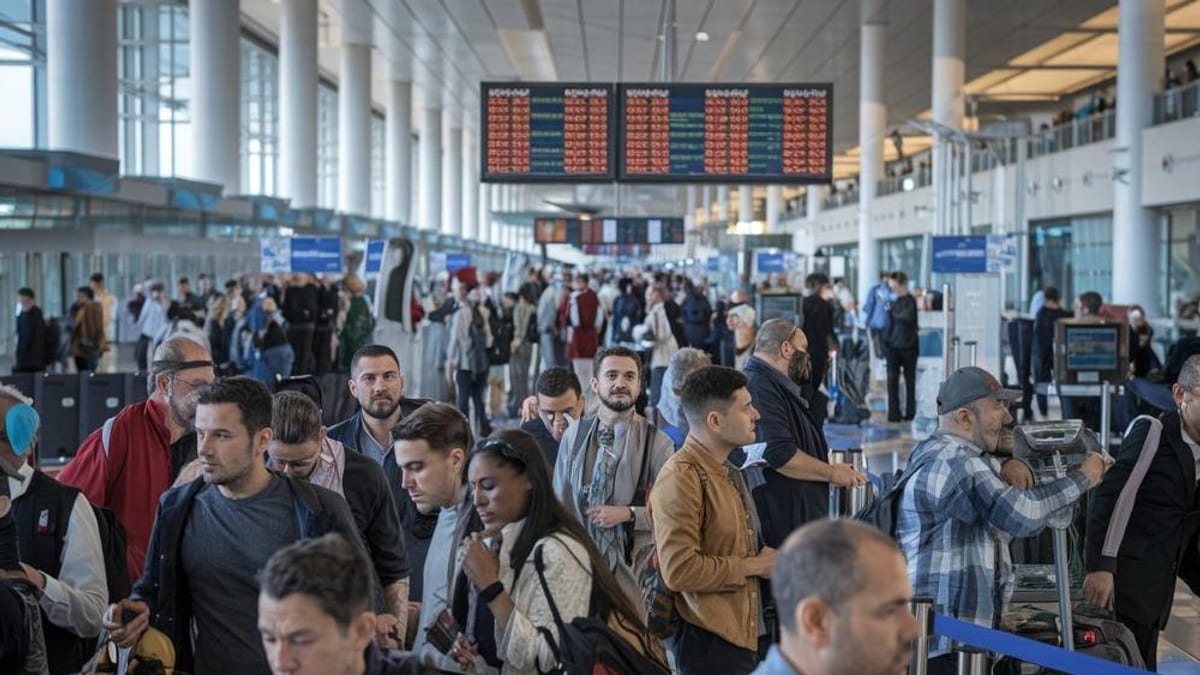
Image by Travel And Tour World
Targeted Cancellations Deepen Baghdad Disruptions
Published data for March 29 indicates that Baghdad International Airport saw three flight cancellations involving Gulf Air and Royal Jordanian, concentrating disruption on services linking Iraq with Bahrain and Jordan. While the number of affected flights was limited, the targeted nature of the cancellations created disproportionate turmoil for passengers who rely on Baghdad as a key connection point between the Gulf, the Levant and wider international networks.
Reports of the incident describe a day with no major delays recorded at Baghdad, but a complete halt for the affected services. Publicly available aviation tracking and industry coverage show that the cancellations removed all scheduled Gulf Air activity to and from the Iraqi capital for the period in question, while Royal Jordanian services between Baghdad and Amman also experienced interruptions.
The timing has compounded challenges for travelers already coping with a volatile regional environment. In recent weeks, Iraq’s airspace has faced temporary closures and restrictions amid heightened security concerns, and Baghdad’s role as a transit point has grown more precarious as carriers adjust routing and scheduling across the Middle East.
Knock-on Effects in Amman and Bahrain
The Baghdad cancellations resonated most sharply in Amman and Bahrain, where both Royal Jordanian and Gulf Air are central to national and regional connectivity. According to published coverage on March 29, Bahrain International Airport recorded a 100 percent cancellation rate for Gulf Air on the affected routes, underscoring the strain on the airline’s home hub and its ability to maintain schedules during the broader regional crisis.
In Amman, Royal Jordanian’s network is a core lifeline linking Jordan to Iraq and neighboring markets. Disruptions on the Baghdad sector added to an already fluid operating environment in which airlines across the region have been trimming schedules or suspending flights in response to airspace concerns and evolving security assessments. Publicly available flight monitoring shows irregular patterns on certain regional routes, contributing to uncertainty for passengers planning trips through Queen Alia International Airport.
For both hubs, even a small cluster of cancellations can throw off carefully planned connection banks that feed long haul services to Europe, Asia and North America. Travelers originating in Baghdad and connecting onward via Amman or Bahrain faced the risk of missed onward flights, forced overnight stays and last minute rebooking challenges, particularly as other carriers are operating reduced schedules across multiple Middle Eastern airports.
Passengers Confront Limited Alternatives
For individuals and families attempting to reach or leave Iraq over the weekend of March 29 and 30, the options were constrained. Regional aviation advisories in March have pointed to ongoing airspace closures or restrictions affecting Iraq and several Gulf states, reducing the number of viable routings that airlines can offer. As a result, when Gulf Air and Royal Jordanian services dropped from the timetable at Baghdad, passengers often lacked simple one stop alternatives on the same day.
Travel industry updates describe a patchwork of suspensions and delays across carriers serving Bahrain, Saudi Arabia, Qatar and other key hubs, leaving many travelers dependent on rebooking via more distant connection points or waiting for later flights once operations stabilize. The compressed availability of seats has pushed some passengers toward complex multi segment itineraries involving detours through airports in Egypt, Turkey or Europe to complete journeys that would typically involve a short hop within the region.
Publicly available guidance from airlines and travel agencies in recent days has emphasized the need for travelers to monitor flight status closely and maintain flexible plans. With some Gulf and Levant hubs experiencing cancellation rates significantly higher than normal, same day recovery options are limited, and travelers stranded in Baghdad, Amman or Bahrain may face longer layovers than usual before continuing their trips.
Part of a Wider Middle East Aviation Crisis
The events at Baghdad International Airport are unfolding against the backdrop of one of the most severe aviation disruptions the Middle East has seen in years. Recent analyses of regional traffic point to thousands of daily cancellations at the height of the crisis, driven by escalating tensions and reciprocal strikes that have led to airspace closures affecting Iran, Iraq, Syria and several Gulf states.
Industry briefings issued in March highlight that Bahrain’s airspace has been subject to closures, with some carriers suspending service entirely and Gulf Air relocating parts of its fleet to neighboring countries to preserve operational flexibility. Iraq has similarly imposed temporary halts on air traffic at points during the month, while airports in Jordan, Qatar, the United Arab Emirates and Saudi Arabia have experienced repeated waves of delays and cancellations.
These constraints have forced airlines to redraw their route maps on short notice, bypassing sensitive airspace and in some cases suspending entire city pairs. Travel sector analyses note that Egypt’s airspace and Cairo International Airport have emerged as critical alternatives for Europe Asia connections, as carriers search for corridors that allow them to maintain at least partial service. The Baghdad, Amman and Bahrain disruptions sit squarely within this larger pattern of shifting routes and reduced capacity.
Outlook for Travelers and Regional Connectivity
Looking ahead, the outlook for travelers using Baghdad, Amman and Bahrain remains uncertain and highly dependent on the security environment and regulatory decisions on airspace access. Aviation advisories continue to describe conditions in several Middle Eastern flight information regions as degraded, with closures and restrictions that may extend with limited notice. Airlines serving Iraq and the Gulf are likely to keep schedules under constant review, adjusting frequencies or canceling flights as needed to comply with safety requirements.
For passengers, publicly available guidance from carriers and travel associations stresses the importance of proactive planning. Flexible tickets, travel insurance coverage for disruption, and willingness to accept alternative routings through less affected hubs may be essential tools for those who must travel in the coming days and weeks. Travelers with itineraries involving Baghdad, Amman or Bahrain are being advised in open communications to reconfirm bookings frequently and to be prepared for sudden timetable changes.
At a regional level, the latest disruptions at Baghdad International Airport underscore how quickly localized cancellations can ripple outward through an already fragile network. As airlines and airports across the Middle East work to stabilize operations, the experience of Gulf Air and Royal Jordanian at Baghdad highlights the continued vulnerability of key routes that link conflict affected areas with the broader global aviation system.