

More news on this day
Passengers traveling from Baghdad International Airport faced fresh disruption today as at least five key flights operated by Gulf Air, Qatar Airways, and Royal Jordanian were canceled, stranding travelers bound for Bahrain, Doha, Amman, and onward international destinations amid continuing instability in Middle East airspace.
Get the latest news straight to your inbox!
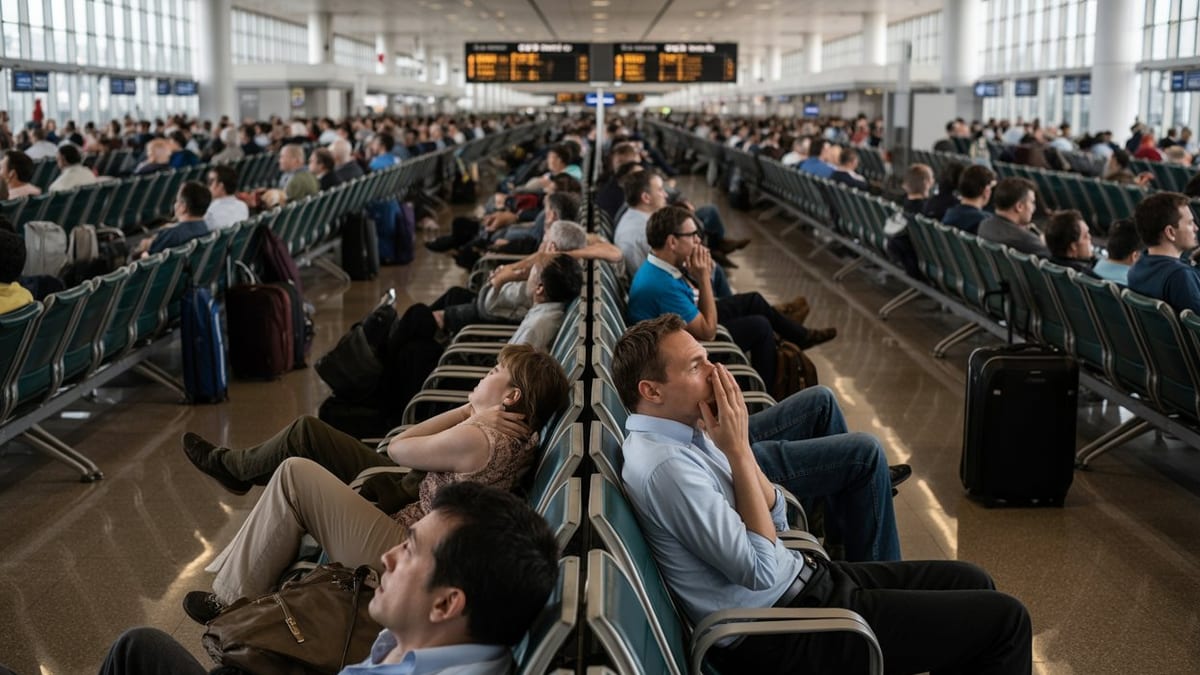
Image by Global Travel Alerts, Advisories, International Travel Alerts
Key Gulf and Levant Routes From Baghdad Abruptly Halted
According to live airport departure boards and published aviation data, a cluster of outbound services from Baghdad International Airport to major regional hubs was withdrawn from the schedule within hours of departure. The affected flights include Gulf Air services to Bahrain, Qatar Airways connections to Doha, and Royal Jordanian departures to Amman, along with at least two additional regional rotations that normally feed long haul networks in Europe and Asia.
The cancellations effectively severed several of Baghdad’s most important same-day links to global aviation hubs. Bahrain and Doha function as primary transfer points for passengers heading from Iraq to Europe, North America, and East Asia, while Amman is a critical connector for regional and transatlantic itineraries. With these flights grounded, many travelers in Baghdad lost their only same-day option to reach long booked onward connections.
Publicly available flight tracking information indicates that some of the affected services had operated intermittently in recent days, with rotations added or removed at short notice as airlines recalibrated their schedules around regional airspace constraints. The sudden withdrawal of multiple departures on the same day, however, marks a significant setback for efforts to stabilize connectivity from Iraq.
While local authorities have not published a consolidated tally for the day, schedule data and eyewitness reports from the terminal suggest that hundreds of passengers may have been impacted by the combination of cancellations and missed onward connections through the three carriers’ hubs.
Regional Airspace Restrictions Continue To Shape Airline Schedules
The latest disruption in Baghdad comes against the backdrop of an already strained aviation landscape across the Middle East. Over recent weeks, reciprocal strikes and heightened security concerns have led to periods of airspace closure or severe restriction over Iran, Iraq, and parts of the Gulf, forcing airlines to either cancel services outright or reroute them along longer corridors to the north or south of the conflict zone.
Industry analyses from outlets such as Condé Nast Traveler and regional news agencies have highlighted the scale of the impact on carriers based in the Gulf. Qatar Airways, in particular, has recorded thousands of cancellations since late February as its hub at Doha has been compelled to adapt to changing airspace permissions and safety assessments. Other regional players, including Gulf Air and various Middle Eastern flag carriers, have also undertaken broad schedule revisions on routes touching Iraq, Jordan, Lebanon, and the wider Levant.
For Baghdad, these broader trends are acutely felt. The city sits near several of the restricted corridors and has seen its connectivity fluctuate sharply during the crisis. Airlines attempting to maintain a minimum level of service have often resorted to short term schedule planning, with flights appearing as “operating” on some days only to be pulled closer to departure as security or operational parameters shift.
Observers note that as long as significant sections of regional airspace remain constrained, Baghdad’s role as an origin and destination for traffic feeding Gulf hubs will continue to be vulnerable to abrupt changes, especially for carriers whose route networks depend heavily on the central Gulf corridor.
Passengers Confront Overnight Stays, Missed Connections, And Limited Alternatives
The immediate consequence of today’s cancellations has been a familiar scene of uncertainty for travelers at Baghdad International Airport. Social media posts and informal reports from the terminal describe groups of passengers clustered at airline desks seeking rebooking or refunds after flights to Bahrain, Doha, and Amman were removed from departure screens.
For many, the cancellations do not only affect the short haul sector out of Baghdad. Because Gulf Air, Qatar Airways, and Royal Jordanian operate hub-and-spoke networks, passengers on these routes are often ticketed through to final destinations such as London, Frankfurt, Bangkok, or North American cities. When the initial leg from Baghdad is canceled, carefully timed connections at Bahrain International Airport, Hamad International Airport in Doha, or Queen Alia International Airport in Amman are also lost.
Publicly available airline advisories issued over recent weeks suggest that affected travelers may be offered rebooking on later dates, alternative routings via third country hubs, or refunds, depending on the type of ticket and local regulations. However, the high demand for remaining seats on unaffected services, together with longer detours required around closed airspace, has made same day or next day alternatives difficult to secure on busy routes.
Some passengers have reportedly opted to seek overland transport to other regional airports with more stable schedules, such as in Turkey or the Gulf, in the hope of finding onward flights from there. Travel agents and consumer advocates caution, however, that such self-arranged itineraries can be costly and may not always be protected under the original carrier’s conditions of carriage, leaving travelers to navigate complex refund and insurance processes on their own.
Airlines Balance Safety, Operational Limits, And Commercial Pressures
The decisions by Gulf Air, Qatar Airways, and Royal Jordanian to withdraw services from Baghdad on a single day underscore the difficult balance regional airlines are attempting to strike between maintaining connectivity and observing evolving safety guidance. Aviation authorities and industry experts consistently stress that route planning in the Middle East at present is guided first by security assessments, which can change rapidly in response to new developments.
Reports from specialist aviation outlets indicate that carriers are routing aircraft along approved “safe corridors” where possible, but that these pathways may not always support the full range of pre-crisis schedules. Longer flight times, higher fuel burn, and crew duty limitations all contribute to tighter operating margins, which in turn can make certain rotations from secondary markets, including Baghdad, more vulnerable to short notice cancellation.
Airlines in the region also face rising operating costs as jet fuel prices respond to ongoing geopolitical tension and supply disruptions. Recent coverage from financial and aviation news sources notes that carriers across Europe and the Middle East have cited fuel price spikes and capacity constraints when announcing temporary reductions in frequencies, particularly on routes that require substantial diversions around restricted airspace.
Within this context, today’s cancellations in Baghdad appear to be part of a broader pattern in which airlines continuously reassess the viability of individual flights. While hubs such as Doha and Bahrain continue to function as critical gateways, their feeder routes from conflict-adjacent markets are likely to remain subject to sudden adjustments as conditions evolve.
What Travelers From Iraq Can Do Next
For passengers in Iraq holding upcoming tickets with Gulf Air, Qatar Airways, or Royal Jordanian, travel experts recommend closely monitoring booking management tools and flight status pages, as schedules in and out of Baghdad can change with limited advance notice. Many airlines serving the region have issued flexible booking policies over recent weeks that allow date changes or rerouting without standard penalties for travel falling within specified disruption windows.
Published guidance from consumer organizations also suggests that travelers who booked through online travel agencies should coordinate both with the agency and the airline, as responsibilities for rebooking and refunds can vary depending on who issued the ticket. Keeping detailed records of cancellation notifications, receipts for additional expenses such as accommodation and meals, and any alternative transport arrangements can be important for later claims with airlines or travel insurers.
Looking ahead, aviation analysts quoted in recent regional and international coverage anticipate a gradual normalization of traffic patterns if security conditions improve and more airspace segments reopen. However, they caution that the process is likely to be uneven, with some routes returning more rapidly than others and contingency adjustments remaining a feature of flight operations around Iraq for some time.
Until then, passengers planning to use Baghdad International Airport as a gateway to Bahrain, Doha, Amman, or further afield may need to factor in the possibility of late schedule changes, longer routing times, and higher fares on remaining services, even as airlines and regulators work to restore a more predictable travel environment.