

More news on this day
South Korea has escalated its travel advisory for Bahrain to Level 3, putting the Gulf kingdom in the same high-risk category as the United Arab Emirates, Oman, Qatar, Saudi Arabia, Kuwait, and Jordan amid a rapidly deteriorating security situation across the Middle East.
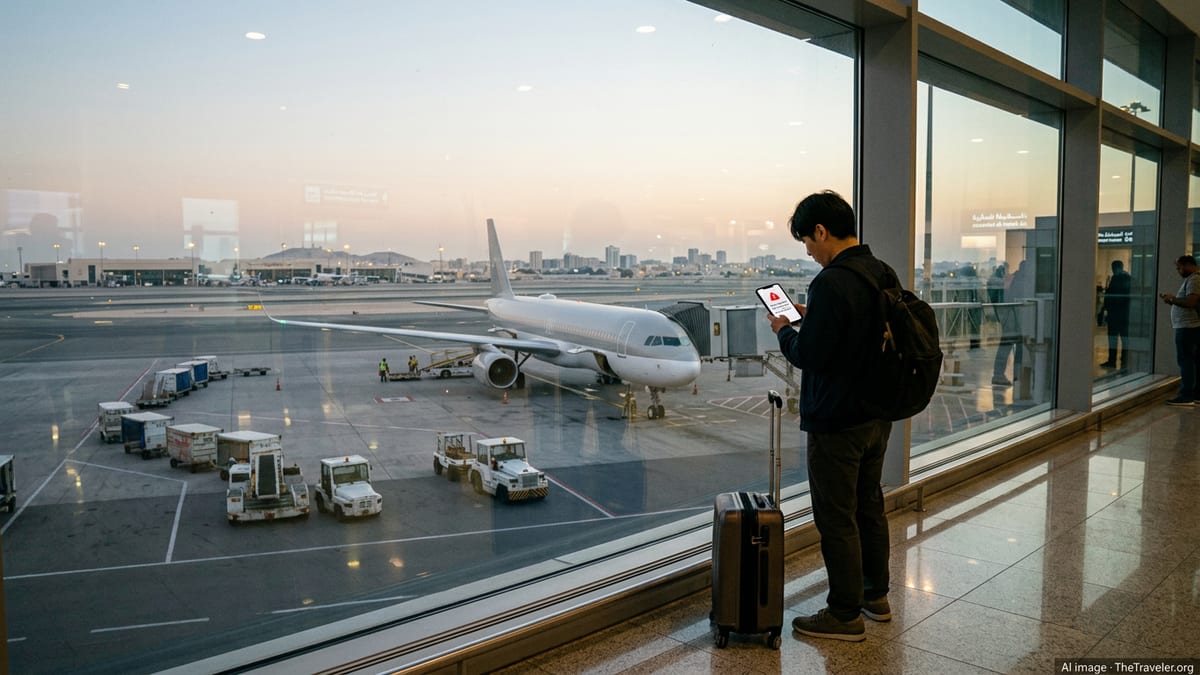
Seoul Raises Gulf and Jordan Warnings to Level 3
South Korea’s Ministry of Foreign Affairs announced on March 8 that its special travel advisory covering parts of the Middle East will be elevated to a full Level 3 warning for Bahrain, the United Arab Emirates, Oman, Qatar, Kuwait, Saudi Arabia, and Jordan. A Level 3 advisory, under Seoul’s four-tier system, is a formal recommendation that citizens refrain from nonessential travel and consider leaving if they are already in the affected country.
The decision comes less than a week after Seoul first introduced a short-term special advisory for seven Middle Eastern states as regional tensions spiked. That temporary measure effectively compressed elements of Level 2 and Level 3 guidance, but Friday’s move clarifies the stance: South Korean travelers are now explicitly urged to reconsider any plans to visit these destinations and to prioritize their safety over leisure or business trips.
Officials in Seoul said the escalation reflects a sharp deterioration in security conditions across the Gulf following missile and drone attacks linked to the ongoing Iran war, as well as mounting concerns about airport closures, suspended airspace, and the possibility of further strikes. The ministry stressed that the upgraded warning is preventive and intended to reduce the number of citizens who may become stranded if the crisis worsens.
What Level 3 Means for Korean Travelers
Under South Korea’s advisory framework, Level 3 is the second-highest tier and signals a serious and sustained risk to personal safety. While it does not legally ban travel, it carries significant practical consequences. Travelers heading to Level 3 countries can face restricted consular support, higher insurance costs, and reduced availability of commercial services such as flights and package tours as companies adjust their risk exposure.
For Koreans already in Bahrain, the UAE, Oman, Qatar, Saudi Arabia, Kuwait, or Jordan, the government is now advising a careful assessment of whether to stay or leave. Those whose presence is not deemed essential are encouraged to depart while commercial routes remain available, and to register with local embassies so they can be contacted quickly in case of evacuations or further security incidents.
Families and companies in South Korea are being urged to review travel plans for business trips, pilgrimages, and tourism to the affected region. Tour operators and airlines are expected to respond by modifying schedules, offering rebooking or refunds, and in some cases suspending itineraries that include high-risk hubs. Travelers with imminent departures are being told to check directly with carriers and agencies, as conditions and schedules may change with little or no notice.
Why Bahrain Has Been Pulled Into the High-Risk Category
Bahrain’s inclusion under South Korea’s expanded Level 3 advisory reflects both its geographic proximity to key flashpoints and the direct impact of recent attacks. The small island kingdom hosts strategic military facilities and sits along vital shipping lanes in the Gulf, making it particularly sensitive to spillover from the broader confrontation involving Iran and regional allies.
In recent days, Bahrain’s airspace has faced intermittent closures and disruptions as Gulf states react to missile and drone strikes and reassess aviation risk. Shipping operations around Bahraini ports have also seen temporary suspensions following nearby incidents, illustrating how quickly a security crisis can affect civilian logistics and travel connectivity across the region.
South Korean officials noted that while not all parts of Bahrain are equally exposed to direct violence, the interconnected nature of airspace controls, regional airline networks, and maritime routes means that any escalation can have immediate consequences for foreign nationals trying to enter or leave. Authorities are therefore erring on the side of caution by aligning Bahrain’s status with that of other Gulf states now designated at Level 3.
Regional Travel Disruptions and Evacuation Efforts
The upgrade in South Korea’s advisory coincides with sweeping travel disruptions across the Middle East. Several Gulf countries, including Bahrain, Kuwait, Qatar, and the United Arab Emirates, have partly or fully restricted their airspace at various points in the past week, forcing airlines to cancel, reroute, or delay flights and leaving many travelers stranded in transit hubs.
Governments around the world, from the United States to Japan and European states, have issued their own higher-level alerts for the same cluster of countries, often warning citizens to depart as soon as practical. Some have begun organizing charter flights and overland convoys to move nationals from smaller Gulf states toward airports that remain operational in Saudi Arabia or Oman, underscoring the logistical challenges of exiting the region once normal flight patterns are disrupted.
Seoul has already dispatched at least one government-chartered aircraft to help Koreans leave the United Arab Emirates and has indicated that further assisted departures could follow if conditions deteriorate or if commercial capacity proves insufficient. Diplomatic missions in Manama, Riyadh, Doha, Kuwait City, Muscat, Abu Dhabi, Dubai, and Amman are closely monitoring local developments, issuing security updates, and offering guidance on overland routes, curfews, and safe gathering points.
Practical Advice for Koreans Considering or Already on Gulf Trips
For South Korean nationals who had planned upcoming trips to Bahrain, the UAE, Oman, Qatar, Saudi Arabia, Kuwait, or Jordan, officials are recommending a full reconsideration of timing and necessity. Nonessential tourism, conferences, and events are being discouraged, with the ministry advising that such travel be postponed until the advisory level is lowered and the security picture becomes clearer.
Those who decide to travel despite the Level 3 warning are strongly urged to keep itineraries flexible, maintain close contact with airlines and hotels, and prepare for sudden route changes, extended layovers, or short-notice cancellations. Travelers should ensure they have robust travel insurance that explicitly covers war-related disruptions and evacuations, as some standard policies may exclude claims tied to armed conflict or government advisories.
South Koreans currently in the affected countries are being asked to avoid large gatherings, stay away from sensitive sites such as military installations and government buildings, and keep essential documents and emergency supplies readily accessible. Authorities recommend that nationals register their presence via the foreign ministry’s overseas travel portal or through local embassies so they can receive alerts and be accounted for in any evacuation planning.
Officials in Seoul say they will continue to review the Level 3 status for Bahrain and the six other states on a rolling basis, depending on the trajectory of the conflict and the stability of air and sea corridors. For now, the message from the government is clear: trips to these once-popular Gulf and Levant destinations should be delayed if at all possible, and Koreans already there should prioritize routes home while they remain open.