

More news on this day
The United Arab Emirates has expanded its latest urgent travel advisory to include Bahrain alongside Qatar, Thailand, Saudi Arabia, China, Oman, Kuwait and other popular destinations, as authorities warn Emirati travelers to tighten passport compliance, heed rising security alerts and respect stricter local laws abroad.
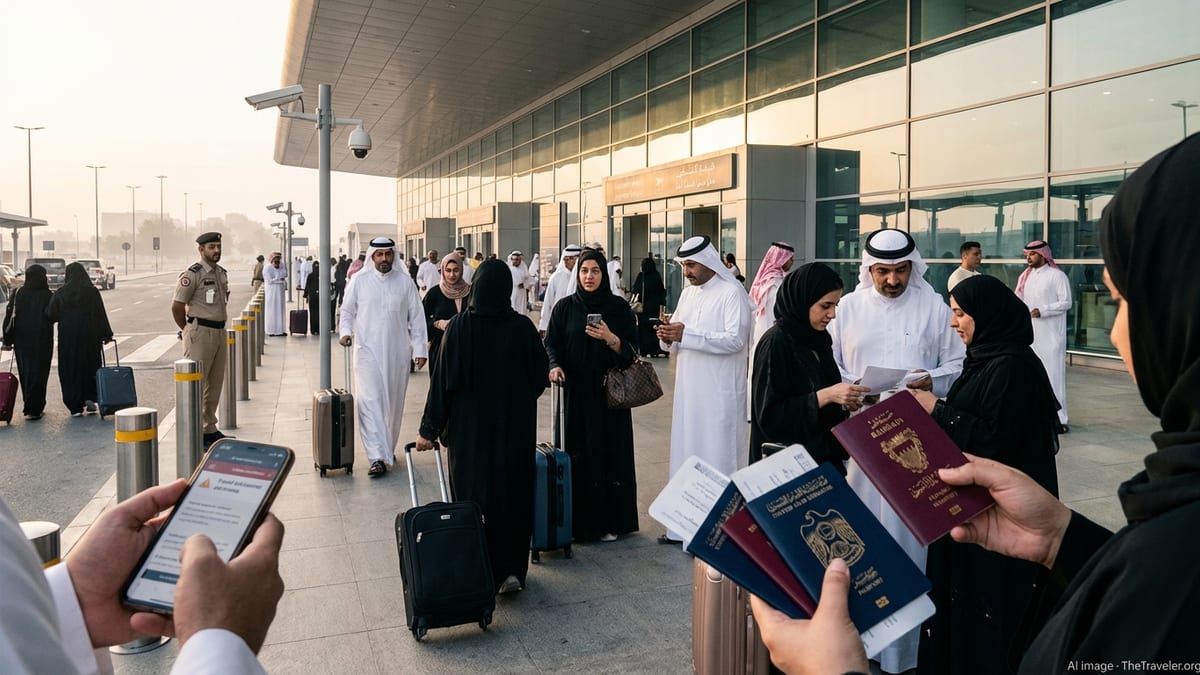
New UAE Advisory Targets Passport Validity and Pre-Travel Checks
The UAE Ministry of Foreign Affairs has stepped up its messaging to citizens planning overseas trips, urging them to verify that their passports carry at least six months of validity beyond their date of travel and to complete all visa and health formalities well in advance. The renewed guidance, circulated this week ahead of an expected surge in Ramadan and spring travel, explicitly frames document checks as a first line of defense against disruption at foreign borders.
Officials are underscoring that many of the destinations now highlighted in the advisory, including Bahrain, Qatar, Thailand, Saudi Arabia, China, Oman and Kuwait, apply strict rules at check in and on arrival. Travelers with passports close to expiry or with missing electronic travel authorizations can be denied boarding even when they hold confirmed tickets and hotel bookings. Emiratis are being reminded to consult official channels and airline notices rather than relying on outdated word of mouth.
The ministry is also pushing international health insurance that covers the full duration of a trip, stating that medical costs, evacuation and unexpected extended stays are becoming more common as security incidents and public health alerts flare in different regions. Insurance proof is increasingly requested by airlines, border officers and private clinics in several of the countries now flagged in the advisory.
Beyond paperwork, Emiratis are being encouraged to plan itineraries through reputable travel agencies and car rental providers, and to monitor road, weather and local authority updates before departure and during their stay. Officials say these basic steps can significantly reduce exposure to both bureaucratic setbacks and emerging safety threats.
Bahrain’s Security Alert Pushes Gulf Safety Back Into Focus
Bahrain’s addition to the UAE’s urgent advisory list follows a security alert issued in Manama on February 28, when emergency sirens sounded after authorities reported a “presence of danger.” The country’s Ministry of Interior urged residents to stay calm, move to safe areas and keep main roads clear while further instructions were prepared, briefly heightening anxiety in a destination that has positioned itself as a stable Gulf hub.
The United States Embassy in Bahrain also advised its staff and American citizens to shelter in place, encouraging them to find secure indoor locations, stock essential supplies and monitor news and official updates closely. While full details of the underlying threat have not yet been made public, the episode has been enough to prompt renewed scrutiny of security procedures and contingency planning for foreign visitors.
For Emirati travelers, the UAE advisory does not prohibit trips to Bahrain but effectively raises the bar for situational awareness. Citizens are being told to keep emergency numbers at hand, maintain charged phones, share itineraries with family and be prepared to adapt plans if local authorities tighten movement or impose temporary restrictions.
Regional analysts note that even short-lived alerts can ripple through airline schedules, hotel bookings and event calendars in compact markets such as Bahrain, making flexible planning and clear communication with travel providers essential for those heading to or transiting through the kingdom in the coming days.
Qatar, Thailand, Saudi Arabia, China, Oman and Kuwait Under Closer Watch
The latest UAE guidance places Bahrain within a broader cluster of destinations where security dynamics, border controls and local laws are shifting fast. Qatar and Saudi Arabia continue to draw large numbers of Gulf travelers for business and family visits, yet remain under close observation due to wider regional tensions, sensitive religious sites and major infrastructure projects that can trigger sudden crowding and checkpoint changes.
Thailand and China, two of the most popular Asian holiday choices for Emiratis, are being cited in the advisory for their evolving entry protocols and firm enforcement of visa conditions. Officials point to instances in which travelers have been turned around for minor documentation errors or for breaching overstays by only a few days. In some cases, violations can lead to detention, fines or multi-year entry bans.
Closer to home, Oman and Kuwait are being highlighted not because of acute crises but due to the combination of increased cross-border traffic and tightening enforcement of residency, driving and customs rules. The UAE advisory urges citizens to remember that familiar Gulf destinations still maintain distinct legal systems, and that assumptions based on domestic practice can quickly lead to misunderstandings abroad.
Travel consultants in Dubai and Abu Dhabi say they are fielding more questions about what constitutes acceptable conduct in conservative or security-sensitive environments, from photographing sensitive locations to social media posts and public gatherings. The advisory effectively places the onus on travelers to research local norms and avoid behavior that might be routine at home but problematic elsewhere.
Stricter Emphasis on Law Compliance and Digital Registration
A central pillar of the UAE’s updated travel message is a renewed emphasis on respecting local laws and regulations in host countries, particularly around public order, online speech, road safety and religious sensitivities. Authorities are reminding citizens that ignorance of the law is not accepted as a defense, and that even minor infractions can escalate when they intersect with security operations or political events.
Emiratis are being urged to avoid demonstrations, stay clear of political gatherings and refrain from posting or sharing unverified information about sensitive incidents while abroad. The guidance reflects a global trend in recent travel advisories in which governments highlight the legal implications of digital activity, from livestreaming police operations to commenting on local politics.
In parallel, the UAE is strongly promoting registration in its Twajudi emergency system, which allows citizens and their families to log travel details with the Ministry of Foreign Affairs. Officials say the platform significantly speeds up consular assistance when crises erupt, whether they involve natural disasters, sudden unrest or airspace closures that leave passengers stranded.
The advisory encourages travelers to upload electronic copies of passports and identity cards, store them securely and keep them accessible even if physical documents are lost or confiscated. This, combined with timely registration, is being presented as a practical way to ensure that help can be coordinated quickly if conditions worsen in any of the now-flagged destinations.
GCC Mobility in Flux as Single Visa Project Advances
The sharpened UAE warning comes as the Gulf Cooperation Council works toward a Schengen-style unified tourist visa that aims eventually to cover Saudi Arabia, the UAE, Qatar, Bahrain, Kuwait and Oman. A pilot phase is currently targeted for late 2026, beginning with a corridor between the UAE and Bahrain before widening to other member states, according to recent regional briefings.
For now, each of these countries continues to operate its own entry systems and security screening processes, meaning travelers must still navigate separate visas, passport checks and local regulations at every border. The new UAE advisory underlines that, until integration is complete, Emiratis should treat each stop on a multi-country Gulf itinerary as a distinct jurisdiction, with its own enforcement culture and risk profile.
Industry observers say that, in the short term, the combination of heightened security alerts and stricter documentation checks may slow some travel plans, but they also expect demand to rebound quickly once procedures are better understood. The UAE government’s priority, they argue, is not to deter travel but to push citizens to plan earlier, stay insured and remain reachable in emergencies.
With Bahrain now joining Qatar, Thailand, Saudi Arabia, China, Oman and Kuwait on the UAE’s expanded watch list, the message to Emirati travelers is clear: international trips in 2026 will require more preparation, closer attention to rules and a readiness to respond swiftly if security conditions shift.