

More news on this day
Hundreds of travelers were stranded at Bahrain International Airport on March 1 as at least 121 flights were cancelled and one delayed, severing key links on Gulf and long haul routes to Riyadh, London, Paris and New York amid spiraling airspace closures across the Middle East.
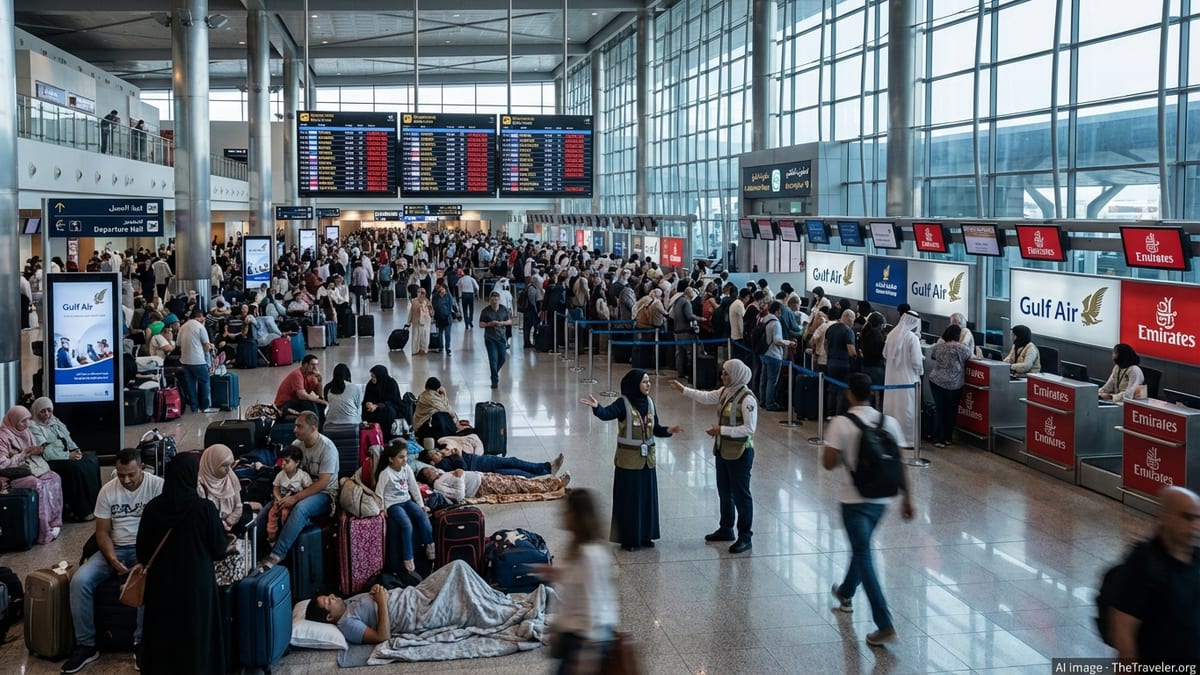
Drone Strike and Airspace Closure Paralyze Bahrain Hub
Operations at Bahrain International, normally a busy Gulf connecting point, were thrown into disarray after a reported drone strike hit airport infrastructure early Sunday, prompting authorities to activate emergency protocols and shut national airspace for safety checks. Officials said there were no casualties at the airport, but damage to facilities and concerns about follow up attacks triggered an immediate halt to most commercial services.
Data from regional aviation trackers and airport schedules showed 121 flights scrubbed and one additional service delayed through Sunday afternoon, with local carrier Gulf Air bearing the brunt of the disruption alongside major Gulf operators Emirates and FlyDubai. Services to and from regional capitals, including Riyadh, as well as long haul links to European and US gateways, were among those grounded.
The shutdown in Bahrain came as part of a much wider aviation crisis sweeping across the Middle East after US and Israeli strikes on Iran and Iranian retaliatory attacks prompted multiple countries to close or severely restrict their airspace. Airlines and passengers at Bahrain International found themselves suddenly caught at the frontline of a fast moving security and logistics emergency.
Officials in Manama said security sweeps, damage assessment and coordination with military authorities were under way, but offered no clear timeline for restoring full operations. Travelers were advised against heading to the airport unless they had direct confirmation from airlines that flights were operating.
Passengers Sleep in Departure Halls as Airlines Scramble
Inside the terminal, the closures quickly translated into scenes of overcrowded departure halls, packed seating areas and long lines at check in counters and airline service desks. Stranded passengers reported spending hours trying to secure updated information or rebooking options as departure boards filled with cancellations.
Families returning from school holidays, business travelers en route to Europe and North America, and Gulf residents attempting to reach Riyadh and other regional cities were among those left in limbo. With hotels near the airport quickly filling and overland options limited by parallel disruptions in neighboring states, many travelers prepared to spend the night on terminal floors.
Gulf Air, Bahrain’s national carrier and the dominant operator at the airport, cancelled dozens of services and placed others under review as aircraft and crew became out of position. Emirates and FlyDubai also pulled flights linking Bahrain with Dubai and onward long haul destinations, which in turn broke connection chains for passengers bound for London Heathrow, Paris Charles de Gaulle and New York’s major international airports.
Airline staff worked to hand out meal vouchers and arrange hotel rooms where possible, but capacity lagged behind need. Several travelers said they were instructed to rebook online or through call centers due to overwhelmed airport counters, a challenge in itself as call volumes surged across the region.
Key Routes to Riyadh, London, Paris and New York Disrupted
The wave of cancellations severed some of Bahrain’s most important regional and intercontinental links, underscoring how vulnerable global travel has become to sudden airspace shocks. Short haul corridors between Bahrain and Riyadh, Jeddah, Dubai, Abu Dhabi and Doha were among the first to be cut as airlines prioritized safety and complied with new flight restrictions.
On long haul services, passengers bound for London, Paris and New York were particularly hard hit. These routes, typically operated either nonstop or via nearby hubs, rely on open corridors across Gulf and Iranian airspace. With Bahrain’s skies closed and neighboring countries imposing their own restrictions, carriers could not reliably plot safe and commercially viable routings, leading to blanket cancellations rather than lengthy diversions.
Travel agents in Manama and across the wider region reported a spike in calls from customers seeking alternative ways to reach Europe and North America, including via more distant hubs in Turkey or South Asia. However, as the broader Middle East network absorbed shockwaves from thousands of cancellations and diversions, spare seats on remaining flights quickly became scarce.
Industry analysts said that even passengers whose flights were scheduled days later could feel the impact, as aircraft and crews displaced by the shutdown in Bahrain and other Gulf hubs ripple through airline rosters, causing rolling delays and schedule changes well beyond the initial crisis window.
Regional Aviation Crisis Spreads Beyond Bahrain
The turmoil at Bahrain International formed just one part of an unfolding regional aviation emergency that has seen airports across the Gulf and beyond curtail operations. Airspace closures over Iran, Israel, Iraq, Qatar and parts of the United Arab Emirates have forced carriers to ground or reroute planes, leading to thousands of cancellations from Dubai and Abu Dhabi to Doha, Kuwait City and beyond.
International carriers including British Airways, Air France, Lufthansa, Air India and major US airlines have suspended or sharply reduced services into the region, compounding the strain on local hubs already grappling with security incidents and damaged infrastructure. With multiple key corridors effectively shut, some long haul flights between Europe and Asia have been forced into lengthy detours or cancelled outright.
Aviation experts warn that restoring normal connectivity will take time even after airspace gradually reopens, as airlines rebuild schedules, reposition aircraft and crews, and clear passenger backlogs. The longer restrictions remain in place, the greater the risk that short term disruption will turn into a sustained capacity crunch on popular routes that typically funnel through Gulf hubs.
Governments in Europe and Asia have begun reviewing contingency plans to assist their nationals stranded across the Middle East, though officials stress that diplomatic and security considerations will determine how quickly additional evacuation or relief flights can be mounted once conditions allow.
What Travelers Need to Know Right Now
For passengers with tickets to or through Bahrain in the coming days, airlines and travel agents are urging a cautious and flexible approach. Travelers are being advised not to proceed to the airport until they have received direct confirmation that their flight is operating, and to expect last minute changes even for services that remain on schedules.
Most major carriers serving Bahrain, including Gulf Air, Emirates and FlyDubai, are offering options such as free rebooking, travel vouchers or full refunds for affected journeys. However, processing times may be slower than usual as contact centers and online systems manage an unprecedented surge in inquiries from across the region.
Travelers whose itineraries involve onward connections through Dubai, Doha or other Gulf hubs are being told to pay particular attention to transit rules and minimum connection times, as residual delays could easily lead to missed onward flights. Those who must travel urgently are being encouraged to explore alternative routings via more distant hubs where capacity remains, though these options may involve longer journeys, higher fares and overnight stays.
With the situation evolving by the hour, industry observers say the most important resource for travelers is up to date information. Passengers are urged to monitor airline notifications, local news and official advisories, and to prepare for the possibility that disruptions at Bahrain International and across the Gulf could extend beyond the current day’s cancellations and into the week ahead.