

More news on this day
Once marketed as a smooth Gulf gateway, Bahrain International Airport has instead become a symbol of the Middle East’s latest travel turmoil, as a prolonged airspace closure strands passengers, reroutes global flight paths, and raises fresh questions about the region’s hard-won tourism recovery.
Get the latest news straight to your inbox!
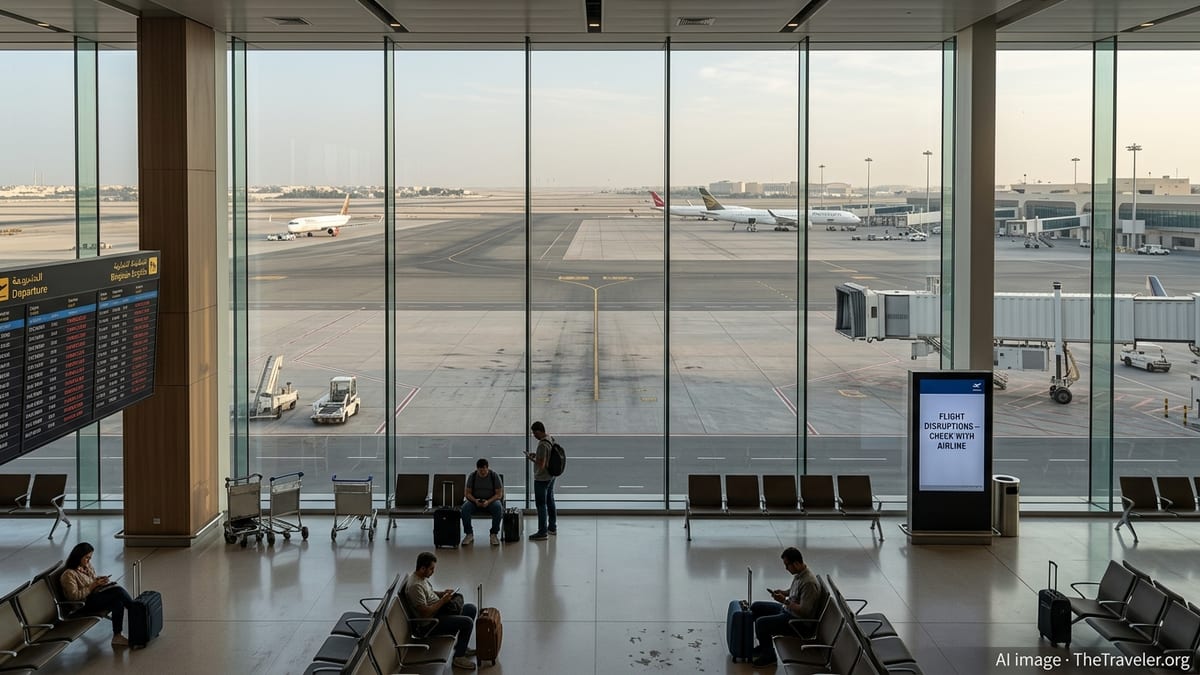
A Strategic Hub Brought to a Standstill
Bahrain International Airport, a key link between Europe, Asia, and the Indian subcontinent, has been effectively frozen since late February 2026 after the kingdom closed its airspace amid escalating regional conflict. Travel advisories and aviation notices describe operations at the airport as mostly halted, with commercial arrivals and departures suspended and only limited special movements reported.
Publicly available information from Bahrain’s aviation authorities and regional media indicates that the closure followed missile and drone attacks linked to the wider Iran war, including a strike on a fuel facility in Muharraq Governorate near the airport. While the terminal itself has not been reported as heavily damaged, safety concerns and the broader airspace shutdown have kept scheduled flights grounded.
The timing is particularly striking for an airport that only recently completed a multibillion-dollar modernization, positioning itself as a boutique alternative to larger Gulf hubs. Passenger numbers had been climbing through 2024 and 2025, supported by Bahrain’s efforts to market new stopover products and short-break tourism. The sudden reversal underscores how quickly geopolitical shocks can disrupt even well-planned aviation strategies.
Local reports describe the closure as open-ended, with no firm target date for a full restart of regular services. The uncertainty has become a central concern for airlines, tour operators, and travelers across the region.
Stranded Passengers and Rerouted Journeys
For individual travelers, the immediate impact has been confusion and long delays. Travel forums and passenger accounts describe journeys abruptly canceled or rerouted, with some visitors to Bahrain forced to extend stays while others scramble to reach alternative departure points by road.
Regional advisories outline how passengers transiting between Europe and Asia have seen Bahrain disappear from booking options, pushing more traffic toward Muscat, Riyadh, Jeddah, Abu Dhabi, and Dubai. Travel compensation platforms estimate that thousands of flights across the Middle East have been canceled, diverted, or significantly delayed since early March, creating bottlenecks at remaining open hubs.
The closure of Bahrain’s airspace is part of a broader pattern that includes at times heavily restricted skies over Iran, Iraq, Kuwait, Qatar, Israel, and parts of the Levant. Airlines have been forced to plot longer detours, burning more fuel and compressing already tight schedules. Global aviation data for early March shows widespread knock-on disruption at airports as far away as London and New York when aircraft could not safely overfly the region.
For would-be visitors, the practical advice now dominating public guidance is to check bookings repeatedly, build in extra connection time, and be prepared for last-minute changes. Many travelers who once selected Gulf routings for their reliability are now weighing more circuitous paths via Europe or Central Asia to avoid the most volatile corridors.
Tourism Ambitions Under Threat
The shutdown arrives just as the Middle East’s tourism sector had been celebrating a robust rebound from the pandemic. Industry bodies reported that international arrivals to the region in 2025 were close to or above pre-2020 levels, with the Gulf states among the strongest performers. Bahrain, in particular, had been pitching itself as a compact cultural and leisure destination, supported by improved airport connectivity, new hotels, and regional events.
Analysts now warn that the conflict-related closures could strip hundreds of millions of dollars from expected 2026 visitor spending across the region. Estimates from global tourism organizations suggest that current disruptions to air routes and traveler confidence are costing the wider Middle East hundreds of millions of dollars per day in lost receipts, compared with pre-crisis projections.
Bahrain’s position as both a destination and a connector magnifies the impact. The pause in operations reduces access for weekend leisure visitors from nearby Gulf markets, complicates inbound travel for business and financial services linked to Manama, and undermines stopover programs that were designed to entice long-haul passengers to spend a night in the kingdom.
Neighboring tourism economies are feeling the ripple effects. With Bahrain Airport offline, some travelers are skipping the country entirely rather than navigating overland workarounds through Saudi Arabia. Others are opting to consolidate their Gulf stays in cities with stable, high-capacity airports, concentrating demand in a smaller number of hubs and leaving secondary markets exposed.
Gulf Hubs Scramble to Absorb Disruption
The Middle East’s other aviation centers have been forced into a delicate balancing act. While several major airports remain operational, they are contending with periodic airspace restrictions, capacity pressures, and changing security assessments that complicate scheduling and passenger handling.
Travel industry reports show that Dubai, Abu Dhabi, Doha, and Muscat have absorbed a significant share of rerouted traffic that might previously have flowed through Bahrain. Airlines based in these hubs are adjusting timetables and, in some cases, temporarily trimming frequencies to destinations east and west to accommodate longer flight paths and reduced overflight options.
Egyptian Red Sea airports, along with Jeddah and other Saudi gateways, have also emerged as important diversion points, particularly for flights linking Europe with East Africa and South Asia. This reconfiguration of traffic flows demonstrates both the resilience and the fragility of the Gulf’s interconnected aviation system: when one node such as Bahrain is removed, others can stretch to fill the gap, but only up to the limits of their own capacity and risk tolerance.
For regional tourism boards, the situation presents a communications challenge. Public messaging now emphasizes flexibility and safety, with encouragement for travelers to keep plans but remain alert to advisories. Behind the scenes, however, route planners and hotel revenue managers are contending with volatile demand forecasts and the possibility that some itineraries involving Bahrain may not return quickly even after technical reopening.
Uncertain Timeline, Long-Term Questions
The key unknown for Bahrain International Airport is duration. Aviation advisories as of late March 2026 describe the airspace closure and airport shutdown as ongoing, with periodic reviews but no definitive restart date. Each additional week of disruption complicates aircraft and crew rotations and increases the risk that airlines will commit long term to alternative routings.
Industry observers note that once schedules are rebuilt around other hubs, winning back routes can be slow, especially for smaller airports competing against well-established mega-hubs. Bahrain’s flag carrier faces the added strain of maintaining customer confidence and loyalty while much of its network is on hold, with some passengers likely to develop new habits on rival airlines that remained operational.
There are also broader reputational questions for the Middle East as a whole. The region has invested heavily in presenting itself as a dependable crossroads between continents, with world-scale terminals and seamless transfer experiences. Repeated airspace closures linked to security crises risk embedding a perception of unpredictability among long-haul travelers and corporate travel planners.
For now, Bahrain Airport sits at the center of that perception shift, its modern terminal largely quiet while aircraft that once touched down on Muharraq’s runways trace longer arcs around closed skies. How quickly it can rejoin the global network will influence not only the kingdom’s tourism ambitions but also the wider story of how Middle East travel adapts to an era of heightened geopolitical risk.