

More news on this day
As sudden airspace closures ripple across the Gulf and aircraft divert from traditional corridors, Bahrain International Airport is redrawing its flight map while putting an unprecedented spotlight on passenger safety and operational resilience, aiming to reassure visitors that the kingdom remains one of the region’s most controlled and confidence-inspiring gateways.
Get the latest news straight to your inbox!
Flight Patterns Shift in a Tighter Gulf Sky
In recent days, Bahrain International Airport has found itself at the heart of fast-changing regional aviation dynamics, with carriers forced to reconsider routings and schedules as neighboring states tighten or close sections of their airspace. While some services have been curtailed or rerouted, aviation officials in Manama are working to preserve core international connectivity, especially for key tourism and business markets in Europe and Asia.
The changes have reshaped traditional flight paths over the northern Gulf, with airlines weighing longer flying times against the need to avoid risk-prone corridors. Industry observers say the Middle East hub network is undergoing a live stress test, in which each airport’s ability to manage disruption, protect passengers and maintain reliable links will define its reputation for years to come.
Bahrain authorities have emphasized that any network adjustment must be grounded in safety-first decision making. That has meant temporarily suspending certain links while preserving others that can be operated within the latest guidance from international regulators and regional aviation bodies. For tourists, the immediate impact may be revised departure times and alternative routings, but officials insist these measures are designed to keep the airport firmly aligned with global best practice.
Behind the scenes, Bahrain’s route planners are also thinking beyond the current turbulence. The airport’s long-term strategy continues to target an expanded network of destinations, particularly in Europe, South Asia and emerging leisure markets, though executives now say that future growth will be paced by the evolving security picture and traveler sentiment.
Tourists Watch Safety Measures Move Into the Spotlight
As flights adjust and headlines focus on airspace closures, arriving and departing passengers at Bahrain International Airport are paying closer attention to every checkpoint, queue and announcement. Travelers report that staff are more visible across the terminal, with security teams, customer service agents and health officers all playing a role in answering questions and managing concerns.
The scrutiny comes at a time when Bahrain’s main gateway has been steadily building a reputation for rigorous safety and health standards. The airport operator has collected multiple international honors for occupational health and safety performance, reflecting a systematized approach to risk management, incident reporting and staff training that predates the latest regional turbulence.
For tourists, much of this work is visible in the way the airport flows. From reinforced access control in landside areas to enhanced baggage screening and clearly marked emergency routes, officials have tried to balance strict protocols with a calm, hospitable atmosphere. Many of the measures are deliberately subtle, designed to protect travelers without overwhelming them with overt security theater.
Travel advisors note that perceptions of safety have become central to destination choice, particularly for families and solo travelers. In that context, Bahrain’s decision to showcase its safety credentials, rather than treat them as a purely operational matter, is seen as an attempt to convert behind-the-scenes investments into a tangible competitive advantage in the Gulf tourism market.
Runway, Terminal and Tech Upgrades Underpin Security Push
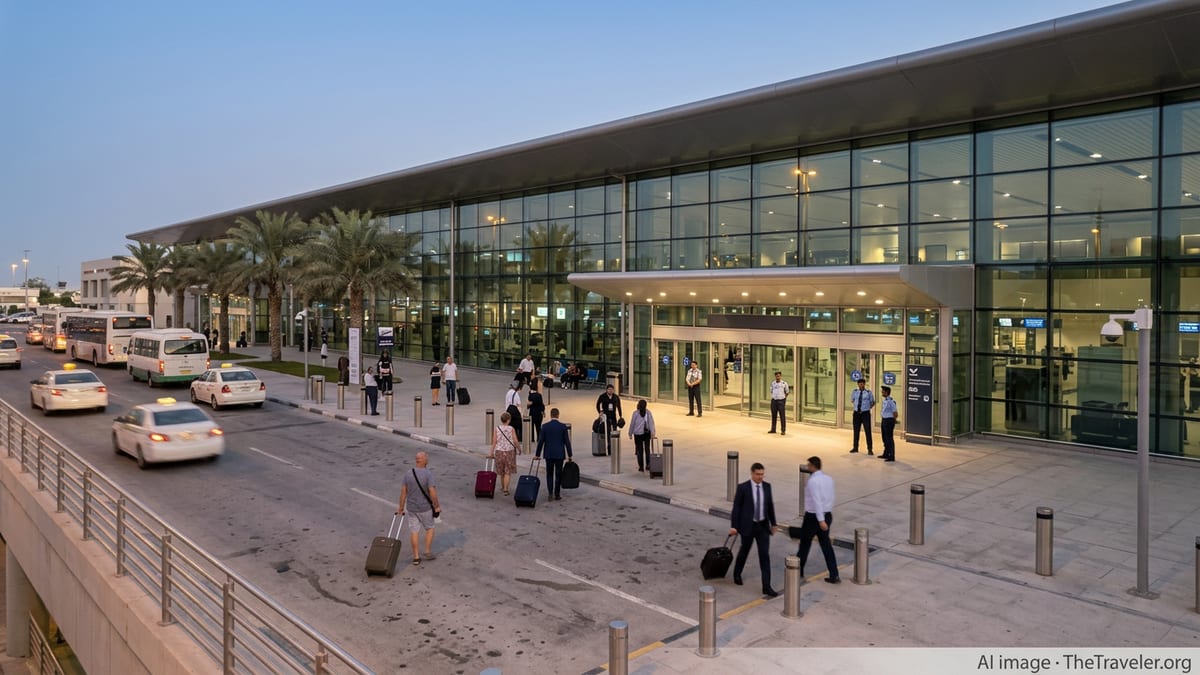
The current focus on safety is supported by a series of recent upgrades to Bahrain International Airport’s physical and digital infrastructure. The airport’s new terminal, opened in 2021, was designed with expanded capacity, modern screening lanes and advanced baggage handling systems, allowing operations teams to respond more flexibly to fluctuating traffic and heightened security alerts.
On the airside, Bahrain Airport Company has been investing in routine but critical runway maintenance, including resurfacing works, rubber removal and the upgrading of airfield ground lighting with more efficient LED systems. These improvements, carried out in coordination with the national civil aviation authority, aim to reduce the risk of incidents during takeoff and landing while maintaining steady throughput even in challenging operating conditions.
Technology has become a central pillar of the airport’s safety architecture. Biometric identity tools, smart surveillance systems and integrated control rooms are being used to link security checkpoints, border control, baggage reconciliation and airside access into a more coherent whole. Partners in the private sector have been enlisted to deploy unified security platforms capable of real-time monitoring and incident response across airport facilities.
Aviation analysts say that such investments put Bahrain on the leading edge of a wider regional trend in which Gulf airports are leveraging digital platforms to enhance situational awareness. For passengers, the benefits are often felt most clearly when things go wrong: the speed with which an incident is detected, contained and communicated can make the difference between a minor disruption and a prolonged crisis.
Disaster Preparedness and National Readiness Come to the Fore
Beyond day-to-day operations, Bahrain International Airport has also been sharpening its capacity to handle extraordinary events, from natural disasters to geopolitical shocks. Recent disaster-preparedness workshops, run with international logistics and development partners, have brought together airport managers, emergency responders, customs officials and security agencies to map out coordinated responses to a range of scenarios.
These exercises are intended to stress-test everything from communications protocols to resource allocation and the continuity of cargo flows. In a region that has become a vital artery for global supply chains, Bahrain’s participation in such programs is framed as both a national security imperative and a commercial necessity, safeguarding the airport’s role as a reliable logistics node.
National aviation authorities have complemented this work with their own initiatives, including strategic aircraft repositioning operations designed to ensure that key assets are located where they can best support rapid response and ongoing protection of the country’s airspace. Officials describe these moves as part of a broader plan to keep Bahrain’s aviation infrastructure ready for any sudden change in the security environment.
For travelers, much of this preparedness is invisible, unfolding in operations rooms, training centers and joint command posts rather than on the departures board. Yet tourism strategists argue that the credibility of a destination increasingly rests on this hidden layer of planning, which can determine how quickly flight networks are restored and confidence rebounds after a shock.
Balancing Tourism Growth With a New Era of Risk Awareness
The tension between ambition and caution is now shaping Bahrain’s tourism and aviation policy. Government plans call for the airport to support a sizable increase in visitor numbers and destinations in the coming years, positioning the kingdom as both a boutique leisure stopover and a convenient gateway for regional business circuits.
At the same time, policymakers acknowledge that the Gulf’s evolving security landscape is forcing a rethink of traditional growth assumptions. Rather than simply adding routes, the focus is shifting toward building a more resilient network, supported by multiple contingency options and deeper coordination with neighboring states and international agencies.
Local tourism stakeholders, from hotel operators to tour companies, are being encouraged to align with this safety-first narrative. Industry briefings emphasize the need for clear communication with guests about changing flight patterns, insurance requirements and any temporary advisories, while also highlighting Bahrain’s record of compliance with international safety norms.
As Bahrain International Airport redraws its flight map in real time, the message officials want to send is that the kingdom will not chase connectivity at any cost. Instead, they argue, sustainable tourism growth in the Gulf’s new era of risk awareness will belong to hubs that can demonstrate both openness to the world and an unflinching commitment to keeping every journey as secure as possible.