

More news on this day
Passengers across Europe, Asia and the Americas are facing fresh disruption as Bahrain keeps its airspace closed and national carrier Gulf Air extends a sweeping suspension of flights, amplifying the aviation chaos triggered by the latest flare-up in Gulf tensions.
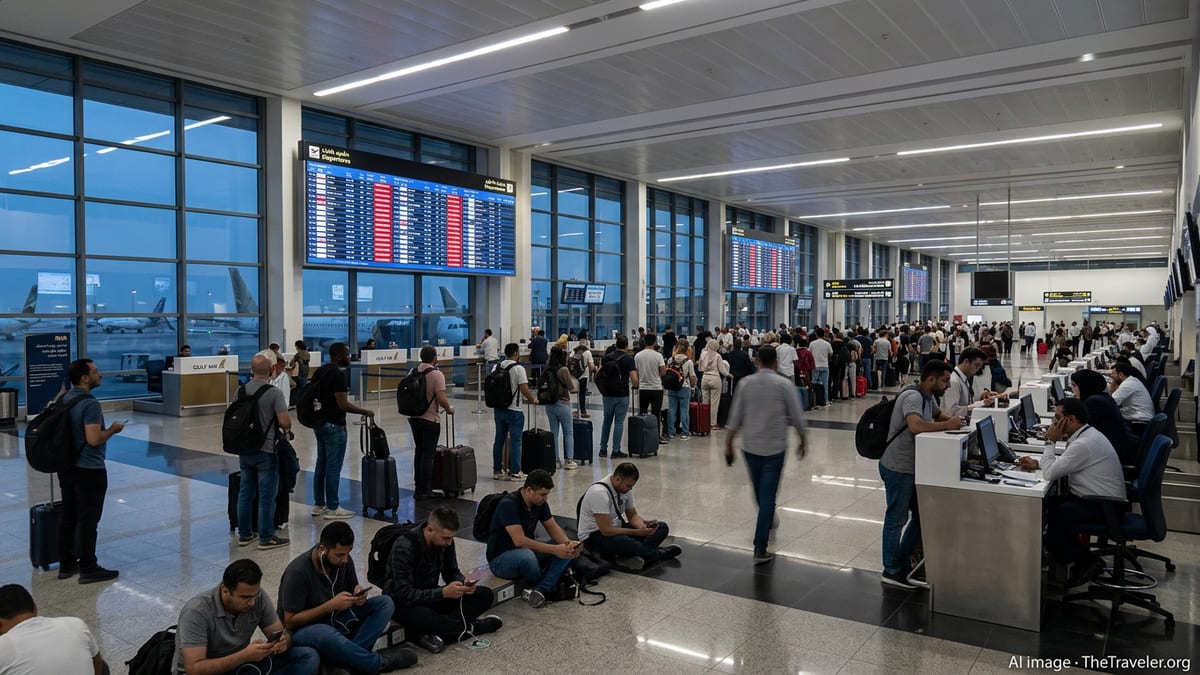
Bahrain Airspace Stays Shut as Regional Crisis Drags On
Bahrain’s civil aviation authorities have kept the kingdom’s airspace closed to civilian traffic, part of a wider web of restrictions stretching across the Gulf in response to the ongoing conflict involving Iran and several regional states. The move has effectively frozen normal operations at Bahrain International Airport, a key transfer point linking South Asia, the Middle East and Europe.
Travel and aviation outlets report that while some nearby countries have begun allowing limited corridors and rescue flights, Bahrain remains off-limits to overflights and scheduled passenger services, forcing airlines to redraw routings or cancel services altogether. Industry analysts warn that even short extensions of these closures can create multi-day knock-on effects as aircraft and crews end up out of position around the world.
Officials and local commentators have stressed the strategic significance of Bahrain’s role within Gulf aviation, noting that the shutdown not only affects point-to-point traffic but also the dense mesh of connections that usually criss-cross the island nation’s airspace. With no firm timeline for a full reopening and only rolling reassessments announced, airlines are planning conservatively and continuing to pare back their schedules.
Gulf Air Grounds Scheduled Network Indefinitely
Gulf Air, Bahrain’s national carrier, has confirmed that its regularly scheduled flights remain suspended indefinitely as long as the airspace closure is in force. In updates shared through regional and international media on 4 and 5 March, the airline said it is unable to operate its normal program and will issue further guidance only after regulators signal that it is safe to resume.([ch-aviation.com](https://www.ch-aviation.com/news/164582?utm_source=openai))
Operational data and industry briefings suggest that only a very small number of limited rescue or positioning flights have been possible, and those have departed from airports in neighbouring Saudi Arabia and Oman rather than Bahrain itself. These flights are designed to move stranded passengers and aircraft out of bottleneck locations but do not represent a restart of the carrier’s commercial schedule.([ch-aviation.com](https://www.ch-aviation.com/news/164582?utm_source=openai))
Gulf Air has advised passengers not to travel to the airport unless they have been directly contacted with confirmed alternative arrangements. Instead, customers are being urged to monitor their booking status and airline communications channels for rebooking options, vouchers or refunds. Given the uncertainty, travel agents say many travellers are choosing to push trips back by weeks or reroute entirely on carriers that can bypass the Gulf.
Global Ripple Effects: Cancellations, Diversions and Longer Journeys
The shutdown of Bahraini airspace, combined with parallel restrictions over Qatar, Kuwait and parts of the United Arab Emirates, has sent shockwaves through long-haul networks linking Europe and Asia. Aviation tracking services have logged thousands of cancellations and reroutings since the first closures were announced at the end of February, with Bahrain listed alongside Doha, Dubai, Abu Dhabi and Kuwait City as major hubs experiencing severe disruption.([travelwiseway.com](https://www.travelwiseway.com/section-news/news-flights-begin-returning-as-middle-east-airspace-disruptions-continue-05-03-2026.html?utm_source=openai))
Carriers from South Asia and Europe that normally use Bahrain or nearby hubs as transit points are cancelling frequencies outright or operating significant detours that skirt the restricted zones. Reports from South Asian airports describe departure boards dominated by cancelled services to Gulf destinations including Bahrain, Doha and Dubai, while airlines warn that altered routings mean longer flight times, additional fuel burns and last-minute schedule changes.([forbesindia.com](https://www.forbesindia.com/article/news/west-asia-tensions-send-shockwaves-through-aviation/2991862/1?utm_source=openai))
Even airlines not directly flying to Bahrain are feeling the strain as overflight permissions vanish. With several Gulf states closing or curbing their airspace, traditional corridors between Europe and India, Southeast Asia and Australasia have narrowed, reducing flexibility for rerouting around storms, congestion or further security incidents. Analysts say the disruption is reminiscent of earlier large-scale closures, but with a far greater concentration of global traffic now depending on Gulf hubs than a decade ago.([en.wikipedia.org](https://en.wikipedia.org/wiki/2026_Iran_war?utm_source=openai))
What This Means if You Are Booked Through Bahrain or the Gulf
For travellers holding tickets on Gulf Air in the coming days, the practical consequence is that you should currently assume your flight will not operate as scheduled. Industry notices describe the suspension as indefinite, with the next official update from Gulf Air and Bahraini authorities expected after further safety reviews. Passengers are being offered date changes or refunds in line with each airline’s disruption policy, though exact options vary by fare type and point of purchase.([timesofindia.indiatimes.com](https://timesofindia.indiatimes.com/life-style/travel/news/gulf-air-flights-remain-temporarily-suspended-as-bahrain-airspace-closure-continues/articleshow/129086983.cms?utm_source=openai))
If your itinerary includes a transit in Bahrain on another airline, or even a simple overflight of Gulf airspace, you may still be affected. Many carriers are proactively cancelling or rerouting services that would have flown close to restricted zones, while others are consolidating flights and changing departure times at short notice. Travel agents advise checking your booking every few hours rather than assuming that a previously issued schedule will hold.
Airports across Europe, South Asia and Africa are reporting clusters of stranded passengers whose onward connections via Bahrain, Doha or other Gulf hubs have disappeared, sometimes with only minimal advance warning. Travellers are being urged to avoid heading to the airport until they have a rebooked ticket or explicit confirmation from their airline, as check-in staff often have limited power to override network-wide cancellations during large-scale disruptions.([thenationalnews.com](https://www.thenationalnews.com/travel/2026/03/04/virgin-atlantic-resumes-dubai-and-riyadh-flights-as-other-airlines-suspend-middle-east-routes/?utm_source=openai))
Practical Steps to Protect Your Trip Amid Ongoing Uncertainty
While the situation remains fluid, aviation and consumer experts recommend a few immediate steps. First, if your journey involves Bahrain or another affected Gulf state in the next week, assume change is likely and log in to your booking to ensure your contact details are up to date. Airlines are primarily using email, apps and text messages to share rebooking options; if they cannot reach you, you may miss the chance to move onto an earlier available departure.
Second, if you have not yet started your trip, consider asking your airline or travel agent to reroute you via alternative hubs such as Istanbul, major European gateways or South Asian cities that are currently outside the immediate disruption zone. Many carriers have issued flexible travel policies that waive change fees for itineraries touching Bahrain, Qatar, Kuwait or the United Arab Emirates during the current period, although fare differences may still apply depending on the route you choose.([forbesindia.com](https://www.forbesindia.com/article/news/west-asia-tensions-send-shockwaves-through-aviation/2991862/1?utm_source=openai))
Finally, travellers already in the Gulf who find themselves stranded should explore options beyond their original carrier, including rescue flights or indirect routings via neighbouring countries whose airspace remains partly open. Local embassies and consulates may also be able to provide guidance for citizens facing prolonged delays. With Bahrain’s airspace closure and Gulf Air’s suspension still in force, industry observers caution that the return to normality is likely to be gradual, and passengers should prepare for a protracted period of schedule volatility across the region.