

More news on this day
The war in Iran is redrawing global travel maps, disrupting traditional air corridors through the Gulf and prompting a rapid realignment of tourism flows that is benefiting a cluster of agile destinations from Bahrain and Turkey to Spain, the United States and the Canary Islands.
Get the latest news straight to your inbox!
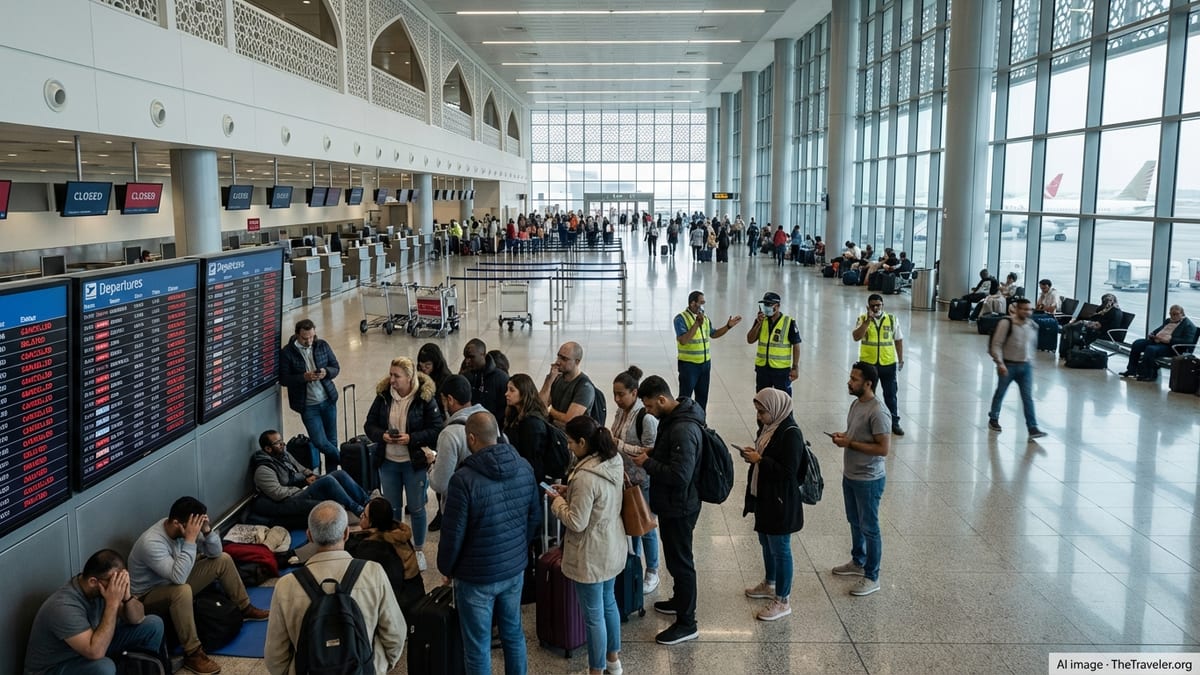
Aviation Disruption Forces a Redrawing of Global Travel Routes
Airspace closures and security concerns linked to the Iran war are reshaping how airlines and travelers move between continents, with knock-on effects for tourism-dependent economies. Reports indicate that airspace restrictions around Iran and parts of the Gulf have forced carriers to take longer, more fuel-intensive routes, while key hubs such as Dubai, Abu Dhabi and Doha have seen operations curtailed or temporarily halted as the conflict escalated.
According to published coverage, closures in the Strait of Hormuz and attacks on regional energy and infrastructure assets have driven up jet fuel and insurance costs, adding pressure on long haul routes that once relied heavily on Middle Eastern stopovers. Industry analyses suggest that airlines are reallocating capacity away from disrupted corridors toward safer and more profitable sectors, particularly intra-European, transatlantic and short haul regional networks.
Travel patterns are shifting in response. Tour operators report that some long haul itineraries to Southeast Asia and parts of the Middle East are being redesigned to avoid conflict-adjacent hubs, nudging travelers to consider alternative destinations that are perceived as more stable or easier to reach on nonstop or single-stop flights.
This realignment is emerging on top of existing route changes triggered by the earlier closure of parts of Russian and Ukrainian airspace, creating a layered network of no-fly zones that is steadily pushing demand toward destinations on the periphery of the current conflict.
Bahrain Positions Itself as a Niche Gulf Gateway
Amid the reshuffle, Bahrain is working to elevate its profile from a regional side trip to a stand-alone Gulf destination. Publicly available information shows that authorities have set an official target of more than 14 million visitors annually by 2026, supported by a national tourism strategy aimed at boosting the sector’s contribution to gross domestic product and doubling visitor spending.
Recent policy steps include regulatory changes to make it easier for foreign leisure vessels to enter Bahraini waters, reinforcing ambitions to develop yacht and cruise tourism. Market research notes that Bahrain welcomed around 140,000 cruise passengers in a recent season, with about 40 cruise ships calling at its ports, signaling growing interest from regional and international cruise operators even as total ship calls remain below pre-pandemic peaks.
Investment has focused on waterfront developments, boutique hotels and cultural attractions designed to complement Bahrain’s existing strengths in motorsport events and regional business travel. With larger Gulf hubs facing intermittent disruption from the conflict, Bahrain is promoting its relative stability, modern infrastructure and compact size as advantages for weekend breaks and short-haul getaways from neighboring markets.
Analysts caution that the kingdom’s proximity to areas of tension leaves it exposed to shifts in risk perception. However, as travelers and cruise lines look for alternatives that preserve access to Gulf experiences while seeking to avoid heavily militarized chokepoints, Bahrain’s attempt to position itself as a nimble, high-service hub is gaining new relevance.
Turkey, Qatar, UAE and Israel Manage Mixed Impacts
Major regional tourism players are experiencing a more complex picture as the war deepens. In Turkey, official statistics and industry commentary for 2024 and 2025 show record or near-record arrivals, with more than 52 million international visitors and over 60 million tourists reported in successive seasons alongside revenues exceeding 60 billion dollars. This performance underscored the sector’s resilience to earlier geopolitical tensions.
The latest phase of the Iran conflict has introduced new strains. Aviation advisories detail diversions around eastern Turkish and Iranian airspace, increasing flight times on some routes and adding to operational uncertainty. Travel trade reports describe a softening in bookings from certain Western markets nervous about the broader regional environment, even as demand from Russia and parts of Europe remains robust and continues to fill resort capacity on the Aegean and Mediterranean coasts.
In the United Arab Emirates and Qatar, where air transport and stopover tourism are central to diversification agendas, the immediate impact has been more severe. Economic analyses indicate that airlines based in these states are operating at well below pre-war capacity, with a sharp fall in international arrivals as travelers reroute away from perceived frontline hubs. Luxury retail, events and business tourism segments in cities such as Dubai and Doha have seen a sudden slowdown after years of rapid expansion.
Israel, which had been nurturing a growing urban and religious-tourism market centered on Tel Aviv, Jerusalem and coastal resorts, is simultaneously a combatant in the conflict and a tourism destination coping with security concerns. Published coverage notes widespread cancellations from traditional European and North American source markets, partial suspension of cruise calls and the redirection of itineraries toward Mediterranean competitors viewed as safer.
Spain, Canary Islands and the United States Absorb Diverted Demand
As parts of the Middle East struggle with disrupted connectivity and heightened risk perceptions, destinations further from the conflict zone are capturing spillover demand. In Spain and the Canary Islands, tourism boards and local media highlight continued growth in arrivals, especially from northern Europe, where travelers appear to be opting for familiar, short or medium-haul sun destinations that do not require complex routings through contested airspace.
Industry data and commentary suggest that airlines are reinforcing capacity on routes to Spanish coastal regions and island archipelagos as they redeploy aircraft from more volatile markets. Travel agencies in key European source countries are reportedly steering clients toward the Canary Islands in particular, emphasizing their year-round climate, established resort infrastructure and distance from active conflict zones while retaining similar beach-focused appeal to winter-sun destinations in the Gulf and Indian Ocean that are now harder to reach.
Across the Atlantic, the United States is seeing a related but distinct trend. With transatlantic corridors largely unaffected by the Iran war, major US gateways continue to function as stable long haul entry points. Tourism bodies report solid demand for city breaks, national parks and theme parks from both domestic and international travelers, with some long haul visitors who might previously have combined Asia or the Gulf with Europe now opting for single-country itineraries centered on the United States.
At the same time, a strong dollar and higher airfares are tempering growth in some inbound segments. Analysts say the country’s role as a relative safe haven for long haul travel is nevertheless being reinforced as security-conscious tourists prioritize destinations perceived to be insulated from the immediate fallout of the conflict.
Shifting Preferences Reshape the Global Tourism Landscape
Beyond immediate operational challenges, the Iran war appears to be accelerating deeper shifts in traveler behavior that began during the pandemic and were later influenced by the conflict in Ukraine. According to global travel trade assessments, tourists are increasingly favoring point-to-point flights, shorter booking windows and destinations with clear communication on safety and contingency planning.
Destinations like Bahrain, Turkey, Spain and the Canary Islands are responding by emphasizing diversified source markets, improved crisis management and targeted marketing that foregrounds stability and accessibility. In the Gulf, this includes efforts to expand regional tourism and weekend travel, while in Europe and North America, strategies focus on reassuring messaging and flexible cancellation policies that reduce perceived risk.
Industry observers say that if airspace disruptions and energy price volatility persist, structural changes could follow. Airlines may permanently scale back reliance on vulnerable hubs, while investors could redirect tourism development capital away from zones repeatedly affected by conflict toward destinations with more predictable operating environments.
For now, the map of winners and losers remains fluid. What is clear is that the Iran war is not only a humanitarian and geopolitical crisis but also a catalyst for a new phase in global tourism, in which agility, diversification and perceived safety are becoming as critical as scenery and sunshine.