

More news on this day
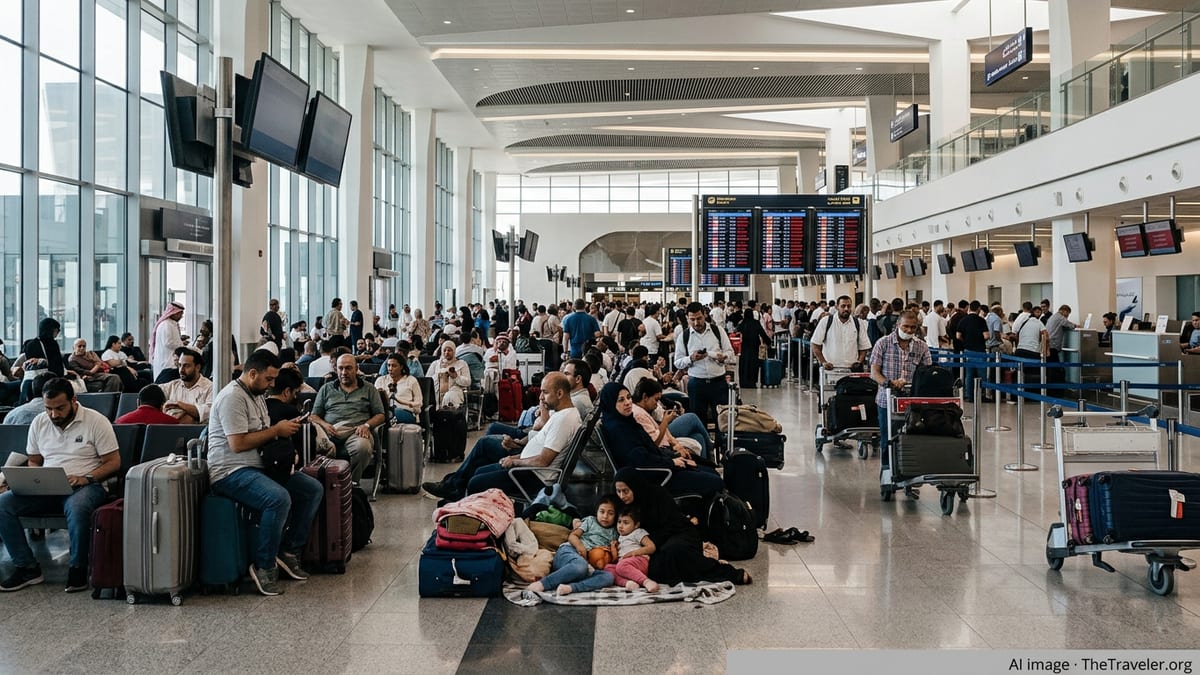
Thousands of travellers have been left stranded at Bahrain International Airport after a fresh wave of flight cancellations by Gulf Air and EgyptAir, with 104 services reportedly scrapped and knock-on disruption spreading across major Gulf hubs including Dubai, Riyadh, Dammam, Jeddah and Kuwait City.
Get the latest news straight to your inbox!
Regional Airspace Turmoil Hits Bahrain Hub
Publicly available information indicates that closures and restrictions in parts of Gulf airspace since late February and early March 2026 have severely constrained operations at Bahrain International Airport, one of the region’s key transit hubs. With Bahrain’s skies subject to heightened security measures, scheduled passenger services have been repeatedly curtailed or halted, leaving terminals crowded with travellers facing long delays and uncertain rerouting options.
Reports from regional news outlets and passenger accounts suggest that Gulf Air, Bahrain’s flag carrier, has borne the brunt of the disruption, cancelling large numbers of services to and from the island kingdom. EgyptAir, which relies on connections through Bahrain and other Gulf gateways for its wider Middle East network, has also cut flights, contributing to a total of 104 cancellations linked to the current upheaval.
The interruptions come at a time when Gulf airports have been handling strong passenger demand, including labour traffic between South Asia and the Gulf states and a busy calendar of business and leisure events across the region. The sudden loss of capacity has exposed how reliant international itineraries are on the dense web of connections through a handful of Gulf hubs.
Observers note that Bahrain International Airport’s busiest regional routes include Dubai, Kuwait City, Dammam and Jeddah. When flights on these corridors are withdrawn at short notice, schedules across multiple airlines can quickly unravel, cascading delays and cancellations far beyond Bahrain’s borders.
Ripple Effects Across Dubai, Riyadh, Dammam, Jeddah and Kuwait City
Disruptions originating in Bahrain have added strain to already stressed operations at other major Gulf airports. Dubai International Airport, the region’s largest hub by passenger numbers, has seen repeated schedule changes in recent weeks as airlines adjust routings to avoid closed or restricted airspace and accommodate passengers whose Bahrain-bound or Bahrain-originating flights have been cancelled.
In Saudi Arabia, King Khalid International Airport in Riyadh, King Fahd International Airport in Dammam and King Abdulaziz International Airport in Jeddah have all reported irregular operations as carriers re-time or reroute flights. Available coverage indicates that Saudi airspace has remained comparatively more open than Bahrain’s, turning Riyadh, Dammam and Jeddah into alternative gateways for travellers trying to bypass the bottleneck at Bahrain.
Kuwait City’s main airport has also been drawn into the disruption, with flight-tracking data and regional reporting showing altered routings and cancellations linked to the wider airspace constraints. As airlines seek viable corridors between Europe, Asia and Africa, Kuwait has alternated between acting as an operational pressure valve and facing its own wave of stranded passengers during peak disruption days.
This complex pattern has left many travellers on multi-leg itineraries facing missed connections and forced overnight stays in unfamiliar transit points. Some reports describe passengers being rebooked through secondary Gulf or Levant hubs, while others remain in limbo as airlines wait for clearer guidance on airspace conditions.
Gulf Air and EgyptAir Struggle to Maintain Connectivity
Gulf Air’s position as Bahrain’s national carrier and primary tenant at Bahrain International Airport makes it particularly exposed to local airport and airspace closures. Recent public updates from travel and aviation channels suggest that the airline has, at times, suspended most or all operations through its home hub, effectively cutting off a key bridge between South Asia, the Middle East and Europe for its passengers.
In response, Gulf Air has reportedly explored temporary workarounds, including limited operations via Dammam in eastern Saudi Arabia. Such measures are intended to provide an exit route for stranded travellers, but capacity on these ad hoc services remains far below normal schedules, and seats are quickly taken by passengers whose earlier flights were cancelled.
EgyptAir, operating a dense network into the Gulf from Cairo and other Egyptian cities, has also been affected. The grounding of flights into Bahrain and periodic changes to operations at other Gulf airports have forced the carrier to revise timetables, consolidate services and, in some cases, suspend certain routes temporarily. This has added further pressure on already full flights through alternative hubs such as Riyadh, Jeddah and Kuwait City.
Industry analysts note that network airlines like Gulf Air and EgyptAir rely heavily on the predictability of regional hubs. When a primary transit point such as Bahrain experiences sustained disruption, it undermines tightly planned banked connections and increases operational costs as aircraft and crews are repositioned or left idle.
Passengers Face Long Delays, Costly Detours and Limited Options
Travellers caught in the current disruption describe a patchwork of experiences that depend heavily on where they were in their journey when cancellations occurred. Those stranded at Bahrain International Airport have faced particularly acute challenges, with limited outbound flights, high competition for available seats and rapidly changing information on departure boards.
Some passengers have reportedly turned to overland options, travelling by car or bus across the King Fahd Causeway into Saudi Arabia in the hope of finding flights from Dammam or Riyadh. Others have sought seats from Dubai, Jeddah or Kuwait City, creating fresh surges in demand at those airports as they try to accommodate both local travellers and displaced Bahrain passengers.
Travel forums and social media posts indicate that hotel availability near major Gulf airports has tightened during peak cancellation periods, pushing up prices and forcing some travellers to spend extended hours or nights inside terminals. Flexible tickets and comprehensive travel insurance have proven valuable, although not all passengers hold such protection, leaving many to shoulder rebooking and accommodation costs themselves.
With aviation authorities and airlines providing only short-notice operational updates, many travellers have adopted a day-by-day approach, checking status alerts frequently and remaining close to their departure airports to seize any available opportunity to move onward.
Uncertain Outlook as Airlines Wait for Stable Airspace
As of mid-March 2026, the outlook for a rapid normalisation of flights through Bahrain and the surrounding region remains uncertain. Publicly accessible aviation data continues to show significant gaps in scheduled services to and from Bahrain International Airport, and airlines are generally reluctant to commit to full resumptions until they are confident that airspace restrictions will not be reimposed.
Aviation observers point out that the current situation follows several years of heightened geopolitical tension that has periodically affected Middle Eastern air corridors. Airlines have expanded contingency planning for such events, but large-scale, multi-country disruptions like the present one still impose severe strain on carriers and passengers alike.
For now, travellers with upcoming itineraries involving Bahrain, Dubai, Riyadh, Dammam, Jeddah or Kuwait City are widely advised, according to published guidance, to monitor airline communications closely, allow extra time for connections and consider alternative routings where possible. As Gulf Air, EgyptAir and other regional carriers work to rebuild their schedules, the experience of thousands of stranded passengers at Bahrain International Airport stands as a stark reminder of how quickly a key aviation hub can be brought to a standstill.