

More news on this day
Bahrain is cautiously reopening to international air traffic after weeks of conflict-related airspace closure, with flights now resuming in phases and schedules still constrained across the Gulf region.
Get the latest news straight to your inbox!
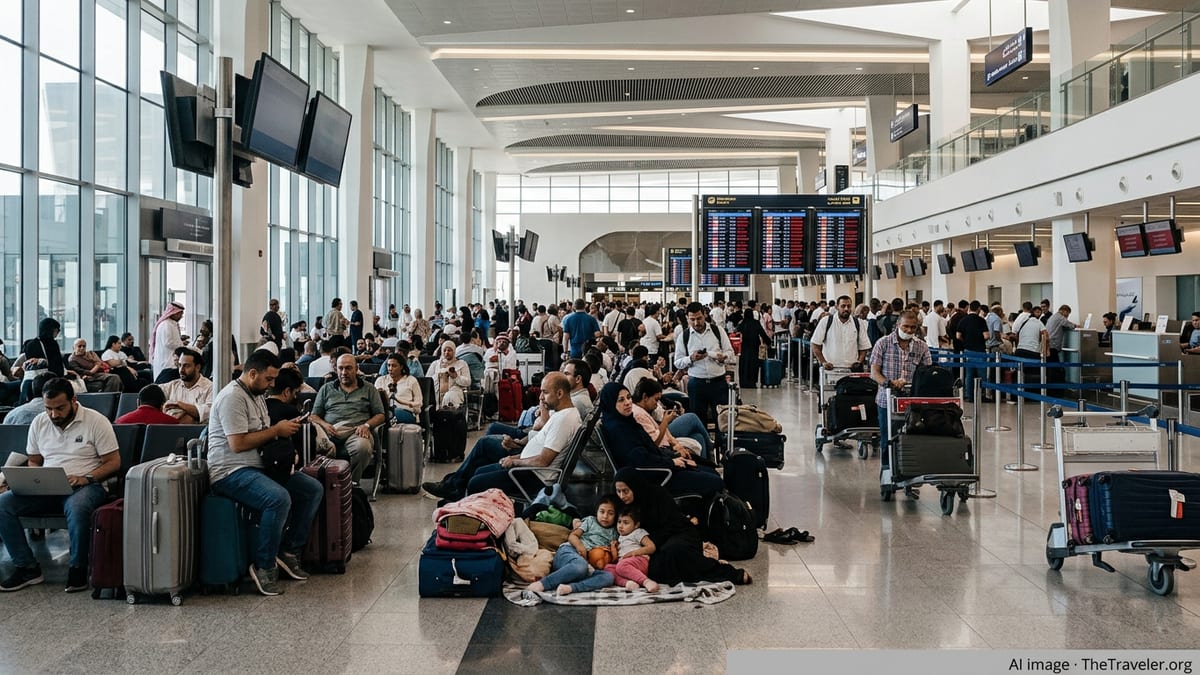
Airspace Reopens After Conflict-Driven Shutdown
Bahrain’s decision to reopen its airspace in early April follows a prolonged shutdown triggered by a sharp escalation in the regional conflict involving Iran and multiple Gulf states. Publicly available information shows that Bahrain, along with several neighbors, closed its skies in late February as missile and drone activity created significant safety concerns for civil aviation.
Reports indicate that Bahrain’s Civil Aviation Affairs has now announced a full reopening of the kingdom’s airspace, clearing the way for commercial traffic to return. The move marks a turning point for a country whose role as a regional transit hub was abruptly interrupted, stranding passengers and disrupting cargo flows between Europe, the Gulf, and South Asia.
Even with the reopening, aviation risk assessments remain complex. A conflict-zone advisory from the European Union Aviation Safety Agency continues to urge caution in large parts of Middle East and Gulf airspace, highlighting that the security situation is still fluid and that airlines must carry out detailed route-by-route evaluations before operating.
Gradual Flight Resumption at Bahrain International Airport
Flight activity at Bahrain International Airport is now slowly returning after a near standstill during the closure period. According to recent travel and aviation coverage, operations are resuming in stages rather than snapping back to full capacity, with airlines rebuilding their schedules around aircraft availability, crew positioning, and evolving safety guidance.
The initial focus is on restoring high-demand regional links. Reports from regional media describe early phases that prioritize short- and medium-haul routes within the Gulf and to key South Asian destinations, reflecting strong demand from migrant workers, returning residents, and connecting travelers who had been left in limbo for weeks.
Airport services are also ramping up in parallel. Ground handling, security screening, retail, and hospitality operations are adjusting to variable flight volumes, which can change at short notice as airlines add or pull services. Operators are signaling that full pre-conflict capacity is unlikely in the immediate term and that schedules will continue to evolve over the coming days.
Gulf Air and Other Carriers Rebuild Networks
National carrier Gulf Air has begun a limited resumption of scheduled services from its Bahrain hub, after initially suspending all regular flights during the airspace closure and temporarily routing some operations through alternative airports in neighboring Saudi Arabia. According to published airline updates, the carrier is now reinstating a first wave of destinations while maintaining contingency plans in case of renewed instability.
Coverage in regional and international media notes that Gulf Air’s early network rebuilding centers on more than a dozen key cities, particularly within the Gulf Cooperation Council and in South Asia. These are markets where demand rebounded quickly once the reopening was announced and where passengers had been heavily affected by earlier cancellations and diversions.
International airlines that had suspended or rerouted services through Bahrain are similarly reviewing their options. Some carriers are reinstating selected frequencies, often at reduced levels and with adjusted departure times to align with updated overflight permissions and conflict-zone advisories. Others continue to keep Bahrain off their near-term schedules, citing the need for additional risk assessment and operational certainty.
Ongoing Regional Disruptions and Safety Advisories
While Bahrain’s skies have reopened, the wider regional picture for air travel remains unsettled. Conflict-zone guidance from European and national regulators continues to highlight elevated risks across several flight information regions covering the Gulf and parts of the Middle East, advising operators to avoid certain areas or apply strict mitigation measures at specified altitudes.
Publicly available conflict and aviation analysis underscores that airspace closures and restrictions have not been uniform. Some neighboring states have fully reopened, others are maintaining partial restrictions, and routing options for long-haul services between Europe and Asia are still more constrained than before the crisis. This patchwork creates knock-on effects for Bahrain-bound flights, as carriers must weave through congested or elongated corridors.
Airlines are responding with dynamic route planning, higher fuel allowances, and additional time buffers to accommodate potential reroutes. Safety and insurance considerations remain central to these decisions, and industry observers caution that sudden changes in the security environment could still prompt temporary suspensions or diversions, even with Bahrain’s airspace technically open.
What Travelers Should Expect in the Coming Days
For passengers with upcoming trips involving Bahrain, the new phase is characterized by cautious optimism tempered by uncertainty. Travel advisories and airline notices emphasize that, although flights are resuming, schedules remain subject to last-minute adjustment. Travelers are being urged, through widely shared guidance, to monitor their bookings closely and allow extra time for connections.
Reports from consumer travel platforms highlight that rebooking backlogs and altered routings are still filtering through airline systems after weeks of widespread cancellations. Some passengers previously diverted via alternative hubs may now be offered the option to reconnect through Bahrain, while others may find that their itineraries remain routed around the kingdom until carriers restore more capacity.
Industry analysts suggest that a fuller picture of Bahrain’s post-conflict connectivity will emerge over the next several weeks. Much will depend on the durability of the current de-escalation, the evolution of regulatory advisories, and airlines’ assessments of demand. For now, the reopening of Bahrain’s airspace and the gradual restart of flights represent a significant, if cautious, step toward normalizing travel across one of the world’s most strategically important aviation crossroads.