

More news on this day
Passengers traveling through Bahrain are facing a new wave of uncertainty as Gulf Air, Qatar Airways, and IndiGo cancel more than 20 flights, disrupting key routes to Doha, London, Mumbai, Paris, Frankfurt, Istanbul, Milan, and other major hubs amid ongoing airspace restrictions and regional tension.
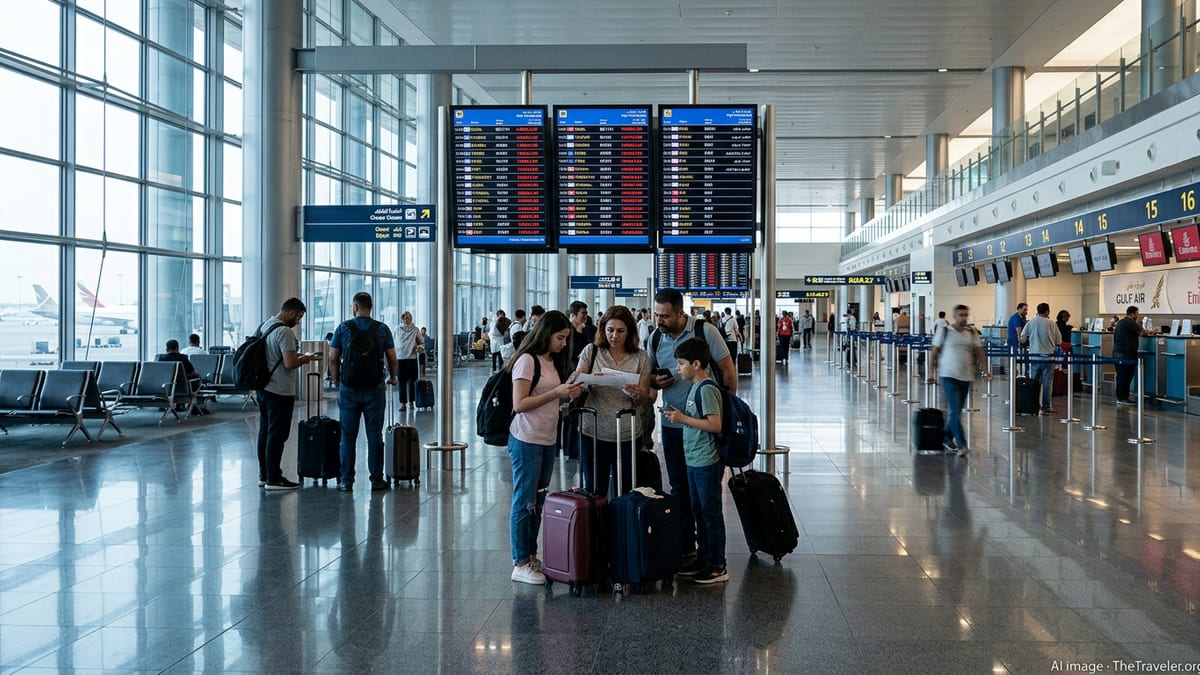
Wave of Cancellations Hits Bahrain’s Main Gateway
Bahrain International Airport has entered a fresh period of disruption as carriers across the Gulf recalibrate their schedules in response to volatile airspace conditions and shifting security assessments. Gulf Air, the kingdom’s flag carrier, remains heavily curtailed, while partner and competitor airlines are now pulling additional services that connect Bahrain to vital long-haul and regional networks.
Airport sources and airline advisories indicate that more than 20 flights touching Bahrain over the coming days have been cancelled or suspended. The majority are services linking passengers via Doha, one of the region’s most important transit hubs, but long haul routes to European and South Asian gateways are also affected, including London, Paris, Frankfurt, Milan, Istanbul, and Mumbai.
The latest schedule changes follow a turbulent fortnight for aviation in the Gulf, where partial airspace closures and rerouted corridors have upended normal operations. Travelers accustomed to using Bahrain as a convenient transfer point between Europe, Asia, and the Indian subcontinent now face short-notice cancellations, lengthy detours, and sharply reduced choice of departure times.
While Bahrain’s airport remains open, airlines are operating with far greater caution. Carriers are trimming frequencies, consolidating services, and prioritizing limited operating slots for repatriation and essential travel rather than discretionary trips, leaving leisure and business travelers scrambling to rebook.
Gulf Air Keeps Core Fleet Grounded as Disruptions Drag On
Gulf Air, which normally provides the backbone of Bahrain’s international connectivity, has yet to restore its pre-crisis schedule. Much of its fleet remains grounded after regional airspace restrictions and security concerns forced a rapid halt to regular operations. The airline has focused on a skeleton schedule and ad hoc rescue flights, but many scheduled services in and out of Bahrain remain suspended.
Industry analysts note that Gulf Air is particularly exposed because of its reliance on short and medium haul routes crisscrossing the most heavily affected air corridors. Connections to Doha, Riyadh, Kuwait, and select European and Asian destinations typically feed its network, and the closure or restriction of these paths has sharply constrained the carrier’s ability to operate economically viable rotations.
For Bahraini nationals and residents, the prolonged reduction in Gulf Air flights means fewer direct options to key cities such as London, Frankfurt, and Istanbul, and less redundancy when other carriers cancel. Passengers who once counted on multiple daily departures to regional hubs now report that entire days pass with only a handful of flights available or none at all on certain routes.
Gulf Air has urged customers to verify their bookings before heading to the airport and has introduced temporary policies allowing fee-free changes and refunds on affected itineraries. Call centers and airport ticket desks remain under intense pressure as travelers seek rerouting through alternative hubs such as Dubai, Abu Dhabi, Riyadh, and Muscat.
Qatar Airways Reduces Bahrain Connectivity as Doha Hub Operates on Limited Basis
Qatar Airways, which normally offers frequent connections between Bahrain and its Doha hub, has also pared back services touching the kingdom. The airline is currently running a tightly controlled, limited flight schedule to and from Doha, aimed primarily at moving stranded passengers via a select list of long haul destinations including London, Mumbai, Istanbul, Frankfurt, Milan, and other major cities.
Under the latest operational plans, Doha is handling far fewer departures and arrivals than usual, with only specific corridors cleared for use. Flights that would typically continue or originate in Bahrain have been among those most vulnerable to cancellation, as the carrier concentrates capacity on routes with the highest numbers of stranded travelers and the strongest strategic importance.
Passengers from Bahrain who would normally connect via Doha to Europe or Asia now face a patchwork of options that can change with little notice. Some are being rebooked onto Qatar Airways services operating only on one or two days this week, while others are advised to reroute through alternative hubs or postpone their trips entirely. Reports from the region’s travel agents indicate that same-day connections from Bahrain through Doha to cities such as London, Paris, and Frankfurt have become difficult or impossible to secure.
Although Qatar Airways has emphasized that safety and regulatory compliance are driving every schedule adjustment, the practical impact on Bahrain-based travelers is severe. Reduced frequencies, unpredictable timing, and heavily waitlisted flights are combining to extend journeys and, in some cases, strand passengers abroad awaiting confirmed seats on relief services.
IndiGo and Other Carriers Scale Back Bahrain Links Amid West Asia Turbulence
India’s low cost giant IndiGo, an important player in connecting Bahrain with the Indian subcontinent and onward routes, has also cancelled a number of flights in response to ongoing volatility in West Asia. Recent schedule updates show disruptions on services linking Bahrain with Mumbai and other Indian gateways, as the airline adjusts its operations to steer clear of restricted airspace and avoid congested alternate corridors.
These cancellations add to pressure on a segment already stressed by strong demand and limited capacity. Bahrain is a critical node for the large Indian expatriate community in the Gulf, and cuts to IndiGo’s flights reduce affordable options for workers and families trying to travel between the region and cities such as Mumbai. Many of these passengers now must hunt for seats on remaining full service carriers at higher fares or accept lengthy detours.
Other international airlines serving Bahrain, including European and regional carriers, are similarly trimming operations or temporarily suspending certain rotations. Long haul links to hubs like London, Paris, and Frankfurt are particularly vulnerable, as operators weigh aircraft availability, crew duty limits, and the additional fuel costs of detouring around closed or constrained airspace.
Travel advisors in Manama report that customers booking new itineraries are increasingly being steered away from transiting West Asia in the next week, with some shifting to routings via Istanbul, Cairo, or southern Europe where feasible. However, those alternatives are also under strain, with Istanbul in particular seeing surging demand and limited short notice capacity.
Passengers Confront Long Queues, Rerouting Battles, and Costly Detours
For travelers on the ground in Bahrain, the operational complexity translates into long queues at airport counters, jammed call centers, and mounting frustration. Many passengers learned of cancellations only hours before departure, prompting rushed attempts to secure seats on remaining flights to Doha or alternative hubs.
Those with onward connections to cities such as London, Mumbai, Paris, Frankfurt, Istanbul, and Milan face especially difficult choices. Some accept multi stop itineraries with overnight layovers, while others abandon air travel altogether and reschedule critical meetings, vacations, or family visits. In several cases, travelers report paying significantly higher fares to secure last minute seats on carriers that still have space.
Travel insurance and flexible ticket policies are easing some of the financial pain, but not all passengers are fully covered. Budget travelers and migrant workers on non refundable fares are particularly exposed, as refunds may be partial or slow to process, and rebooked itineraries can cost more than their original tickets. Agents in Bahrain say they are fielding a surge of requests from customers seeking documentation to support insurance claims and employer reimbursements.
Despite the disruption, airlines and airport authorities stress that safety remains the decisive factor in every cancellation or delay. They continue to urge travelers to monitor flight status closely, use official airline apps and hotlines rather than third party channels where possible, and allow extra time at the airport as security checks and boarding procedures adapt to rapidly changing operational plans.
Outlook: Reduced Schedules and Ongoing Uncertainty in the Days Ahead
While limited relief flights and carefully managed corridors are gradually restoring some connectivity across the Gulf, Bahrain’s air links are expected to remain fragile in the short term. Gulf Air, Qatar Airways, IndiGo, and other carriers serving the kingdom are all operating under constraints that leave little room for additional disruption, whether from further airspace changes, operational bottlenecks, or new security developments.
Industry observers anticipate that schedules will continue to evolve day by day rather than returning quickly to normal seasonal timetables. Short haul sectors to Doha and other regional hubs are likely to see intermittent cancellations and last minute timing shifts, making advance planning difficult for both leisure and corporate travelers relying on Bahrain as a transit point.
Travel professionals recommend that passengers with imminent departures build backup plans into their itineraries, including alternative dates, different routing options, or contingency budgets for potential overnight stays. They also stress the importance of booking through channels that can provide real time support, given the heightened risk of last minute changes.
For now, Bahrain’s role as a resilient Gulf hub is being tested by circumstances far beyond the control of its airlines or airport. How quickly full connectivity is restored to Doha, London, Mumbai, Paris, Frankfurt, Istanbul, Milan, and other key destinations will depend on regional security dynamics as much as on airline logistics, leaving travelers braced for several more days of uncertainty in the skies.