

More news on this day
Bahrain has moved to align with a fast-evolving regional coordination effort involving the United Arab Emirates, Saudi Arabia, Oman, Kuwait, Lebanon, Jordan, and other Middle East states, as governments race to manage unprecedented travel disruption, protect stranded visitors, and stabilize cross-border mobility following recent conflict-related airspace closures and security incidents.
Get the latest news straight to your inbox!
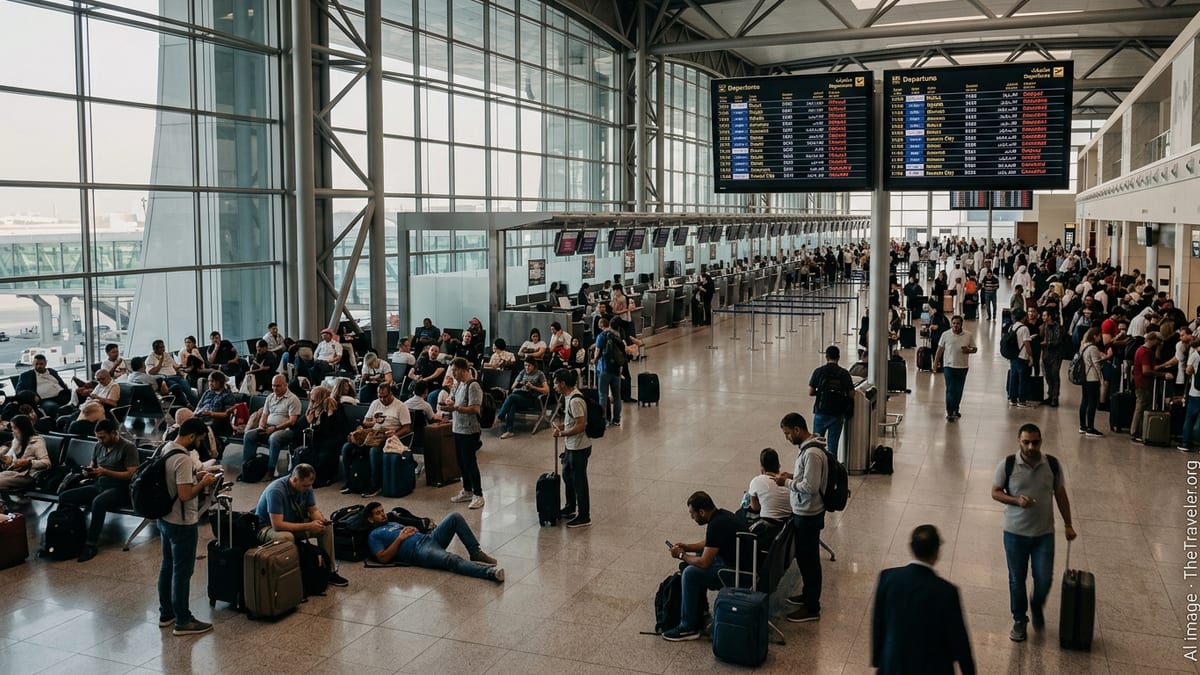
Regional Coordination Emerges Amid Widespread Disruption
Publicly available aviation and security advisories show that since late February 2026, a series of conflict-related incidents around the Gulf and the Strait of Hormuz has severely disrupted commercial aviation and shipping, triggering mass cancellations and leaving thousands of travelers unable to leave or enter affected countries.
Information compiled from regional airspace notices indicates that multiple Gulf states, including Bahrain, the United Arab Emirates, Saudi Arabia, Oman, Kuwait, and Qatar, have imposed partial or near-complete airspace restrictions at various points in March. These measures, designed to mitigate risk to civilian aircraft, have in turn choked normal travel flows and placed strain on airports that remain partially operational.
According to travel and risk advisories issued in early March, scheduled passenger flights across several hubs, including Bahrain International Airport, Kuwait International Airport, and Hamad International Airport in Doha, have been heavily reduced or temporarily halted, with only limited emergency or evacuation operations permitted in some cases. Carriers in the wider region have adjusted schedules, rerouted aircraft, or paused services, reducing options for travelers trying to transit through traditional Middle East hubs.
In parallel, maritime advisories covering the Strait of Hormuz and adjacent Gulf waters point to a marked decline in traffic and heightened security risk perceptions. While primarily focused on cargo and energy shipments, these developments have added to the sense of uncertainty surrounding mobility to and from the Gulf, reinforcing the need for coordinated cross-border responses that consider both residents and visiting travelers.
Bahrain’s Role in a Broader Middle East Response
Bahrain’s decision to join a wider regional coordination effort is unfolding against a backdrop of national airspace restrictions and a growing number of visitors unable to depart the country as planned. Notam summaries and logistics advisories circulated in March describe Bahrain’s airspace as closed to routine commercial traffic, with exceptions only for limited categories of flights.
Reports from aviation and cargo operators indicate that Gulf-based carriers, including those using Bahrain as a hub or key stopover point, have been forced to ground or reroute flights, affecting itineraries linking South Asia, Europe, and the wider Middle East. Online accounts from travelers, especially transit passengers and short-term visa holders, describe stays unexpectedly extended by days or weeks as they wait for rebooking options or alternative exit routes.
In this context, Bahrain’s participation in regional coordination appears focused on aligning procedures with neighboring states to manage stranded travelers more systematically. Public documentation related to United Nations deliberations and Gulf-wide security responses shows that Bahrain is working alongside Saudi Arabia, the United Arab Emirates, Oman, Kuwait, Jordan, and Lebanon within broader diplomatic and operational frameworks that also address regional security and humanitarian concerns.
While detailed joint communiqués on tourism and passenger welfare have not been widely circulated, the pattern of coordinated airspace decisions, shared risk assessments, and reference to common humanitarian objectives suggests that Bahrain’s actions are increasingly embedded in a collective regional strategy rather than a purely national approach.
Immediate Measures to Support Stranded Passengers and Visa Holders
Across the Middle East, authorities and industry stakeholders have begun to roll out short-term measures aimed at easing the pressure on visitors unable to travel as planned. Publicly available notices from airlines, consular services, and risk consultancies point to a mix of repatriation flights, temporary accommodation arrangements, and relaxed administrative rules for visa holders caught by sudden closures.
In Gulf hubs such as Bahrain, Dubai, Abu Dhabi, and Doha, travel advisories describe efforts to prioritize vulnerable travelers for available outbound seats, including those with urgent medical needs, families with children, and passengers whose visas are close to expiring. Some airlines have indicated that they are waiving change fees or offering flexible rebooking windows for tickets originating in or transiting the affected region, although capacity constraints remain a central challenge.
Information shared by logistics and freight operators suggests that limited passenger repatriation operations are being planned alongside cargo flights, particularly from airports where full commercial schedules remain suspended. These flights are intended to move stranded travelers in coordination with foreign embassies and regional partners, with routing decisions closely tied to evolving assessments of airspace safety and airport readiness.
In parallel, several Gulf states have publicly signaled their intention to provide administrative relief to visitors whose legal status has been jeopardized by disruption. While specific regulations vary by country, published summaries of emergency measures mention grace periods for exit, simplified extension procedures for visit visas, and a more flexible approach to overstays directly linked to flight cancellations or border closures.
Visa and Residency Flexibility to Preserve Traveler Protection
Alongside operational responses in aviation, the emerging Middle East coordination effort is placing growing emphasis on the legal and practical situation of travelers who suddenly find themselves unable to comply with standard visa timelines. Public briefs on regional mobility highlight concerns that tourists, business travelers, and foreign residents on short-term permits could otherwise be exposed to fines, entry bans, or gaps in access to essential services.
Across Bahrain, the United Arab Emirates, Saudi Arabia, Oman, Kuwait, Jordan, and Lebanon, publicly accessible guidance points to an evolving toolkit of protective measures. These include temporary suspension or softening of overstay penalties in cases directly linked to transport disruption, expanded options to convert short-stay visas into longer temporary permits, and, in some jurisdictions, the possibility to regularize status while waiting for outbound flights.
Travel risk analysts note that these steps are intended not only to prevent bureaucratic hardship but also to maintain a climate of basic stability for foreign visitors at a time of heightened tension. For many destinations whose economies rely heavily on aviation connectivity, hospitality, and medical or business travel, safeguarding the experience of stranded visitors is viewed as an investment in long-term reputation as much as a crisis-management necessity.
However, the patchwork of rules and the speed at which circumstances are evolving mean that travelers are still being advised to consult official channels for country-specific guidance before making decisions on onward travel, overland exits, or changes to their stay. In Bahrain and other Gulf states, publicly available notices stress the importance of matching individual plans with the latest airspace updates, visa regulations, and any newly announced humanitarian corridors.
Longer-Term Implications for Regional Travel Stability
Beyond the immediate crisis, the coordinated response involving Bahrain and its neighbors is likely to shape how the Middle East manages traveler protection and aviation risk in the years ahead. Policy papers and regional aviation forecasts released prior to the current disruption projected a sharp rise in Middle East passenger traffic through 2030, alongside ambitious investments in airports, airlines, and tourism infrastructure.
Analysts now suggest that the current episode may accelerate efforts to formalize regional crisis protocols covering airspace closures, emergency rerouting, and minimum standards for passenger care. The experience of stranded travelers across Bahrain, the Gulf states, and the Levant is expected to feed into new agreements that clarify how airlines, airports, and governments share responsibility during periods of severe disruption.
There are indications that future coordination could extend beyond security-related airspace decisions to include shared digital platforms for traveler alerts, standardized approaches to ticket flexibility during emergencies, and pre-agreed frameworks for temporary visa relaxation. For global travelers accustomed to using Gulf hubs as vital connectors between continents, such measures could become a key factor in rebuilding confidence once regular schedules resume.
For now, Bahrain’s alignment with a broader Middle East coordination effort signals that the region’s governments are attempting to move from ad hoc, country-by-country responses toward more integrated mechanisms aimed at keeping travelers protected and mobility as stable as possible, even amid an unusually volatile environment.