

More news on this day
Authorities in Bali are intensifying safety reviews and security preparations across the island ahead of the 2026 Eid al-Fitr holiday surge, aiming to reassure visitors that Indonesia’s most popular tourism destination will remain secure, orderly, and welcoming during one of its busiest travel periods of the year.
Island-Wide Safety Audit as Visitor Numbers Climb
Indonesia’s deputy tourism minister and senior provincial officials have been inspecting major visitor hotspots in Bali in recent days, from Kuta and Nusa Dua to Ubud and popular coastal corridors, to assess readiness for the approaching Eid holiday peak. Site checks have focused on crowd management, structural safety at busy beaches and viewpoints, and the capacity of local authorities to respond quickly to incidents as domestic and international arrivals increase.
The review comes as Bali continues to chase ambitious tourism targets after surpassing pre-pandemic international arrival records. Local tourism leaders have acknowledged that this growth, while vital to the economy, is putting pressure on infrastructure, public order, and community life, particularly around major religious holidays when domestic travel surges. Officials say the latest safety audit is intended to balance economic gains with a more sustainable, quality-focused tourism model.
Alongside physical inspections, ministries are coordinating with district governments, tourism associations, and transport operators to map projected bottlenecks on roads and at gateways such as Ngurah Rai International Airport and the Gilimanuk ferry port. Authorities have indicated that they expect both outbound “mudik” homecoming traffic and inbound holidaymakers to test the island’s transport network in the weeks surrounding Eid.
Operation Ketupat Agung Extends Security Presence for Eid
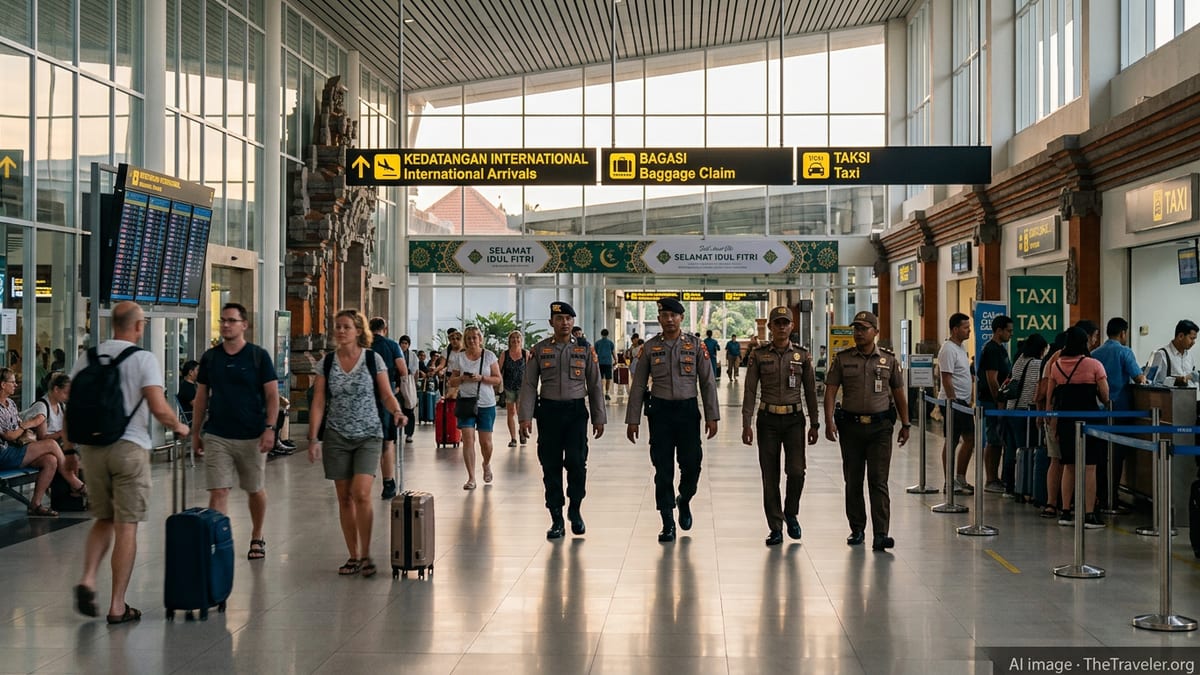
Bali’s security preparations are being anchored by Operation Ketupat Agung, a nationwide policing initiative activated each year around the Nyepi and Lebaran Eid al-Fitr holidays to maintain public safety. Police have confirmed that, as part of this year’s operation, tourists can expect to see increased uniformed and plain-clothes patrols at airports, ports, bus terminals, and key tourist areas through the end of the peak travel window.
The operation brings together national police, Bali’s civil service police unit Satpol PP, and other government agencies in integrated posts set up at strategic locations. These posts are intended to provide rapid coordination in the event of accidents, crime, or natural disruptions, as well as to offer information and assistance to travelers. Health posts and mobile medical teams are also being prepared along major overland routes to support both residents and visitors.
Traffic management is a central focus, with extra teams deployed along routes connecting Denpasar to Gilimanuk on the western tip of Bali, a corridor that carries a heavy flow of vehicles to and from Java during the Eid period. Authorities have previously restricted heavy vehicles on certain days to ease congestion and have signaled that similar controls could be implemented again if traffic volumes threaten to overwhelm local roads.
Airport and Immigration Tighten Watch on Arrivals
At Bali’s Ngurah Rai International Airport, security officials have already moved to strengthen aviation safety protocols following national directives issued last year. Police patrols inside the terminal complex have been stepped up, with round-the-clock monitoring designed to deter crime, respond swiftly to emergencies, and manage crowding at immigration, baggage claim, and transport pick-up areas during holiday peaks.
Immigration authorities, meanwhile, are continuing to deploy a specialized task force to monitor the behavior of foreign visitors across the island. The unit conducts targeted patrols in popular tourist districts, focusing on travelers suspected of violating visa conditions, working illegally, or engaging in activities that risk public order. Officials say enforcement aims to protect both compliant tourists and local communities from the fallout of a small number of problematic visitors.
Looking ahead, the provincial government is preparing additional regulations for 2026 that will further scrutinize foreign visitors’ financial readiness and planned activities before or upon arrival. While details are still being finalized, policymakers present the move as part of a broader push toward “quality tourism,” seeking visitors who respect local laws and culture while contributing more evenly to the island’s economy.
New Tourist Conduct Rules and Digital Monitoring
Alongside physical security measures, Bali has sharpened its regulatory toolkit. Updated provincial guidelines introduced in 2025 set clearer expectations for foreign tourists, outlining dos and don’ts on issues ranging from appropriate dress and temple etiquette to road safety, currency exchange, and responsible social media use. The guidelines are distributed at immigration checkpoints, hotels, and through tourism operators, and officials have pledged to enforce them more consistently.
Under the new framework, tourists are required to pay a dedicated foreign visitor levy, use authorized money changers, comply with local traffic laws when renting motorbikes or cars, and avoid behavior that is considered disrespectful or disruptive to religious practices. Violations can attract fines, deportation, or other legal consequences under Indonesian law. Authorities argue that these measures are intended not to discourage visitors but to ensure that tourism growth does not erode Bali’s cultural fabric or community wellbeing.
To support enforcement, Bali’s security and tourism agencies are experimenting with greater use of digital monitoring tools. Local hotel and restaurant associations have been asked to cooperate with law enforcement in using shared systems that track foreign guest data within the bounds of national regulations. Officials say the goal is to quickly identify repeat offenders and immigration violators, while enhancing overall situational awareness during high-risk periods such as Eid.
Balancing Religious Observances, Visitor Flows, and Local Life
The Eid holiday rush in Bali unfolds against a complex calendar of religious observances, including Nyepi, the annual Hindu Day of Silence that in 2026 falls in March ahead of Eid al-Fitr. During Nyepi, the island effectively shuts down for 24 hours and even air traffic is paused, an arrangement that requires careful coordination with the subsequent Muslim homecoming and holiday period when travel soars nationwide.
Police and community security teams known as pecalang work together during these overlapping observances to keep roads safe, maintain order at religious ceremonies, and minimize disruptions for both locals and visitors. In the weeks around Eid, this collaboration extends to tourist hotspots, where officers and community leaders seek to ensure that holidaymakers can enjoy beaches, temples, and nightlife without infringing on local customs or straining public services.
Tourism officials are urging travelers planning Eid-period trips to Bali to familiarize themselves with local regulations, anticipate heavier traffic, and build flexibility into their itineraries. They stress that the enhanced safety measures are designed to provide a more comfortable and predictable experience, whether visitors are transiting through Bali en route to Java or settling in for a week at one of the island’s resorts.
With more officers on the streets, clearer behavioral rules, and ongoing inspections of high-density attractions, Bali’s government is betting that proactive planning will help the island navigate another intense holiday season. If successful, the approach could become a blueprint for how the destination handles future peak periods while continuing its shift toward a safer, more sustainable brand of tourism.