

More news on this day
Bali is emerging from the post-pandemic decade as one of the fastest-recovering destinations in Southeast Asia, with regional travel analysis for 2026 indicating that the Indonesian island is on course to welcome a record seven million international visitors drawn by its sacred temples, living culture and dramatic volcanic landscapes.
Get the latest news straight to your inbox!
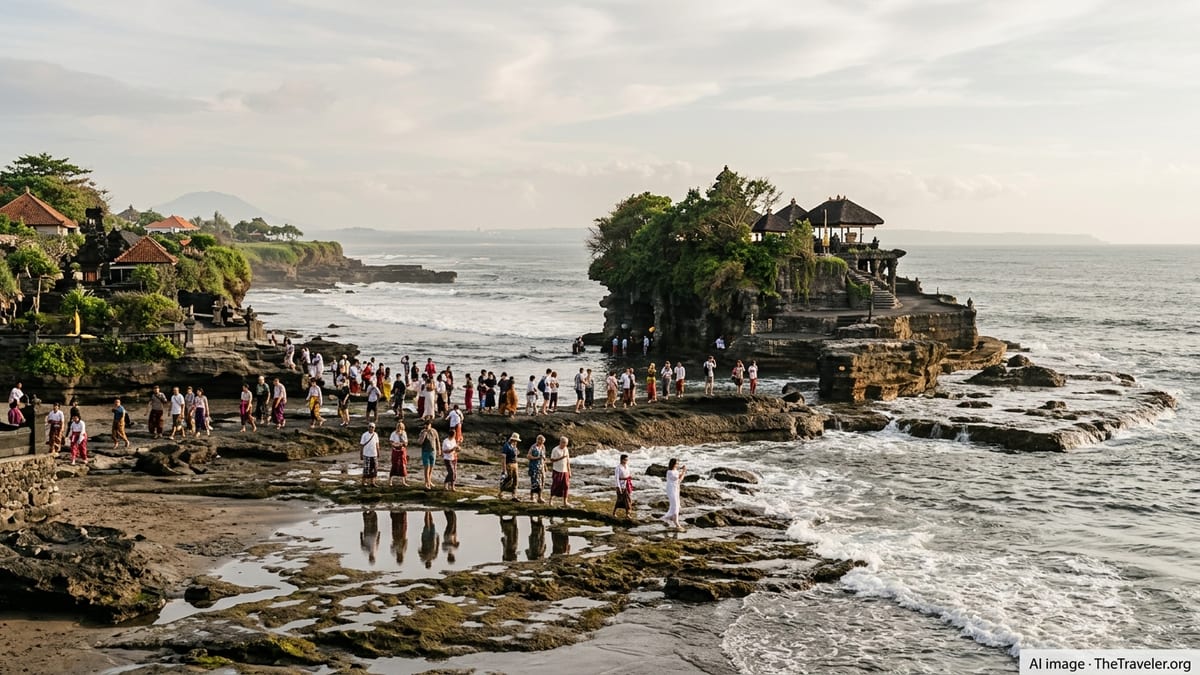
Record-Breaking Visitor Numbers Reshape Bali’s Tourism Map
Recent data and industry outlooks show that Bali has moved beyond recovery and firmly into a new growth phase. Official provincial statistics recorded 6.95 million foreign arrivals in 2025, the highest figure ever and nearly 10 percent more than 2024, when 6.33 million international tourists visited the island. This momentum is feeding directly into projections for 2026, with regional tourism investment reports indicating that Bali has already crossed the symbolic seven million mark when air and sea arrivals are combined, putting it back among Asia’s busiest leisure destinations.
The island’s main gateway, I Gusti Ngurah Rai International Airport near Denpasar, has been central to that surge. Airport and hotel sector updates for 2025 highlighted months when foreign arrivals alone exceeded 600,000, underscoring the strength of Bali’s core markets from Australia, Europe and emerging Asian economies. Analysts tracking aviation and hotel performance note that early 2026 passenger trends, while affected by global uncertainty, continue to reflect robust international interest in Bali as a long-haul beach and culture destination.
Domestic travel remains a crucial pillar of Bali’s tourism profile. National statistics for 2024 showed that around 10 million Indonesian travelers visited the island, making domestic tourists the majority of overall arrivals and providing an important buffer when global demand softens. In 2026, travel agencies and hotel associations report that weekend and school-holiday traffic from Jakarta, Surabaya and other Indonesian cities is helping to sustain occupancy even as some long-haul markets fluctuate.
The shift from simple recovery to expansion is also changing how tourism is distributed across Bali. Visitor statistics and industry commentary point to renewed growth not only in traditional hotspots such as Kuta and Seminyak but also in Ubud, Canggu and the eastern coastal corridor, where investment in boutique resorts and wellness retreats is drawing higher-spending travelers.
Cultural Offerings and Sacred Temples Drive Demand
Behind the headline visitor numbers, Bali’s enduring appeal rests on its distinctive Hindu culture and thousands of temples woven into everyday life. From the sea temple of Tanah Lot, perched on rocky outcrops above the Indian Ocean, to Besakih on the slopes of Mount Agung and the clifftop compound at Uluwatu, the island’s sacred sites remain among the most photographed and visited attractions in Indonesia. Travel market summaries for 2025 and early 2026 highlight these temples as key motivators for long-haul visitors who increasingly seek cultural depth alongside beach holidays.
Festival calendars are another driver of repeat travel. Publicly available tourism schedules show that major ceremonies such as Galungan, Kuningan and Nyepi, the Balinese Day of Silence, continue to attract culturally curious visitors willing to adjust itineraries around processions, offerings and temple visits. Cultural researchers note that performances of traditional dance, gamelan music and ritual arts remain widely accessible in villages and community halls, rather than confined to purpose-built venues, reinforcing Bali’s image as a living culture rather than a staged attraction.
The rapid rise in visitor numbers is prompting renewed attention to cultural management. Academic and policy reports released in late 2025 warn that pressure on high-profile temples is intensifying, particularly during sunset hours and around major holidays. Local regulations already require visitors to wear appropriate dress, including sarongs and sashes, and to respect restrictions on entering prayer spaces. Newer guidance promoted in 2026 emphasizes photography etiquette, the need to avoid interrupting ceremonies and the importance of using designated pathways at temple complexes.
For travelers, this means more structured experiences alongside continued access. Many temples now encourage visits during quieter hours in the morning, while some village-run sites are limiting group sizes or spacing entry times. Tourism studies suggest that these steps are designed to preserve the spiritual atmosphere that first made Bali famous, while keeping key sites open to an expanding global audience.
Stunning Landscapes, From Volcano Ridges to Coral Reefs
Beyond temples and village life, Bali’s geography remains a major reason why tourism numbers are climbing. The island’s interior is dominated by volcanic ridges, crater lakes and terraced rice fields that have been recognized internationally for their cultural landscape value. Travel data services and destination rankings regularly place areas such as Tegallalang and Jatiluwih among the most searched and photographed rice terraces in Southeast Asia, contributing to strong demand for day trips and rural homestays.
Coastal regions are charting their own tourism patterns. Surf breaks along the Bukit Peninsula, from Uluwatu to Padang Padang, continue to attract experienced surfers, while gentler beaches in Sanur and Nusa Dua appeal to families and older travelers. Marine conservation reports highlight that the waters around Nusa Penida and northern Bali support manta ray cleaning stations and coral reefs, drawing snorkelers and divers and helping to diversify tourism away from a small number of southern beaches.
Environmental and infrastructure assessments note, however, that these landscapes face mounting stress as visitor numbers rise. Waste management, traffic congestion and water use are recurring concerns in government and academic analyses of Bali’s tourism trajectory. In response, local initiatives in 2025 and 2026 have expanded community-based trekking routes, promoted refillable water bottle programs and encouraged tour operators to spread itineraries more evenly across the island to reduce pressure on a few high-traffic sites.
For travelers planning a 2026 visit, the changing landscape means more choice but also a stronger need to research specific areas. Northern and eastern regions, including Amed, Tulamben, Sidemen and Munduk, are increasingly promoted as quieter alternatives for hiking, diving and coffee-plantation visits, often with cooler temperatures and fewer crowds than the southern resort belt.
Key Rules, Levies and Practicalities Before You Go
Alongside record visitor numbers, Bali has introduced new rules and costs that travelers need to understand before booking. Since February 2024, all foreign visitors arriving in Bali have been subject to a provincial tourism levy of 150,000 Indonesian rupiah per person, payable once per visit. Travel advisories updated for 2026 make clear that the levy remains in place and is now integrated into standard arrival procedures, with funds earmarked for cultural preservation and environmental management projects across the island.
Visa and entry regulations continue to evolve at national level. By early 2026, Indonesia’s common options for Bali-bound tourists include visa-free entry for a limited list of nationalities, a paid visa on arrival for many others and various longer-stay permits for remote workers, retirees and investors. Embassies, consulates and airline advisories emphasize that travelers should check the latest rules shortly before departure, as eligibility, fees and permitted lengths of stay can change with limited notice.
Local regulations affecting visitor conduct have also become more visible. Public information campaigns and widely shared summaries in 2025 and 2026 outline expectations on dress, behavior at sacred sites, drone usage and respect for residential areas. Several districts have tightened rules on short-term rentals and motorcycle use, citing concerns about noise, safety and community disruption. Travelers are encouraged to verify whether their accommodation is licensed and to follow posted guidance on parking, helmet use and traffic flows.
Health and safety considerations remain central to pre-trip planning. Bali’s tropical climate brings a year-round risk of mosquito-borne illness and heat-related fatigue, and travel health guidance recommends adequate insurance, routine vaccinations and caution when swimming near strong currents. Seasonal weather patterns mean that conditions can vary significantly between dry and rainy months, influencing everything from surf conditions to trekking safety around volcanoes.
Planning a 2026 Trip in a Changing Tourism Landscape
With Bali projected to host around seven million international visitors in 2026, travelers are entering an island that is both familiar and rapidly changing. Hotel occupancy reports show that peak seasons around July and August, as well as year-end holidays, are filling up earlier, especially in popular neighborhoods such as Canggu, Ubud and Nusa Dua. At the same time, commentary from tourism analysts points to occasional dips in occupancy linked to global economic trends and geopolitical tensions, creating short windows when prices soften and crowds thin.
Experts following Southeast Asian tourism recommend that visitors consider shoulder seasons if they want to experience Bali’s cultural and natural attractions with fewer people. Booking in advance is increasingly important for high-demand activities such as sunrise hikes on Mount Batur, boat trips to Nusa Penida and premium beachfront stays, while flexible travelers may find value in exploring inland villages or less publicized coastal towns that are now building modest but comfortable accommodation.
The policy shift toward what Indonesian officials describe as quality tourism is expected to shape visitor experiences throughout 2026. Investment forecasts highlight a growing focus on wellness retreats, sustainable boutique resorts and community-based tourism programs that channel spending into villages and conservation projects. For travelers, that translates into a wider range of choices that emphasize slower travel, cultural immersion and lower environmental impact, set against the backdrop of one of the world’s busiest island destinations.
As Bali navigates record visitor numbers and evolving regulations, those planning trips in 2026 are advised to combine traditional beach-and-temple itineraries with up-to-date checks on rules, levies and local expectations, ensuring that the island’s cultural and natural riches remain accessible for years to come.