

More news on this day
Bali’s image as a laid-back tropical escape is under fresh scrutiny after an American tourist was detained for walking along a road during Nyepi, the island’s sacred Day of Silence, in an incident that has ignited global debate over cultural respect and what visitors are expected to know before they arrive.
Get the latest news straight to your inbox!
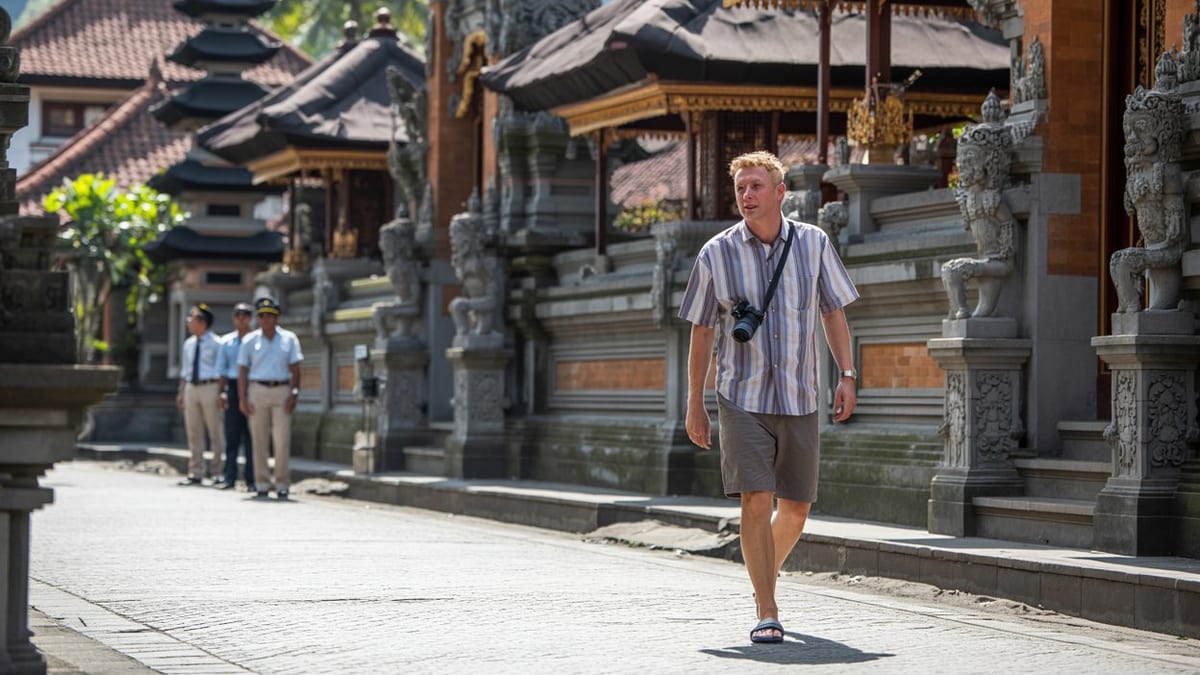
Image by Latest International / Global Travel News, Breaking World Travel News
Day of Silence Turns Into Viral Flashpoint
Reports from Indonesian and international outlets indicate that on March 19, 2026, during this year’s Nyepi observance, a 57-year-old American man was stopped in Sukawati, Gianyar Regency, after being seen walking along a main road at around 7 a.m. local time. Patrol officers were enforcing the near-total shutdown that Bali observes annually, when streets, businesses and even the island’s airport fall quiet for 24 hours.
Published coverage identifies the visitor as Karl Adolf Amrhein, who was briefly detained and questioned after allegedly ignoring instructions to remain indoors. Local media accounts describe how he was escorted to a police station and later to new accommodation, with a formal warning issued against further violations during the silent period.
According to reports, the traveler told officers he had left his previous hotel in Ubud after his stay and visa expired and said he was searching for another place to stay. The explanation has done little to calm public anger in Bali, where Nyepi is widely regarded as one of the most important spiritual events of the year and where residents repeatedly stress that foreign guests are informed of the rules well in advance.
The incident ricocheted across global travel and social media channels within days, with comment threads split between those who saw the detention as a predictable outcome of ignoring sacred customs and those who questioned whether visitors are adequately briefed on how strict Nyepi really is.
What Nyepi Means for Life on the Island
Nyepi, rooted in Balinese Hindu tradition, marks the start of the Balinese New Year and is dedicated to reflection, purification and spiritual renewal. Publicly available information from cultural and tourism sources explains that the island effectively shuts down from 6 a.m. on Nyepi day until 6 a.m. the following morning, a ritual observance designed in part to create the impression of an uninhabited island to malevolent spirits.
During this 24-hour period, most residents follow four key restrictions: no fire or bright lights, no travel, no work and limited entertainment or noise. Streets empty, villages go dark and even the typically busy tourist districts of Kuta, Seminyak and Ubud fall silent. Only emergency services are permitted to operate, and Bali’s I Gusti Ngurah Rai International Airport suspends all commercial flights for the duration before reopening once the observance ends.
The rules apply not only to local residents but to everyone physically present on Bali at the time, regardless of religion or nationality. Hotels and guesthouses are allowed to keep lights on at reduced levels, often with curtains drawn, and may provide food and limited in-house services. Guests, however, are expected to remain on property and off the streets, a condition that caught the detained American traveler in breach when he stepped outside.
Tourism advisories and hotel communications routinely highlight Nyepi’s date and its implications for movement, check-in and checkout times, and flight schedules. The growing number of travelers who plan trips specifically to experience Nyepi suggests that many visitors embrace the observance, yet the latest incident underscores how even one misstep can collide with deeply held local beliefs.
Rising Tensions Over Tourist Behavior in Bali
The case of the American visitor comes amid heightened sensitivity around foreign behavior in Bali. In the same week, separate coverage detailed the arrest of a Swiss tourist over an online post that allegedly insulted Nyepi, further fueling public debate over how some visitors engage with Balinese culture and religion.
Local commentary and editorials in Indonesian media describe a pattern of frustration with a minority of foreign travelers accused of disrespecting dress codes at temples, ignoring traffic rules on rented scooters or misusing social media to mock religious practices. Officials have already introduced stiffer enforcement of visa conditions, road regulations and tourism levies in recent years as visitor numbers have rebounded.
The Nyepi walk incident reflects this broader context. Many Balinese residents who weighed in online framed the American’s actions as symbolically significant, arguing that stepping onto an empty road on the island’s quietest day represented more than a simple misunderstanding. For them, it highlighted the perceived gap between how locals experience Bali as a living spiritual landscape and how some tourists treat it as a backdrop for holiday content.
At the same time, some travel industry voices note that Bali’s rapid return to high visitor volumes after the pandemic has renewed pressure on accommodation providers and tour operators to clearly communicate local norms. They argue that the latest cases underline the need for consistent, multilingual messaging about religious observances and legal expectations.
What Travelers Must Know Before Visiting During Nyepi
For prospective visitors, the incident serves as a stark reminder that Nyepi is not a symbolic ceremony observed only by the devout. It is a binding civic and spiritual event that shapes everything on the island for a full day, from flight schedules to what guests can do inside their hotels.
Travel guidance from airlines, hotels and destination marketers generally advises that anyone in Bali on Nyepi must plan to remain at their accommodation for the entire 24 hours, with no street access and no use of private vehicles. Travelers are urged to stock up on essentials the day before, adjust itineraries to avoid same-day transfers, and expect limited in-house activities, subdued lighting and quiet common areas.
Those with tight international connections are commonly advised to avoid scheduling arrivals or departures on Nyepi itself, since the airport closure halts both domestic and international services. Flight operations typically resume the following morning, but schedules can be congested, and disruptions may carry over into subsequent days.
Prospective guests are also encouraged to check directly with their hotel regarding specific rules: some properties allow guests to use pools and shared spaces discreetly, while others ask guests to remain in their rooms except for meals. In all cases, the expectation is that foreign visitors will align their behavior with local norms, treating Nyepi as an opportunity for rest and reflection rather than a minor inconvenience.
A Test Case for Bali’s Push Toward “Respectful Tourism”
The detention of the American tourist has quickly become a reference point in ongoing discussions about what kind of tourism Bali wants to promote. Local stakeholders have increasingly used language around “quality” or “respectful” tourism, signaling a preference for visitors who are willing to adapt to Balinese customs over those seeking unrestricted nightlife and freedom of movement.
Publicly available policy documents and statements show a broader shift in Indonesia toward codifying expectations for foreign behavior, from mandatory tourist levies that support local infrastructure to renewed reminders about visa rules, dress standards at sacred sites and bans on certain activities in culturally sensitive areas. Nyepi sits at the heart of this conversation because it offers a clear, highly visible test of whether visitors are prepared to follow community-wide rules for a single day.
For many in the global travel community, the latest case is likely to become a cautionary tale shared in online forums and guidebook updates. Far from discouraging tourism, experts suggest it could encourage better pre-trip research and stronger cultural briefing by tour operators, making Nyepi a signature experience that rewards informed and respectful travelers.
As Bali moves deeper into the 2026 holiday season, the memory of one quiet walk on an empty road is expected to linger, shaping how the island presents itself and how visitors prepare for a destination where silent streets and darkened skies can carry the weight of centuries-old belief.