

More news on this day
Bali Zoo has recorded a one hundred and twenty percent rise in visitors during the 2026 Eid al-Fitr holiday period, highlighting the growing pull of wildlife-based attractions on an island long known primarily for its beaches and temples.
Get the latest news straight to your inbox!
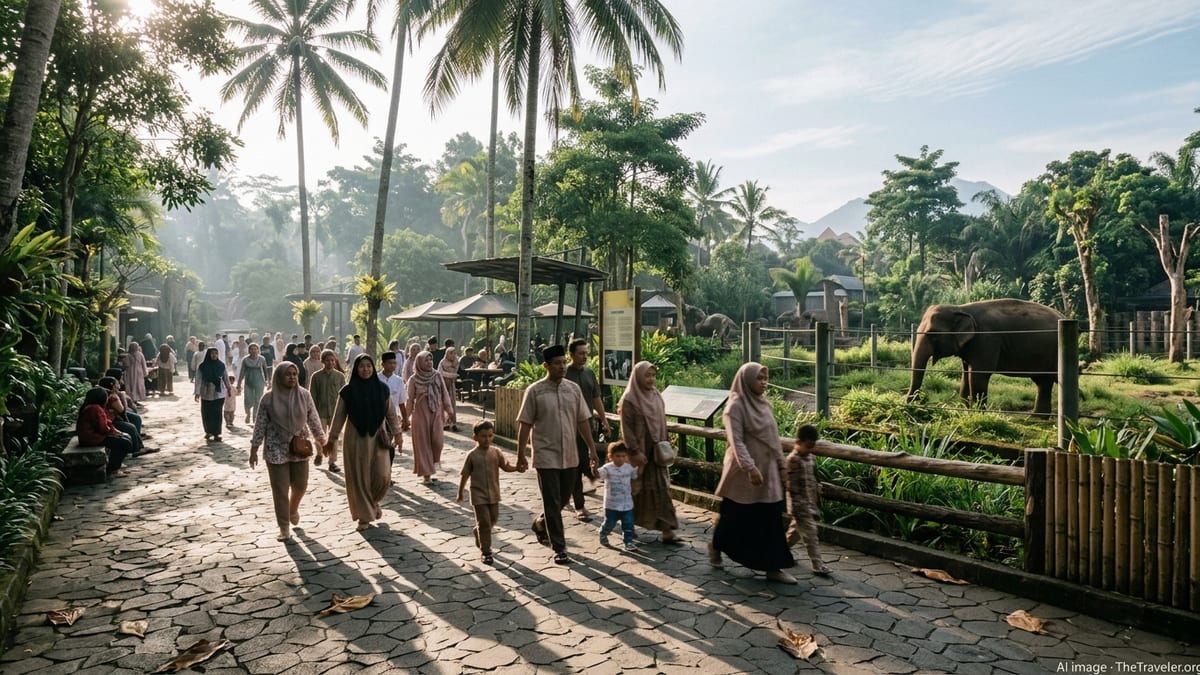
Eid Holiday Crowds Flock to Wildlife Experiences
The Eid al-Fitr break, observed in Indonesia around March 20 and 21 in 2026, traditionally sends millions of domestic travelers across the archipelago for family gatherings and short leisure trips. This year, publicly available information indicates that Bali’s established tourism hubs saw particularly heavy demand from domestic holidaymakers combining festive visits with short getaways.
Within this context, Bali Zoo’s reported 120 percent surge in visitor numbers compared with the previous Eid period stands out. The sharp rise suggests that zoo-based and wildlife encounters are increasingly seen as a core part of the island’s holiday offering, especially for families seeking child-friendly activities beyond Bali’s coastal strips.
The concentration of visits during a relatively short holiday window has also underscored the importance of crowd management and animal welfare protocols at popular wildlife sites. Published coverage of Indonesia’s broader tourism sector notes that peak-season surges can strain infrastructure, and the zoo’s performance during Eid will likely be watched as a case study in balancing visitor volume with responsible operations.
Industry observers point out that the Eid period often acts as an early barometer for tourism demand for the rest of the year. Strong traffic at attractions like Bali Zoo is being interpreted as a positive signal for Bali’s 2026 tourism outlook, particularly in the domestic family travel segment.
Domestic Tourism Drives Holiday Attendance
Indonesia’s Eid al-Fitr holiday, known locally as Lebaran, triggers one of the world’s largest annual movements of people, as travelers return to home provinces or use the extended break for leisure trips. Recent reporting on travel patterns suggests that Bali remains a favored destination for both returning migrants working off-island and urban families from Java seeking a mix of relaxation and activities for children.
Against that backdrop, Bali Zoo’s Eid performance reflects broader domestic demand rather than a purely international uptick. Publicly available information on Indonesia’s travel market indicates that domestic tourism has become a pillar of the national visitor economy, especially after recent global disruptions, and destinations that can cater to multi-generational groups are benefiting most.
The zoo’s draw for domestic visitors is tied to its positioning as a full-day family destination, with animal exhibits, interactive feeding sessions, and educational programming packaged alongside dining and play areas. During the Eid break, this combination appears to have been particularly attractive to travelers seeking experiences that entertain children while remaining accessible to older relatives.
Travel analysts tracking Indonesian holiday trends note that domestic travelers are increasingly looking for value-oriented experiences that feel special but do not require long-haul flights. A surge in attendance at a single, well-established attraction such as Bali Zoo during Eid offers a snapshot of that shift in preferences.
Wildlife Tourism’s Expanding Role in Bali’s Appeal
While Bali’s international image is still dominated by surf breaks, rice terraces, and cultural sites, wildlife tourism has expanded steadily over the past decade. Alongside coastal marine activities such as snorkeling and diving, land-based experiences including bird parks, conservation-focused sanctuaries, and zoos have gained prominence in travel itineraries.
Reports on Bali’s tourism strategy indicate an emphasis on diversifying attractions to spread visitor spending beyond a handful of beach districts. Wildlife-focused venues contribute to this shift by drawing tourists into inland areas, particularly around Gianyar and central Bali, where many animal and nature parks are located.
Bali Zoo’s strong Eid numbers reinforce the perception that visitors are increasingly willing to allocate a full day to inland nature and wildlife experiences. For travel planners and tour operators, this trend supports the development of more varied itineraries that mix coastal stays with visits to animal parks, waterfalls, and upland cultural sites.
At the same time, the rise of wildlife tourism has prompted closer scrutiny of animal welfare standards and environmental impact. International travelers, in particular, are paying more attention to how animals are housed and what forms of interaction are offered. Strong holiday visitation figures may therefore further incentivize Bali’s wildlife attractions to align with globally recognized best practices to retain visitor confidence.
Impact on Bali’s Wider Tourism Growth
Bali’s overall tourism sector has been recovering and expanding, with recent statistics showing international arrivals surpassing pre-pandemic levels and domestic travel remaining resilient. Within this broader rebound, robust performance at individual attractions like Bali Zoo during key holiday periods is seen as a contributing factor to the island’s economic momentum.
Travel industry briefings on Bali emphasize that spending at attractions can significantly boost local economies, supporting jobs in transport, food and beverage, retail, and accommodation. A 120 percent increase in holiday visitors at a single site implies a corresponding rise in ancillary spending on taxis or ride-hailing services, nearby restaurants, and souvenir stalls.
The clustering of visitors around wildlife attractions can also influence infrastructure planning. Local and provincial authorities regularly review traffic flows, parking capacity, and public transport links around major tourism nodes, particularly after peak periods such as Eid. Strong performance by Bali Zoo during the 2026 holiday is likely to feed into these evaluations as stakeholders consider how to better distribute visitor flows and minimize congestion.
Observers of Bali’s tourism development note that attractions capable of drawing consistent numbers of both domestic and international visitors are increasingly central to destination marketing campaigns. Bali Zoo’s Eid figures may thus feature in future promotional narratives that highlight the island as a well-rounded destination offering cultural, coastal, and wildlife experiences.
Balancing Growth With Sustainability and Community Needs
The sharp increase in holiday visitation to Bali Zoo also renews discussion about sustainable tourism on the island. Bali has faced mounting concerns about overtourism in recent years, with public discourse focusing on pressure on water resources, waste management, and cultural sites. Wildlife attractions are part of this conversation, given their land use and resource requirements.
Responsible growth at venues like Bali Zoo is increasingly framed in terms of animal welfare, habitat quality, and engagement with nearby communities. Industry guidelines encourage wildlife operators to prioritize spacious enclosures, enrichment programs, and educational messaging that promotes conservation rather than entertainment alone.
From a community perspective, concentrated visitor surges during holidays such as Eid can affect nearby residents through traffic, noise, and changing land use patterns. Publicly available commentary on Bali’s tourism development suggests growing interest in mechanisms that ensure tourism revenue supports local livelihoods and community facilities in areas surrounding major attractions.
As Bali positions itself as a global example of sustainable tourism, the performance of high-profile sites during peak periods will likely be used to assess how well growth aligns with environmental and social goals. Bali Zoo’s Eid visitor spike in 2026, while a clear indicator of demand, may therefore also serve as a reference point in ongoing debates about how to balance economic benefits with long-term stewardship of the island’s people, wildlife, and landscapes.