

More news on this day
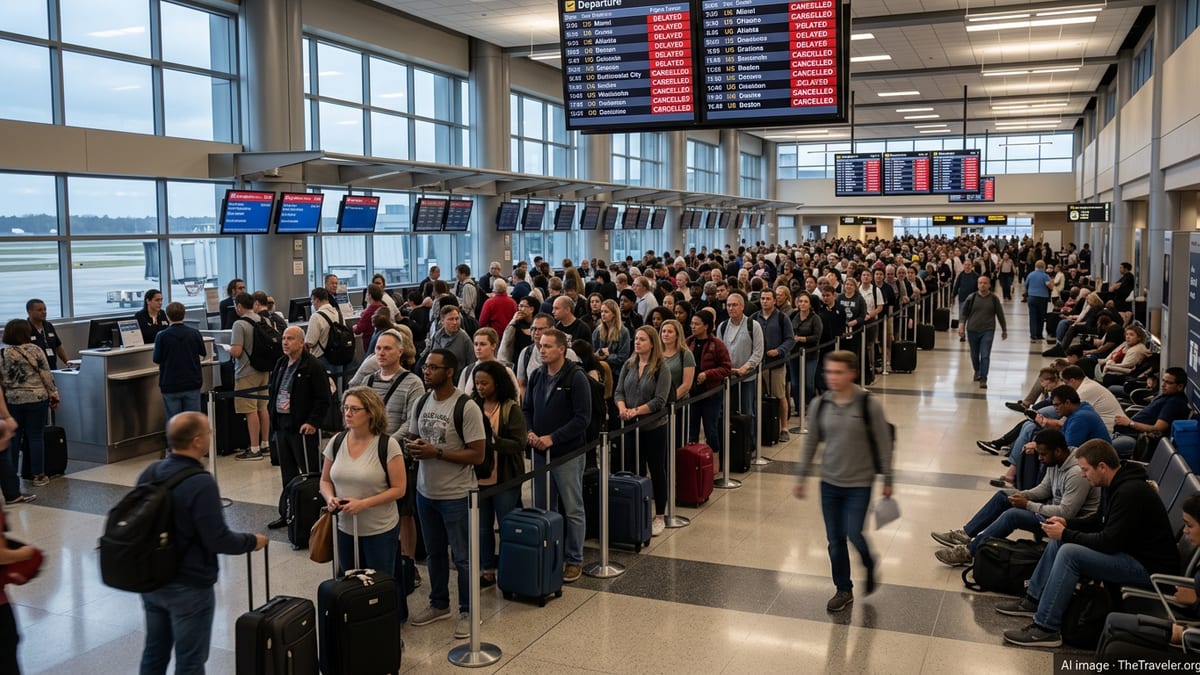
A sudden air traffic control disruption affecting Baltimore/Washington International Thurgood Marshall Airport has triggered a wave of delays and cancellations, leaving passengers to face hours-long waits and missed connections on busy routes to Miami, Orlando, and other major U.S. destinations.
Get the latest news straight to your inbox!
What Sparked the Baltimore Airport Crisis
Published coverage over the weekend indicates that a strong chemical odor at an air traffic control facility serving the Washington and Baltimore region forced a temporary ground stop on the evening of March 13. The incident affected flights into and out of multiple airports, including Baltimore/Washington International Thurgood Marshall Airport, commonly known as BWI. The halt in arrivals and sharply reduced departures quickly translated into mounting delays across the network.
Reports describe operations at BWI slowing dramatically as controllers limited traffic while the issue was investigated. Even after the initial ground stop was lifted, residual constraints on airspace around the capital region meant aircraft could not be processed at normal volumes. For passengers, that meant aircraft held at gates, long lines at departure boards, and rapidly changing departure times.
Publicly available information shows that the disruption overlapped with a busy spring travel period, compounding its impact. With aircraft and crews out of position, airlines began canceling select flights preemptively to avoid further knock-on delays. The result was an uneven patchwork of schedules, with some flights departing hours late while others disappeared from departure boards altogether.
The situation at BWI was further complicated by recent weather-related challenges and prior infrastructure issues during the winter, which had already tested the resilience of airline operations along the East Coast. The latest disruption underscored how quickly a single operational constraint in the region’s tightly interconnected airspace can ripple through the system.
Flights to Miami, Orlando and Other Sun Destinations Hit Hard
Routes linking Baltimore with Florida, including Miami and Orlando, appear to be among the most visibly affected by the latest crisis. Travel industry coverage and live flight-tracking snapshots over the weekend highlighted extensive delays on popular leisure services between BWI and major Florida gateways, with some departures pushed back by several hours or canceled outright.
According to published aviation data and airline advisories, Florida has been a key pressure point during recent disruptions, as tightly scheduled aircraft serve a dense network of flights from the Northeast and Mid-Atlantic to Miami, Orlando and other warm-weather hubs. When an airport like BWI slows down, aircraft earmarked for those routes can quickly fall behind schedule, leaving passengers in both directions without timely options.
Reports from stranded travelers on social platforms describe missed cruises, lost hotel nights and family trips abruptly shortened as they attempted to rebook from Baltimore to Florida. Some passengers reported being rerouted through alternative airports such as Philadelphia or Charlotte in a bid to reconnect with flights bound for Miami or Orlando once capacity allowed.
Because many of these leisure routes are heavily concentrated at certain times of day, even a relatively brief ground stop can erase an entire bank of departures. With planes and crews needing mandatory rest periods, airlines often have limited flexibility to simply “catch up” later in the evening, resulting in outright cancellations and rebookings spread over the following day.
Ripple Effects Across the U.S. Network
The disruption at BWI did not remain a local problem. Air traffic control coverage for the Washington and Baltimore area feeds a broad swath of East Coast and transcontinental traffic, and publicly available flight statistics show extensive knock-on impacts at airports hundreds of miles away. Flights that were already airborne toward the region were diverted to alternate airports, while departures across the country faced delays as they awaited new departure slots.
Reports from travelers in cities such as Dallas, Seattle and various Midwest hubs over the weekend described aircraft holding at gates or on taxiways awaiting clearance to depart for BWI and the broader capital region. Those delays, in turn, created missed connections for onward flights from Baltimore to cities including Atlanta, Fort Lauderdale, Boston and other major domestic destinations.
Industry analysis indicates that modern airline networks are highly sensitive to disruptions at key nodes such as BWI. Aircraft are scheduled to operate multiple legs per day, so a delay on a morning Baltimore departure to a city like Orlando can cascade into late or canceled services on entirely different routes later in the day. Once aircraft and crews are displaced, it can take 24 hours or more for schedules to fully normalize, even after the original cause of the problem has been resolved.
Travel data from recent winter storms and operational meltdowns suggests that cancellations tend to cluster around certain hubs and time windows. The Baltimore incident followed a season in which major storms had already pushed cancellation numbers to some of the highest levels since the early years of the pandemic, leaving airlines and airports with little margin for additional disruption.
How to Check if Your Upcoming Flight Is Affected
With turbulence in the system still working its way through airline schedules, travelers booked to or from BWI over the next few days are being urged by published travel advisories and airline bulletins to stay vigilant. Same-day schedules remain fluid in some cases, and rolling delays can appear with little notice as crews and aircraft reposition.
Publicly available guidance from airlines and airport authorities emphasizes that passengers should monitor their flight status directly through their airline’s official channels and mobile apps, rather than relying solely on third-party trackers or static itinerary emails. Many carriers push real-time gate, boarding and schedule changes via notifications that may arrive hours before general departure boards are updated inside the terminal.
Travel industry experts also note that passengers with flexible plans may benefit from rebooking to less congested departure times or connecting through alternate hubs if their route allows. Some airlines periodically issue travel waivers during major disruptions, allowing affected passengers to move their trip by a day or adjust their routing without extra change fees, subject to fare differences and availability.
For those already at the airport, published advice suggests checking departure boards frequently and speaking with airline staff about standby options if a flight is canceled. However, travelers should prepare for limited availability during peak periods, particularly on popular routes to leisure destinations such as Miami and Orlando, where seats can sell out quickly once disruptions begin.
What This Means for Spring Travelers Through Baltimore
The latest crisis at Baltimore/Washington International Airport arrives at the threshold of the spring break travel surge, raising questions about how resilient the system will be in the face of further weather or operational challenges. Recent storms, infrastructure issues and now an air traffic control–related disruption have all converged on a region that serves as a major crossroads for domestic and international travel.
Analysts who follow airline performance note that the broader U.S. aviation system has struggled with rising delay minutes per disrupted flight in recent years, even as airlines have worked to refine schedules and add new routes. When unexpected events hit a critical node such as BWI, the cumulative effect can be out of proportion to the length of the initial incident, especially when aircraft are already operating close to full capacity.
For travelers planning upcoming trips through Baltimore, publicly available guidance suggests building in additional time and contingency plans. That may include booking longer connection windows, traveling earlier in the day when possible and considering travel insurance or refundable fares for complex itineraries. While such steps cannot prevent disruptions, they may soften the impact when schedules suddenly shift.
As airlines and aviation authorities review the events leading to the latest ground stop and its cascading effects, future adjustments to procedures, staffing or infrastructure may emerge. For now, passengers heading to or from BWI, Miami, Orlando and other high-demand routes are likely to face a period of heightened uncertainty, with flexibility and frequent status checks emerging as the most practical tools for navigating the fallout.