

More news on this day
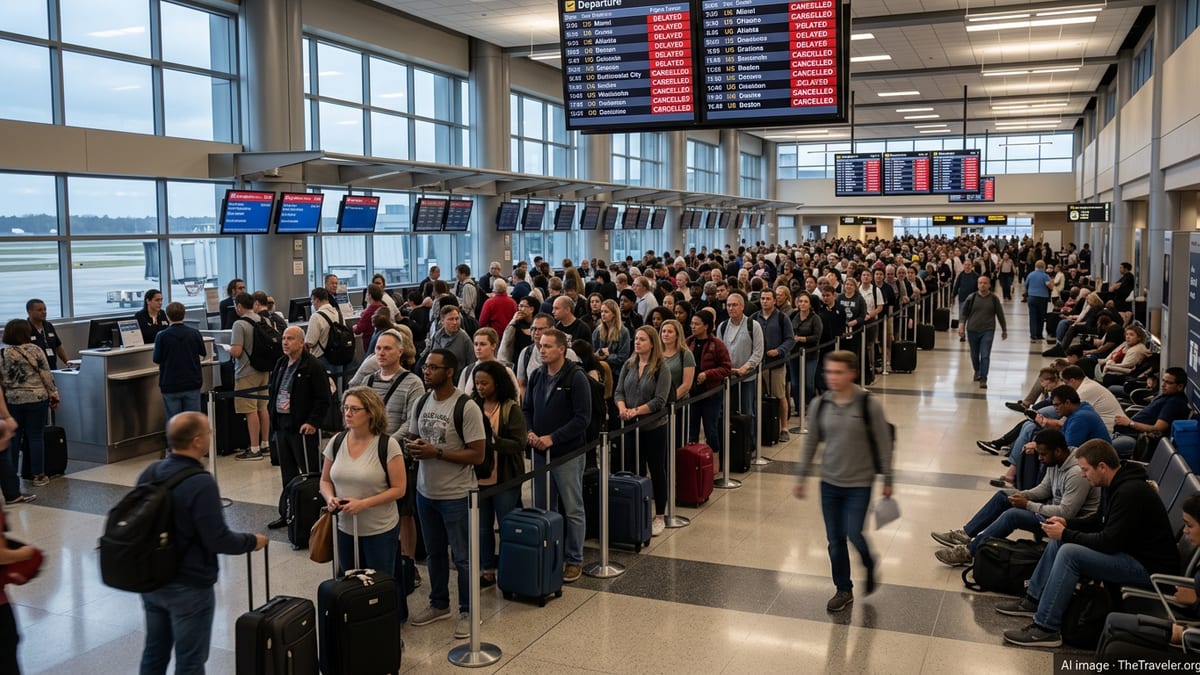
Travelers at Baltimore/Washington International Thurgood Marshall Airport are facing mounting frustration after a regional air-traffic control outage and fast-changing weather triggered widespread delays and flight cancellations to Miami, Orlando, and other major destinations across the United States.
Get the latest news straight to your inbox!
Air-Traffic Control Disruption Brings DC-Area Flights to a Halt
Published reports and real-time flight tracking data indicate that a serious disruption at the Federal Aviation Administration’s Potomac Terminal Radar Approach Control facility in Warrenton, Virginia, late on March 13 and into March 14 led to an abrupt ground stop affecting all departures and arrivals at Baltimore/Washington International (BWI), along with Washington Reagan National and Washington Dulles airports. The facility oversees approach and departure traffic for the wider Washington region, meaning even a localized issue can ripple quickly through airspace and airline schedules.
Passengers described aircraft held at gates, on taxiways, and at remote stands for extended periods while departures were paused and arriving flights diverted or placed into holding patterns. Publicly available accounts from travelers and aviation watchers point to an equipment outage and reports of a strong chemical odor at the air-traffic control facility that required some controllers to be moved out of the building, slowing the flow of traffic to a crawl.
Although the most severe restrictions were gradually eased, the sudden freeze in movements created a backlog of aircraft and crews that airlines struggled to unwind through the remainder of the weekend. By March 15, schedules at BWI were still showing lengthy delays, rolling cancellations, and equipment swaps on some of the airport’s busiest domestic routes.
The disruption hit at the same time that carriers and passengers were still recovering from a series of powerful late-winter storm systems that had already strained crew availability and pushed aircraft out of position across much of the country.
Miami and Orlando Among the Hardest-Hit Destinations
BWI is a key mid-Atlantic gateway to Florida, with multiple daily flights to vacation hotspots including Miami and Orlando. When traffic into and out of Baltimore slowed dramatically, those routes felt the impact almost immediately, leaving holidaymakers and families heading to theme parks facing hours in terminal queues and crowded gate areas.
Flight status boards at both Baltimore and Florida airports showed a patchwork of delays, cancellations, and rebooked departures across several major carriers serving the BWI–Miami and BWI–Orlando markets. Some northbound aircraft that were originally scheduled to return to Baltimore remained stuck in Florida longer than planned, while southbound departures from BWI were pushed later into the day or removed from schedules entirely as airlines attempted to consolidate passengers onto fewer flights.
Travelers reported missed cruise departures, lost hotel nights, and scrapped weekend plans as they tried to reroute through other hubs or switch to remaining open airports along the East Coast. Publicly available information from airline travel advisories suggests that some carriers issued weather and operational waivers covering Baltimore and other mid-Atlantic airports, allowing customers to move their trips without change fees, subject to seat availability.
For many travelers bound for Florida, the timing proved particularly painful, coinciding with peak spring break demand when both planes and hotel rooms are already in short supply and fares are elevated.
Stormy Weather Adds to a Perfect Storm of Disruption
The timing of the air-traffic control crisis overlapped with an intense storm system sweeping across large parts of the United States between March 13 and March 16. Meteorological assessments describe a sprawling complex bringing heavy rain, strong winds, and disruptive snow to different regions, with hundreds of thousands of power outages and transportation delays reported nationally.
While Baltimore itself avoided some of the most extreme snowfall totals seen farther north and west, bands of heavy rain and gusty winds moved through the mid-Atlantic, periodically reducing visibility and complicating ground operations. Airlines and air-traffic managers typically respond conservatively to such conditions, spacing out departures and arrivals, which in this case combined with the air-traffic control issues to prolong the recovery window for BWI.
Airlines also had to contend with knock-on effects from earlier winter weather episodes that had already stretched crew schedules and aircraft utilization. Those prior storms led to large-scale cancellations across the network in late January and February, leaving carriers with limited flexibility when another major disruption emerged in mid-March.
Together, the technical problems at the regional control center and the storm system created what many passengers described as a perfect storm of operational challenges, particularly on heavily traveled routes between the northeast, mid-Atlantic, and Florida.
How to Check Whether Your Baltimore Flight Is Affected
With residual delays still possible, travelers booked to or from Baltimore over the next 24 to 48 hours are being encouraged, via public airline communications and airport advisories, to verify their flight status repeatedly before leaving for the airport. Same-day schedules remain fluid as carriers substitute aircraft, adjust departure times, and attempt to reposition crews.
The most reliable way for passengers to check whether their flight is affected is to consult their airline’s official mobile app or customer notification system, using the specific flight number and date. Many airlines are sending push alerts and emails when disruptions occur, but schedules may change more than once during the day, so frequent checks are advisable.
Travelers who see their flights flagged as significantly delayed or cancelled can explore rebooking options through digital channels before heading to crowded airport counters. During large-scale events, hold times for phone assistance can be lengthy, so online tools and chat support may offer a faster route to an alternative itinerary, particularly for those with some flexibility on departure times or nearby airports.
Passengers with tight connections through Baltimore to international destinations or cruise departures should pay especially close attention, as a relatively small schedule shift can mean missing a critical onward link. In some cases, publicly posted guidance suggests that airlines may allow changes to earlier or later flights within a defined travel window at no additional charge.
What Stranded Passengers Are Experiencing On the Ground
Public social media posts and online travel forums from the weekend depict crowded concourses at BWI and other mid-Atlantic airports, with long lines forming at airline service desks as passengers sought clarification on when, and whether, their flights would depart. Many reported waiting on aircraft for extended periods before being asked to deplane and return to the terminal, only to face further uncertainty about reboarding times.
Families with young children and travelers connecting from international flights appeared particularly affected, as they navigated full gate areas, limited seating, and fast-changing information on departure boards. Some passengers reported difficulty accessing up-to-date status details inside the terminal, leading them to rely heavily on airline apps and third-party flight-tracking tools.
In several accounts, travelers described scrambling to secure last-minute hotel rooms when late-night flights were cancelled outright and rebookings pushed into the following day. Others opted for alternative ground transportation to regional airports still operating with fewer restrictions, or even long-distance train and rental car options when schedules allowed.
Despite the frustration, many travelers also highlighted instances of gate agents and flight crews attempting to manage expectations, distribute snacks, and answer questions as quickly as new information became available, underscoring how rapidly a technical problem far from the passenger terminal can translate into an on-the-ground crisis for thousands of people across the network.