

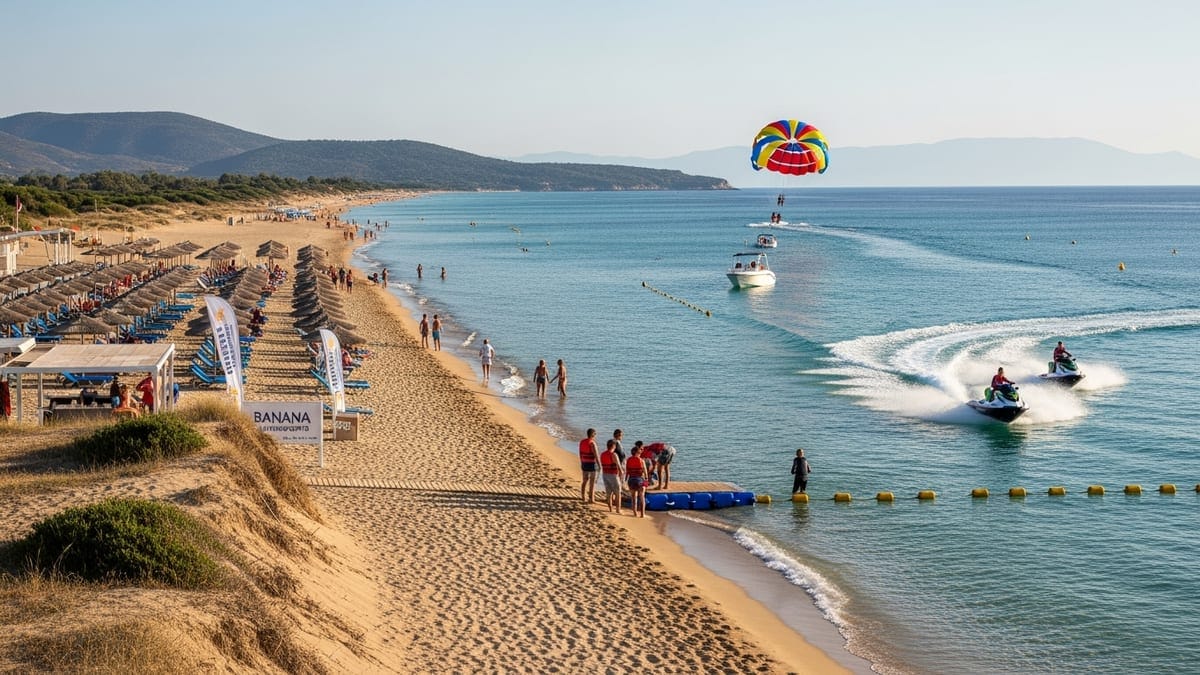
On the long sweep of sand that is Banana Beach on Zakynthos, it is the roar of jet skis and the bright arc of a parasail that often steal the show from the turquoise Ionian Sea. This is one of the island’s most organized water sports hubs, where specialist operators, free shuttle buses and a long menu of adrenaline rides turn a lazy beach day into an action packed session on the water.
Getting Oriented: Banana Beach and Its Watersports Scene
Banana Beach lies on the Vasilikos peninsula in southeastern Zakynthos, a broad ribbon of golden sand backed by dunes, beach bars and rows of sunbeds. It is one of the island’s largest and most developed beaches, and that scale is exactly what has allowed a major water sports center to grow here. Banana Watersports, the main operator on the sand, has more than three decades of experience and runs a sizable fleet of speedboats, jet skis and towable inflatables dedicated to aquatic thrills.
The bay itself is wide and shallow near the shore, with deeper water further out where speed zones and parasailing boats operate. This natural geography helps staff clearly separate swim areas from water sports lanes, an important consideration on a busy summer day. Lifeguards and instructors patrol these designated zones, while boarding points for jet skis and towables are set slightly away from the densest clusters of umbrellas.
Although you will find smaller water sports setups elsewhere on Zakynthos, Banana Beach is routinely singled out by local tourism platforms as one of the island’s primary hubs, with a broad inventory of activities running from traditional banana boat rides to higher skill options such as water skiing, wakeboarding and flyboard sessions. That variety makes it particularly attractive for mixed groups and families, since everyone can find something at an intensity level that suits them.
In high season from June through September, the atmosphere on the sand leans lively and social. Boats are constantly launching and returning, an on-site photographer hops between rides, and music drifts down from beach bars. If you prefer a quieter experience, early season months like May or the shoulder period in early October bring a more relaxed pace along with slightly reduced operating hours for the water sports center.
Practical Basics: Getting There, Season & What It Costs
Banana Beach sits roughly 14 kilometers from Zakynthos Town and a similar distance from the busy resort of Laganas. Many visitors take advantage of the dedicated free shuttle buses that link major resorts such as Laganas, Kalamaki and Argassi with the beach. These branded yellow coaches run several times a morning during the main summer season, picking up at designated points and returning in the afternoon. Seats are first come, first served, so you should be ready at the stop a bit ahead of the posted time, especially in July and August.
If you are driving, the approach is via the Vasilikos road that follows the peninsula. Signage for Banana Beach appears well before you reach the turnoff, and once there you will find a large parking area behind the dune line. Recent local reports indicate that parking remains relatively affordable, usually just a few euros per day, though you should bring cash and arrive early on weekends when spaces can fill quickly.
The water sports center typically operates from May through October, tracking the wider Zakynthos tourism season. Published hours in recent seasons have generally started around mid morning and run into the late afternoon, with slightly shorter days in May and October. Because schedules can shift with weather or demand, it is worth checking times when you arrive at the beach, especially if you are planning a last ride of the day.
Prices for individual activities are clearly displayed on boards at the Banana Watersports base. Recent public price lists show jet ski sessions starting around the mid double digits in euros for a standard time slot, with parasailing and premium activities such as flyboard and jet pack experiences running higher. Towable rides like the banana boat or crazy sofa tend to sit at the more affordable end of the spectrum, often in the low double digits per person. Packages that bundle multiple rides may offer better value than booking everything individually. As with all dynamic tourism services, prices are subject to change from one season to the next, so you should treat any quoted figure as indicative rather than fixed.
Parasailing Over Banana Bay: What To Expect
Parasailing is one of Banana Beach’s signature experiences and a fixture in many visitors’ photo albums. From the shoreline you will spot the colorful parachutes rising steadily behind the tow boat, lifting one or two harnessed riders into the air as the vessel tracks a wide arc around the bay. On a clear day, the views sweep across the Vasilikos coastline and inland hills, often with the distant outline of mainland Greece on the horizon.
The process begins at the water sports desk, where staff will talk you through options such as solo, tandem or sometimes triple flights, as well as approximate flight length. Once your slot is booked, you are fitted with a life jacket and harness and escorted to the parasailing boat. After a short briefing, you take a seated position as the chute inflates behind you and the tow line pays out. Within seconds you feel a gentle upward pull and find yourself gliding upwards into the quieter air above the boat’s wake.
Contrary to its dramatic look, parasailing here is marketed more as a serene sightseeing ride than an extreme sport. The ascent and flight are typically smooth, with minimal jolting. You do not steer or control the chute yourself; the crew manages everything from the boat, and your only task is to sit back and enjoy the view. Nerves are common among first timers, but most find that anxiety melts quickly once they stabilize at altitude and realize how calm the experience feels.
For safety and comfort you should follow a few basic guidelines. Leave loose items, hats and unsecured sunglasses on shore or with companions, as the wind can easily carry them away. If you wear prescription glasses, secure them with a strap. Apply sunscreen ahead of time, since the reflection off the sea can intensify the sun while you are aloft. Weight limits and age restrictions may apply, and wind conditions can cause temporary suspensions of flights on gusty days, so flexibility in your timing is helpful.
Jet Skis, Banana Boats & The Big Adrenaline Hits
For many visitors, jet skiing in Banana Bay is the standout thrill. The water sports center maintains a fleet of modern machines configured for one or two riders, and occasionally for three, operating within clearly demarcated zones. Before you set off, a staff member will walk you through controls, explain the boundary markers and outline right of way rules designed to keep the circuit safe. In recent seasons many operators in Greece have adopted GPS and remote speed control systems on their jet skis, which can automatically limit power in sensitive zones or when riders come too close to each other.
These electronic safety systems can be a point of frustration for those expecting unrestricted speed, and some online reviewers have complained that speed limiting made it difficult to achieve the full adrenaline rush they anticipated. It is worth understanding that such technology is used to comply with maritime safety standards and reduce collision risk in busy areas. If you are primarily chasing top speed, you may want to discuss expectations with staff before booking, but if you are new to jet skis, the added control can actually make your first session more manageable.
Towable inflatables offer a different kind of excitement and are especially popular with groups and families. The classic banana boat remains a crowd favorite, accommodating a long line of riders who straddle the inflatable tube as a speedboat tows them across the bay. The fun lies in holding on as the driver weaves, accelerating until the banana skips across the chop and sometimes tipping its passengers into the sea in a controlled tumble near the end of the ride. Helmets and life jackets are typically provided, and speeds can be adjusted based on whether your group wants a gentler ride or a wilder time.
Alongside the banana, Banana Beach operators usually run a roster of other towables, with names such as crazy sofa, fly fish, ringo, slider and twister. Each has its own character: ringos are individual or paired doughnut rings that sling over the waves; crazy sofa allows a small group to sit side by side; fly fish is a more intense option capable of bouncing partially airborne. Staff normally gauge the appetite of each group and tailor speed and maneuvers accordingly, making these rides surprisingly flexible for mixed ages and comfort levels.
Kayaks, SUPs & Boat Rentals: Slower Ways To Explore
Not every water sports session has to involve speedboats and spray in your face. For those who prefer a more relaxed interaction with the sea, Banana Beach offers slower paced options such as pedalos, canoes and stand up paddleboards. These are ideal if you want to get out on the water with younger children, enjoy a bit of exercise, or simply take some photos of the coastline from a different vantage point.
Pedalos provide a stable platform and a shaded spot to sit, making them a popular choice for families. You pedal at your own pace, stopping to swim in deeper pockets of clear water away from the main swimming area. Canoes and kayaks, usually hired by the hour, require more effort but reward you with quiet glides along the shoreline, where you can peek into small coves and study the color shifts of the Ionian Sea beneath your hull.
Stand up paddleboarding has expanded rapidly across Greek beaches in recent years, and Banana Beach is no exception. SUP rentals are generally available in short time slots that are long enough to get used to your balance and enjoy a mini tour of the bay. Beginners usually start kneeling to gain confidence before attempting to stand. Morning tends to bring the calmest water and lightest winds, which are ideal conditions for a first paddleboard session.
For independent exploration beyond the immediate bay, license free motorboat rentals are another option that operators at Banana Beach have promoted. These small craft are designed to be simple enough for first timers to control, allowing you to follow suggested coastal routes without needing a formal boat license. Before departure, staff typically provide an orientation on navigation, safety gear and local rules, then set you loose to discover nearby stretches of coast at your own tempo. As with all motorized craft, you are expected to respect distance limits from swimmers and restricted zones, and to return on time so the boat can be prepped for the next group.
Safety, Sustainability & Choosing a Reputable Operator
While the focus at Banana Beach is firmly on fun, safety should be the lens through which you choose and experience any water sports activity. Greek law requires operators to be licensed and insured, with properly maintained equipment and trained staff. Established centers like the one at Banana Beach emphasize their compliance with health and safety regulations, as well as the presence of lifeguards and instructors on duty.
Before you sign up for a ride, take a moment to observe how things are run. Well managed operations will brief participants clearly, check life jackets and helmets for proper fit, and control crowds at boarding points. Boats should appear well maintained, with crew members attentive rather than distracted. If you have doubts about an activity’s suitability for your age, fitness level or any medical condition, your first step should always be to ask direct questions at the desk. Responsible staff will err on the side of caution rather than pressure you into a ride.
Online reviews can offer additional perspective, and in the case of Banana Beach they are mixed. Many visitors praise the professionalism of instructors and the quality of experiences such as parasailing or flyboarding. Others have raised concerns about issues such as ride durations not matching advertised times, communication problems, or disputes about refunds when equipment malfunctions or weather forces cancellations. When you arrive, read posted terms about cancellations, refunds and ride timing so you know in advance what policies apply if plans change.
Environmental impact is another area worth keeping in mind. Banana Beach itself is outside the core nesting zones of the protected Caretta caretta sea turtle, but it still forms part of a sensitive coastal ecosystem. Use designated walkways over dunes, obey any marked restricted sections of beach and keep noise to a reasonable level when you are close to more natural stretches of shoreline. At sea, avoid throwing any litter overboard and check that operators keep a respectful distance from any wildlife encountered during boat rides. Supporting businesses that show an awareness of their surroundings helps ensure that Zakynthos’ coastal environments remain attractive for future visitors.
Planning Your Perfect Water Sports Day
Turning a day at Banana Beach into a memorable water sports outing starts with timing. Morning sessions, particularly before midday, generally offer calmer seas, cooler temperatures and smaller crowds. This is the best window for beginners, families with younger children and anyone trying SUP, canoeing or their first jet ski or waterski lesson. The light is also softer for photos, both from the shore and from parasailing flights.
By early afternoon, the sand tends to fill, the wind may freshen slightly and water sports lanes can get busier. This can add to the energy if you are looking for a high octane vibe but may extend waiting times for popular activities. If you plan to string together several rides, consider booking them early in the day and leaving quieter hours for sunbathing, lunch in a beach bar or a swim in the roped off bathing area.
Clothing and gear choices can improve your comfort. A well fitted swimsuit or board shorts that will not shift during fast rides should be your base. Rash vests are useful to protect shoulders and back from sun exposure, especially on towables where you are lying prone or seated facing forward with little shade. Quick drying water shoes can help on hot sand and offer extra grip when clambering on and off inflatables, though most activities are also fine barefoot. Bring a small dry bag if you plan to carry essentials, but expect to leave phones and valuables on shore or in lockers rather than take them on rides.
If you are visiting in the peak summer months, hydration is critical. Alternate alcoholic drinks with water or soft drinks, particularly before engaging in jet skiing or more physically demanding sports like wakeboarding. Operators have the discretion to refuse service to anyone who appears intoxicated, and they do so for good reason: judgment and reaction time are central to safety on the water.
The Takeaway
Banana Beach on Zakynthos has carved out a reputation as one of the island’s go to addresses for water sports, pairing an expansive sandy shore with a professional, well equipped center offering everything from parasailing and jet skis to more novel experiences like flyboarding and jet packs. Its broad menu of towable inflatables and slower paced craft such as pedalos, kayaks and SUPs helps it cater to a full spectrum of visitors, from thrill seekers to families seeking gentle adventure.
Like any busy summer hotspot, it is not without its frictions. Crowds, variable sea conditions, and occasional disputes captured in online reviews underscore the importance of arriving informed, asking clear questions about pricing and ride duration, and respecting both safety protocols and the coastal environment. Balancing those considerations with the undeniable thrill of skimming across the Ionian Sea or floating high above Banana Bay is the art of planning your visit.
If you approach the beach with realistic expectations, a flexible schedule and a readiness to prioritize safety alongside excitement, Banana Beach’s water sports scene can easily become a standout chapter in your Zakynthos story. From the gentle arc of a parasail against a bright blue sky to the laughter that follows a group tumble from the banana boat, the memories you make here are likely to linger long after the sand has been washed from your feet.
FAQ
Q1. Do I need previous experience to try parasailing or jet skiing at Banana Beach?
Most visitors do not have any prior experience, and that is expected. Parasailing is handled entirely by the boat crew once you are harnessed in, and jet ski sessions begin with a basic safety and control briefing. As long as you follow instructions and stay within the marked zones, beginners are welcome.
Q2. Are there age or weight limits for water sports at Banana Beach?
Yes, most activities have minimum age and sometimes weight guidelines. Young children can usually ride on gentler towables like the banana boat with an adult, while solo jet ski or parasailing flights may require participants to be older teens or above. Combined weight limits apply for tandem parasailing. Exact thresholds can change with equipment, so check at the desk before booking.
Q3. How long does a typical jet ski or parasailing session last?
Standard time slots are often around 10 to 15 minutes on the water for jet skis and a similar window from lift off to landing for parasailing, though total experience time is longer when you include briefings and boat transfers. Because some past visitors have reported discrepancies between advertised and perceived ride times, it is wise to confirm the exact duration when you pay.
Q4. Is it safe to take cameras or phones on rides?
For most high speed or airborne activities, it is safer to leave phones and cameras on shore or use the on site photo service if available. Devices are easily lost or damaged by impact and salt water. On slower options like pedalos, kayaks or SUPs, a waterproof case with a reliable lanyard can work, but you still accept some risk.
Q5. What should I wear for water sports at Banana Beach?
A secure swimsuit or board shorts and, ideally, a rash vest are the basics. Avoid loose clothing that can tangle in harnesses or tow ropes. Operators provide life jackets and, where needed, helmets. Water shoes are optional but can make walking over hot sand and climbing on inflatables more comfortable.
Q6. Can I book multiple activities as a package?
Package deals that combine two or more activities, such as a jet ski session plus a towable ride, are often available and can be better value than booking separately. Offers change from season to season, so ask staff about current combinations and promotions when you arrive at the water sports desk.
Q7. Do I need to reserve water sports in advance or can I decide on the day?
Many visitors simply decide on the spot, especially outside peak weeks, but in high season late morning and early afternoon slots for the most popular rides can fill quickly. If you are set on parasailing at a particular time or want to coordinate activities for a large group, it is advisable to book your preferred slot earlier in the day.
Q8. What happens if weather conditions change or the sea becomes rough?
Operators continually monitor wind and sea state. If conditions become unsuitable for a given activity, such as strong gusts affecting parasailing or heavy chop making towables unsafe, rides may be delayed, modified or cancelled. Policies for rescheduling or refunds vary, so read or ask about them when you pay so you know your options should the weather turn.
Q9. Is Banana Beach suitable for visitors who just want to relax without doing water sports?
Yes. While the water sports area is lively, Banana Beach is long enough that you can choose sections farther from the launch zones where the atmosphere is quieter. Sunbeds, umbrellas, casual restaurants and beach bars line much of the shore, so non participants can easily spend the day reading, swimming or people watching while others in their group join activities.
Q10. How can I minimize my environmental impact while enjoying water sports?
Use marked paths across dunes, keep rubbish with you until you find a bin, and never throw anything into the sea. Respect any restricted areas set aside for wildlife and avoid chasing or approaching marine animals with boats or jet skis. Choosing reputable operators that maintain their vessels properly and observe distance rules from swimmers and sensitive zones also helps reduce overall impact.