

More news on this day
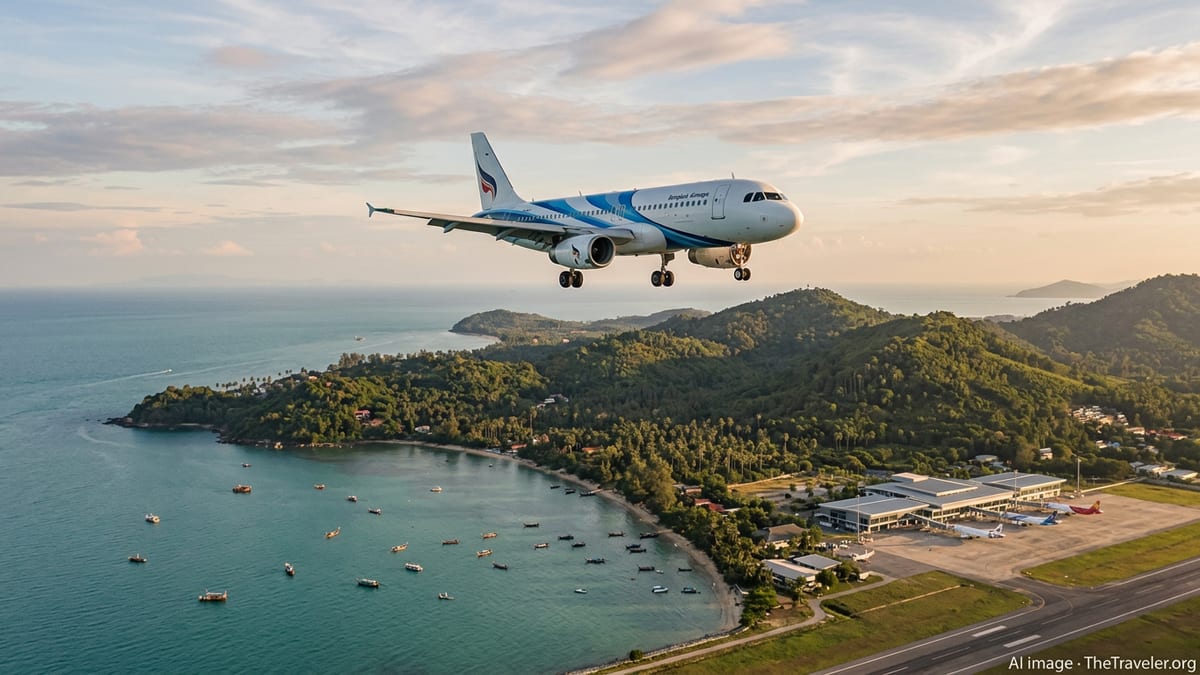
Thailand’s tourism rebound is reshaping air travel across Southeast Asia, and Bangkok Airways is rapidly emerging as the standout winner, using aggressive regional expansion and island-focused capacity growth to outpace rivals in an increasingly competitive market.
Tourism Surge Puts Regional Skies Back in the Spotlight
After a volatile few years, Thailand’s tourism industry is entering a new phase defined less by raw visitor numbers and more by high-yield, experience-driven travel. Official data for 2025 show that while international arrivals dipped compared with 2024, total tourism revenue and average spending per visitor continued to climb, underscoring the sector’s structural strength even in a softer volume environment.
This changing landscape is particularly visible in air travel. Airlines serving Thailand have shifted from a post-pandemic scramble to restore capacity to a more strategic focus on profitable routes, secondary cities and cross-border connections within ASEAN. Regional carriers are redeploying aircraft toward leisure-heavy destinations such as island resorts and heritage cities, capturing demand from both overseas visitors and Thailand’s growing base of domestic holidaymakers.
Against this backdrop, Bangkok Airways has leaned into its long-standing niche as a premium regional specialist. With a network built around short- and medium-haul flights feeding Thailand’s coastal and island destinations, the carrier has been able to monetize the country’s tourism momentum more efficiently than competitors heavily exposed to long-haul or price-sensitive markets.
While national statistics show an overall slowdown in short-haul arrivals from some East Asian markets during 2025, airlines with strong domestic and intra-ASEAN portfolios have been better insulated. Bangkok Airways sits squarely in that category, leveraging resilient demand from Europe, India and within Southeast Asia that continues to favor Thailand’s beaches and boutique island resorts.
Bangkok Airways Expands Regional Network as Competitors Tread Carefully
As larger carriers take a measured approach to capacity, Bangkok Airways is moving decisively to lock in market share on regional and island routes. The airline has ramped up frequencies on its flagship Bangkok to Koh Samui trunk, which links the capital’s Suvarnabhumi hub with one of Thailand’s most in-demand island destinations and a key stop on multi-country itineraries across Southeast Asia.
The carrier has also reintroduced and reinforced seasonal and niche routes that knit together Thailand’s tourist hotspots. Services such as Chiang Mai to Krabi, which connect the cultural north with the Andaman coast without requiring a change of aircraft in Bangkok, cater directly to free independent travelers looking to maximize their time in-country. These point-to-point links are now a vital part of the country’s tourism infrastructure, encouraging visitors to add extra destinations to their trips.
Bangkok Airways is doing more than simply putting aircraft back into the sky. Its regional strategy increasingly hinges on partnerships and connectivity. Expanded codeshare agreements with major long-haul airlines mean that passengers arriving on intercontinental services can connect seamlessly to secondary Thai destinations and nearby countries on a single ticket. This model positions the carrier as the preferred regional connector for overseas visitors whose first point of contact with Thailand is often a global network carrier.
Rival airlines have been slower to match this breadth in regional connectivity. Low cost operators remain focused on trunk routes where fares are under pressure, while the national flag carrier has concentrated its latest expansion on widebody long-haul services. That leaves a clear opportunity in the short-haul, high-yield leisure segment that Bangkok Airways is aggressively moving to fill.
Samui and Island Routes Become Powerhouse Profit Engines
Nowhere is Bangkok Airways’ advantage clearer than on flights serving Koh Samui. The privately operated island airport gives the carrier a de facto monopoly on most scheduled services, a position that has translated into exceptionally strong bookings and yields. Advance reservations for the Samui route through the 2025 high season have risen sharply, driven by both returning international visitors and Thais trading up to premium leisure travel.
Industry analysts expect Samui and other island gateways to contribute a disproportionate share of Bangkok Airways’ operating profit in the coming years. Demand spikes during peak holiday periods are already testing capacity, with flights on key dates frequently sold out weeks in advance. While this creates challenges for late-booking travelers, it underscores the strength of Thailand’s beach and island brand and the carrier’s ability to capture that demand.
The airline is responding with a combination of schedule optimization and fleet planning. More daily rotations on the Bangkok to Samui corridor, carefully timed to feed arriving long-haul services, are designed to reduce bottlenecks without undermining the island’s premium image. Additional capacity is also being directed to other resort destinations such as Phuket, Krabi and Trat, supporting tourism dispersal beyond the traditional hot spots around Bangkok.
For the Thai government, this concentrated growth on island routes dovetails with wider efforts to shift the tourism model toward higher-spending visitors. Bangkok Airways’ network directs traffic toward destinations where boutique hotels, wellness retreats and upscale dining generate significantly more economic value per traveler than budget city stays, reinforcing the narrative that Thailand’s tourism growth is becoming more qualitative than quantitative.
Fleet Modernisation and Samui Airport Upgrade Signal Long-Term Bet
Beneath the visible expansion of routes and frequencies lies a more fundamental transformation of Bangkok Airways’ hardware. The carrier has embarked on a multiyear fleet renewal program that will see its aging turboprop aircraft replaced with a new generation of more efficient regional jets and advanced turboprops from 2026 onward. These aircraft promise lower fuel burn, reduced emissions and quieter operations, all critical considerations for island communities sensitive to environmental impacts.
At the same time, the airline is preparing a significant upgrade of Samui Airport itself. Plans for a major renovation and capacity enhancement project underscore confidence in the island’s long-term tourism prospects and recognition that infrastructure will need to keep pace with rising traffic. The works are expected to improve passenger handling, comfort and sustainability features, from expanded terminal space to more efficient ground operations.
This combination of modern aircraft and upgraded infrastructure positions Bangkok Airways to offer a distinctly higher-end regional product at a time when many competitors are still focused on cost cutting. Passengers flying into Thailand’s resort regions are increasingly seeking a seamless, premium experience from touchdown to check-in, and the carrier’s investments suggest it aims to own that space.
Financial markets have taken note. Analysts tracking Thailand’s aviation sector have highlighted Bangkok Airways as one of the most attractively valued airline stocks in the country, pointing to its strong exposure to high-yield leisure routes and earnings growth potential once the new fleet begins to enter service. In a sector where some carriers are still repairing balance sheets, the regional specialist is seen as comparatively well positioned.
Regional Competition Intensifies but Bangkok Airways Holds Its Edge
Bangkok Airways’ expansion is unfolding amid growing competition for tourists within Southeast Asia. Neighboring destinations are rolling out aggressive incentive schemes, new visa policies and airport expansions to lure visitors who might once have defaulted to Thailand. Airlines based in Singapore, Vietnam and Malaysia are simultaneously building their own regional networks, seeking to funnel travelers through their hubs and onto nearby resort destinations.
Yet Thailand retains several natural advantages that continue to favor Bangkok Airways. Bangkok remains one of the world’s busiest cities for international arrivals, giving the carrier a deep pool of potential passengers transferring onto domestic and regional flights. The country’s extensive hotel infrastructure, proven appeal across multiple market segments and year-round mix of cultural and beach attractions provide a demand base few rivals can match.
For now, the airline is capitalizing on this by positioning itself as the seamless bridge between global gateways and the islands, heritage cities and coastlines that define Thailand’s tourism appeal. As international carriers ramp up long-haul services into Bangkok, each new arrival effectively becomes fresh feed for Bangkok Airways’ network of shorter connections.
If current trends persist, the next two years could see the airline further consolidate its lead in regional leisure traffic, even as the broader tourism market navigates cyclical headwinds. While much attention is focused on headline arrival numbers, Bangkok Airways’ strategy suggests that in Thailand’s new tourism era, the real contest is over who controls the most valuable segments of the sky.