

More news on this day
Hundreds of travelers flying out of Bangkok were left in limbo this week after a cluster of last minute cancellations on key regional and long haul routes to Singapore, Kuala Lumpur, Melbourne and other hubs triggered queues, missed connections and overnight airport stays across Thailand’s busiest terminals.
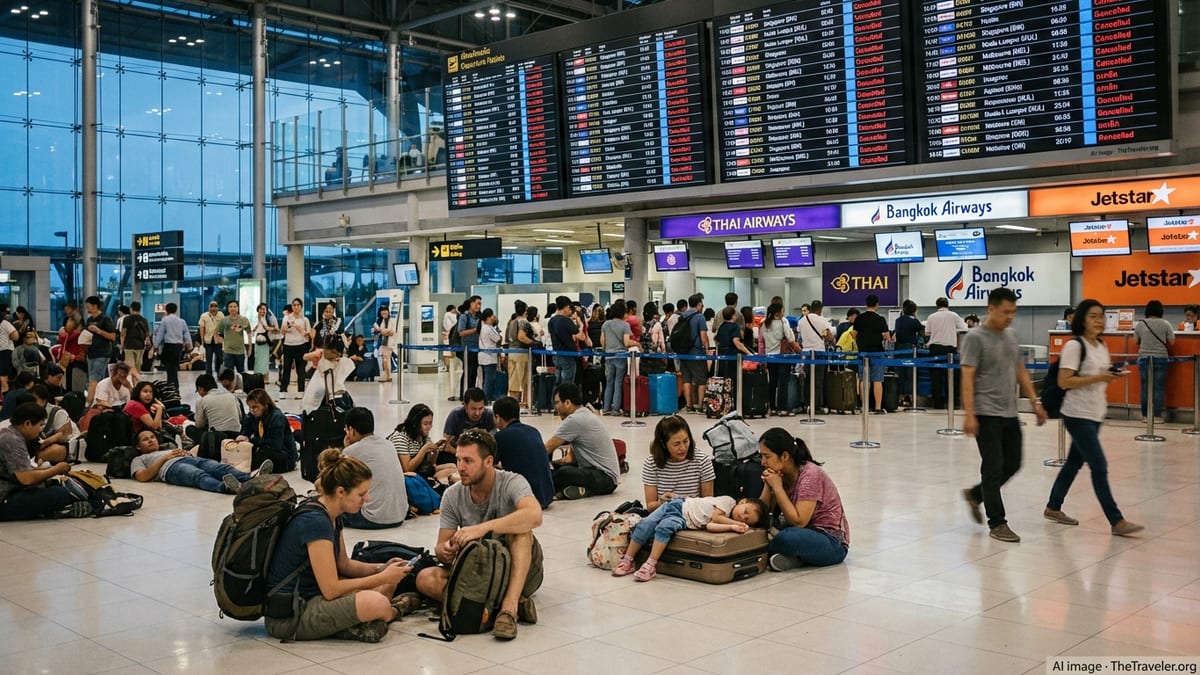
Four Key Flights Pulled From Schedules With Little Warning
Operational data from regional trackers and airport screens in Bangkok showed at least four prominent services scrubbed from departure boards within hours of their scheduled take off, affecting passengers booked on Thai Airways, Bangkok Airways, Jetstar and codeshare partners. The cancellations hit some of the region’s highest demand corridors, including Bangkok to Singapore, Kuala Lumpur and Melbourne, amplifying wider disruption already rippling through Asian air networks.
At Suvarnabhumi Airport, would be travelers bound for Singapore and Kuala Lumpur reported receiving text messages and app notifications advising that their Bangkok departures had been cancelled or “removed from schedule” while they were already in transit to the airport. In several cases, codeshare tickets issued by partner airlines masked the operating carrier, leaving passengers initially unsure which airline was responsible for rebooking or compensation.
On the long haul front, passengers set to board Thai Airways and partner operated services from Bangkok to Melbourne described arriving to find their flights listed as cancelled without immediate explanation beyond “operational reasons.” For many, that meant missed connections onward to other Australian cities, as well as broken itineraries tied to cruises, tours and work commitments.
While airlines have not publicly detailed the underlying triggers, aviation analysts in the region pointed to a combination of tight aircraft utilization, rolling maintenance, weather related delays elsewhere in Asia and congested air traffic flows that can cascade into late stage schedule cuts on already stretched routes.
Scenes of Confusion at Bangkok’s Main Airports
Inside Bangkok’s Suvarnabhumi and Don Mueang terminals, the cancellations quickly translated into dense crowds at service counters as travelers sought clarity on their rights and options. Photos and passenger accounts circulating on social media showed long lines snaking past Thai Airways, Bangkok Airways and Jetstar branded desks, with some customers reporting waits of more than two hours before speaking to an agent.
Families with young children and elderly travelers appeared particularly hard hit, with some forced to bed down on terminal seats overnight after learning that the next available departure to Singapore or Kuala Lumpur was fully booked or departing the following day. Several passengers reported being offered partial hotel support or meal vouchers, while others said they were directed to contact customer service hotlines instead, despite already being at the airport.
The disruption was compounded for transit passengers who had begun their journeys elsewhere in Asia and were relying on Bangkok as a connecting hub. Without through checked alternatives immediately available, some were left to reclaim luggage and rebook from scratch at peak evening hours, when counters and call centers were at their busiest.
Airport staff worked to manage crowds and redirect confused travelers to airline specific desks, but the lack of unified communication about the cancellations left many unsure whether they should remain airside, exit to landside hotels or attempt to rebook online. Travelers posting from the terminal described a patchwork of responses that appeared to depend heavily on the operating airline and the type of ticket held.
Knock On Impact Across Southeast Asian and Australian Networks
The Bangkok cancellations came as airports from Kuala Lumpur to Jakarta and Singapore have been grappling with a broader wave of schedule volatility, with dozens of departures scrubbed or heavily delayed in recent days. Industry data shows that regional carriers and global airlines alike have been forced to adjust operations as they juggle persistent crew shortages, delayed aircraft deliveries and tighter maintenance windows.
Routes between Bangkok and Singapore, among Southeast Asia’s busiest international corridors, are particularly sensitive to disruption because so many travelers rely on them for onward connections to Europe, Australia and North America. A single cancelled sector can unravel complex itineraries, leaving passengers stranded far from their ultimate destination even if their long haul flight is still operating normally.
On services to Melbourne, where Thai Airways and partner airlines link Thailand with one of Australia’s key gateways, cancellations and tight loads mean that rebooking options can be limited for days at a time during peak travel periods. Travelers caught up in this latest episode reported being split across multiple alternative flights or rerouted via other Asian hubs, stretching total journey times well beyond 24 hours.
Regional tourism operators warn that repeated pockets of disruption risk denting confidence among long haul travelers planning itineraries that string together multiple Asian stops. With travelers already facing higher fares and increased airport taxes across parts of Thailand and the wider region, unexpected cancellations on core routes can erode the appeal of complex multi city trips.
Airlines Under Pressure to Improve Communication and Support
The latest turmoil in Bangkok has intensified scrutiny of how airlines based in and operating through Thailand handle real time communication and passenger care when schedules unravel. Many of those affected by the cancellations said they received only generic app notifications or airport announcements, with little substantive information about expected waiting times, entitlements to meals and accommodation, or clear time frames for rebooking.
Consumer advocates argue that while operational challenges may be unavoidable at times, airlines can significantly reduce stress by pushing timely, specific updates about what is happening and what support will be provided. For travelers facing overnight delays, clear assurances about hotel rooms, transfers and meal coverage can make the difference between an uncomfortable but manageable setback and a full blown travel crisis.
Industry observers note that carriers such as Thai Airways and Bangkok Airways are still rebuilding trust after the industry wide upheaval of recent years, and that episodes of confusion at their home hub risk undermining that progress. Strengthening customer service staffing at key times, offering multilingual information in terminals and ensuring that codeshare customers receive equal treatment are seen as immediate steps that could help.
At the same time, regional regulators are watching closely as waves of cancellations sweep through multiple Asian airports. While compensation rules vary widely, there is growing debate over whether clearer minimum standards for care and communication should apply when flights on heavily trafficked international routes are cancelled at short notice.
What Travelers Can Do if Their Bangkok Flight Is Cancelled
For passengers still due to travel through Bangkok in the coming days, experts recommend monitoring bookings closely on airline apps and airport departures boards, particularly for evening departures on busy regional and long haul routes. Checking in online as early as possible and ensuring that contact details are up to date can improve the chances of receiving prompt alerts and rebooking options if schedules change.
Travel agents and corporate travel managers report that those who booked through intermediaries often have an extra layer of support when disruptions hit, as agencies can tap into dedicated airline channels to secure seats on alternative flights. Independent travelers are advised to document all communications, keep receipts for food and accommodation, and understand the specific conditions attached to their fare type and travel insurance.
As airlines continue to fine tune their schedules for the remainder of the high season, industry analysts expect more isolated cancellations but stress that Bangkok remains one of the most connected hubs in Asia. For most affected passengers, that means that while their journey may be delayed or rerouted, alternative paths to Singapore, Kuala Lumpur, Melbourne and other key cities are likely to be found, even if it takes longer and requires additional patience at the airport.