

More news on this day
Travellers flying through Bangkok and Phuket this week are facing another bout of disruption as Cathay Pacific, Malaysia Airlines, Jetstar and MYAirline cancel key departures, snarling flight links to Hong Kong, Australia and other major Asia Pacific hubs.
What Is Happening in Bangkok Right Now
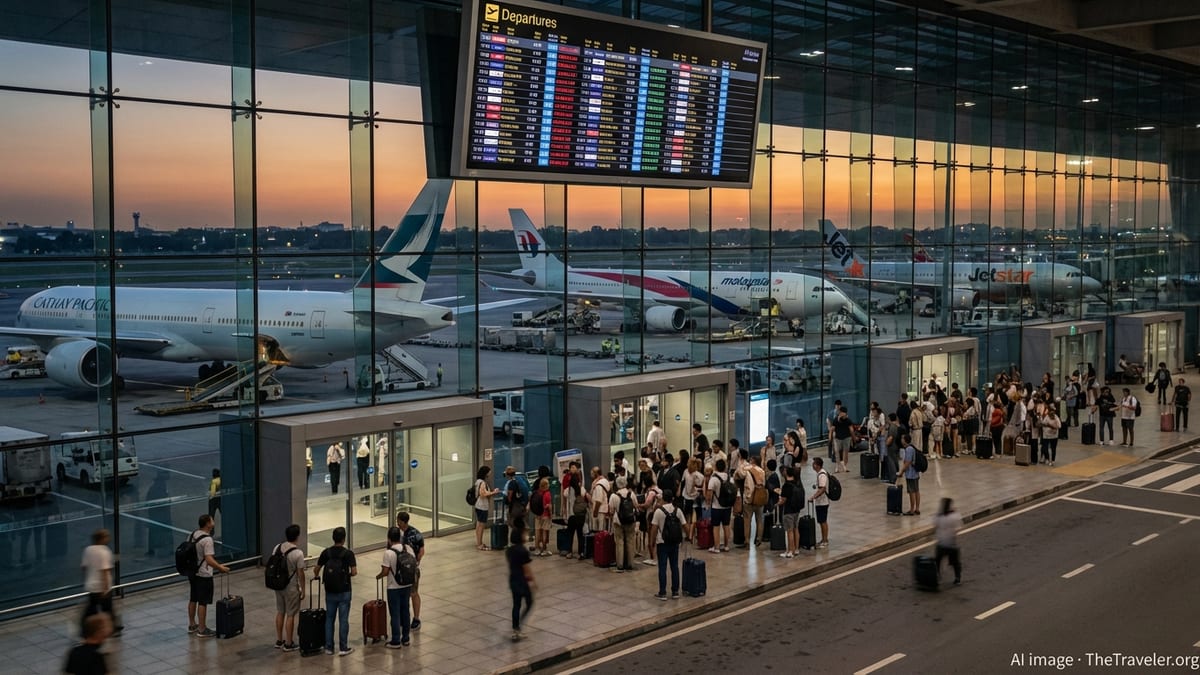
Thailand’s role as a regional aviation crossroads has come under renewed pressure after a cluster of cancellations from Bangkok’s Suvarnabhumi and Don Mueang airports and from Phuket International Airport. Airport departure boards showed multiple international flights scrubbed in quick succession, with services to Hong Kong, Kuala Lumpur and major Australian cities among those affected.
Operational data compiled over February 21 and 22 indicates that at least five international flights operated by Cathay Pacific, Malaysia Airlines, Jetstar and MYAirline were removed from schedules in Thailand, in addition to wider disruption across Asia’s big hubs. While the raw numbers are modest compared with the thousands of delays logged around the region, the impact is magnified because they hit heavily trafficked trunk routes and evening departures that many travellers rely on for onward connections.
Passengers at Bangkok and Phuket reported crowded check in halls, long lines at airline service desks and last minute SMS alerts advising of cancellations or rebookings. For many, the problems are compounded by tight itineraries that tie together Southeast Asia stopovers with onward journeys to Hong Kong, Australia and beyond.
The latest cancellations come against a backdrop of mounting strain on Asia’s aviation network this month, with repeated days of elevated delays and dozens of scrapped services across Thailand, Japan, Indonesia, Vietnam and Hong Kong. For travellers, it adds up to a sense that flying through the region, and especially through Bangkok, has become less predictable.
Which Flights and Airlines Are Affected
Among the highest profile casualties are services linking Thailand with Hong Kong. Cathay Pacific withdrew at least one Bangkok to Hong Kong flight from the schedule, cutting a connection that is popular with both business travellers and holidaymakers tagging Hong Kong onto Thailand itineraries. The move follows a pattern of selective trimming of regional services as airlines juggle aircraft utilisation and crewing.
Malaysia Airlines has also cancelled a Bangkok to Kuala Lumpur departure, disrupting a core corridor that feeds traffic onwards to Australia, South Asia and Europe. Even a single cancellation on this busy pairing can strand dozens of passengers whose itineraries depend on same day onward flights from Kuala Lumpur to cities such as Melbourne, Sydney and London.
At the low cost end of the market, Jetstar has previously axed a Phuket to Perth rotation and remains vulnerable to further schedule tightening when disruption hits. While the latest confirmed cancellations in the current wave are concentrated on Bangkok and Hong Kong, aviation data shows that leisure focused routes connecting Thailand with Australian gateways have been among the most exposed during earlier bouts of instability.
MYAirline, operating from Bangkok’s Don Mueang Airport, has added to the turbulence by cancelling at least one international departure, undercutting the reliability of budget friendly connections within Southeast Asia. For travellers combining Thailand with neighbouring countries on low cost carriers, a single scrubbed flight can erase carefully built savings once last minute hotel nights and replacement tickets are factored in.
How Thailand’s Flight Chaos Ripples to Hong Kong
For Hong Kong bound passengers, Bangkok’s latest cancellations matter far beyond the handful of flights actually removed from the board. Thailand is one of the city’s most important tourism and transit markets, feeding both direct Hong Kong services and onward flows via third country hubs such as Kuala Lumpur and Singapore.
When a Bangkok to Hong Kong departure disappears, passengers lose not only that specific flight but also their ability to connect smoothly into the wave of long haul departures that leave Hong Kong in the late evening. Missed links can mean losing same day connections to North America or Europe, especially for travellers who tacked a short Thailand break onto a longer trip originating elsewhere.
The disruption also undercuts confidence just as Hong Kong has been working to rebuild its visitor numbers and restore its reputation as a reliable stopover city. Recent weeks have already seen elevated delays across Hong Kong International Airport as part of a wider pattern of congestion affecting Asian hubs, and cancellations ex Bangkok make it harder for the network to stabilise.
Travellers who previously viewed a Bangkok Hong Kong hop as a straightforward two hour shuttle are now being forced to actively manage backup plans, including flying earlier in the day, choosing carriers with multiple daily frequencies, or routing via alternative hubs such as Singapore or Taipei to protect long haul connections.
Knock On Effects for Australia Bound Passengers
The turbulence is equally significant for passengers whose final destination is Australia. Thailand and Malaysia function as key staging posts for flights to Melbourne, Sydney and Perth, served by a mix of full service and low cost airlines. When cancellations occur on Thai sectors, the knock on effect is often felt thousands of kilometres away in Australian arrivals halls.
A cancelled Bangkok to Kuala Lumpur segment on Malaysia Airlines, for instance, can ripple into missed overnight departures from Kuala Lumpur to Australian cities. Similarly, trimming of Jetstar and other leisure oriented Thailand to Australia flights leaves fewer seats on remaining services, pushing some travellers onto indirect routings and raising fares on routes that still operate as planned.
The timing of recent cancellations has been particularly awkward for Australians returning home at the tail end of the Southern Hemisphere summer holidays. Many have built itineraries that thread together beach time in Phuket or Krabi, a city break in Bangkok and a final leg home to Australia. When a single link in that chain disappears, the cost and complexity of salvaging the trip can escalate quickly.
Australia’s aviation network has its own capacity constraints, and spare long haul seats at short notice are limited, especially in premium cabins. As a result, travellers caught up in Thailand’s disruption are often rebooked a day or more later than planned, or shifted onto less convenient routings involving extra connections and overnight transits.
Why Asia’s Skies Are So Unstable This Month
The immediate trigger for the latest wave of cancellations is a mix of operational and network management pressures. Airlines across the region are still adjusting capacity after a brisk rebound in travel demand, and relatively small shocks from weather, air traffic control restrictions or technical issues can cascade rapidly through tight schedules.
Flight statistics from multiple Asian hubs over the past two weeks show an unusual concentration of disruption, with days where thousands of services were delayed and scores cancelled across airports in Thailand, Japan, Indonesia, Vietnam, the Philippines and Hong Kong. In such an environment, carriers often pre emptively cancel a limited number of flights in order to protect the wider network from even more severe knock on delays.
Bangkok is particularly exposed because it sits at the heart of many north south and east west routes, acting as both an origin and a through point for travellers heading between Europe, North Asia, Australia and Southeast Asia. When congestion builds at Suvarnabhumi or Don Mueang, the effects are quickly felt in cities as far apart as Hong Kong and Melbourne.
Staffing constraints and aircraft availability remain a challenge, especially for airlines that are still rebuilding from pandemic era downsizing. Even as passenger numbers have surged back, maintenance backlogs and training pipelines have lagged, limiting the spare capacity available to absorb sudden disruptions.
What This Means for Your Upcoming Trip
For travellers with tickets over the next few days, the practical message is to treat itineraries involving Bangkok, Phuket and neighbouring hubs with extra caution. While the majority of flights are still operating, the risk of last minute disruption is clearly higher than usual, particularly on regional routes that feed into long haul sectors.
Passengers heading to or from Hong Kong should build more buffer into their plans, especially if they are relying on same day onward connections to Europe or North America. Choosing earlier departures from Thailand and avoiding very tight layovers can provide a margin of safety if delays cascade through the network.
Australia bound travellers may want to consider booking itineraries that either use nonstop services where available, or that route through hubs with multiple daily departures to their final destination. In practice, this can mean favouring airlines and schedules that give you at least one backup option on the same day, rather than a single daily flight that leaves you stranded if it is cancelled.
For those still planning trips, paying attention to the pattern of recent disruptions can be as important as watching fares. Carriers that have already trimmed specific services from Bangkok and Phuket may continue to adjust schedules, and being flexible on dates and routings can significantly improve your odds of a smooth journey.
How to Minimise the Impact if Your Flight Is Cancelled
If you find yourself caught up in the current wave of cancellations, acting quickly is essential. Head straight to your airline’s app or website as soon as an alert comes through, since self service tools often display rebooking options before airport staff can assist everyone in line. In many cases, travellers can switch to earlier or later flights on the same route at no additional cost when disruption is operational rather than passenger driven.
Where Bangkok or Phuket is just one segment in a multi stop itinerary, insist that the operating carrier protects your onward connections as part of a single solution. This may involve rerouting you via a different hub or even moving you onto a partner airline with spare capacity. Having all segments on a single ticket generally improves your rights, but even on separate tickets, documenting your original plans can help you negotiate with airlines and travel agents.
Travel insurance can also play a more meaningful role when disruption becomes widespread. Policies that include cover for missed connections, additional accommodation and alternative transport costs may soften the financial blow of extra nights in Bangkok or emergency one way fares from alternative airports.
Finally, stay alert to evolving conditions. This month’s experience across Asia has shown that disruption can ebb and flow rapidly from one day to the next. Monitoring airport operations and airline advisories in the 24 to 48 hours before departure can give you valuable early warning and, in some cases, the chance to switch to a more reliable flight before problems peak.
Is It Still Sensible to Route Through Bangkok
Despite the unsettling headlines, Bangkok remains a critical and generally resilient hub for Asia Pacific travel. The vast majority of flights continue to operate, and for many routes, especially within Southeast Asia, alternative options are limited or involve even more complex connections.
What has changed is the margin for error. Travellers can no longer assume that a short connection in Bangkok will always work, particularly during periods of regional strain. Building in additional time, choosing carriers with robust contingency options and being prepared with a plan B now form part of sensible trip planning rather than worst case scenario thinking.
For journeys to Hong Kong, Australia and other long haul destinations, Bangkok can still be a convenient gateway, but it pays to be deliberate about your routing choices. Where possible, favour itineraries that either provide multiple daily frequencies on each sector or that allow you to break your journey with a planned overnight, reducing your exposure to single day disruption spikes.
In the longer term, much will depend on how quickly airlines adjust their schedules and staffing to match sustained demand. For now, travellers using Bangkok and Phuket as springboards to the wider region should approach upcoming trips with eyes open, recognising both the enduring advantages of these hubs and the heightened risk that the next cancellation board update might feature their flight.