

More news on this day
Thai Airways’ latest long-haul moves, including a return to Amsterdam and the planned relaunch of non-stop Auckland services, are positioning Bangkok Suvarnabhumi as an even stronger gateway linking the Netherlands, New Zealand and Southeast Asia for long-haul flyers planning trips from mid-2026 onward.
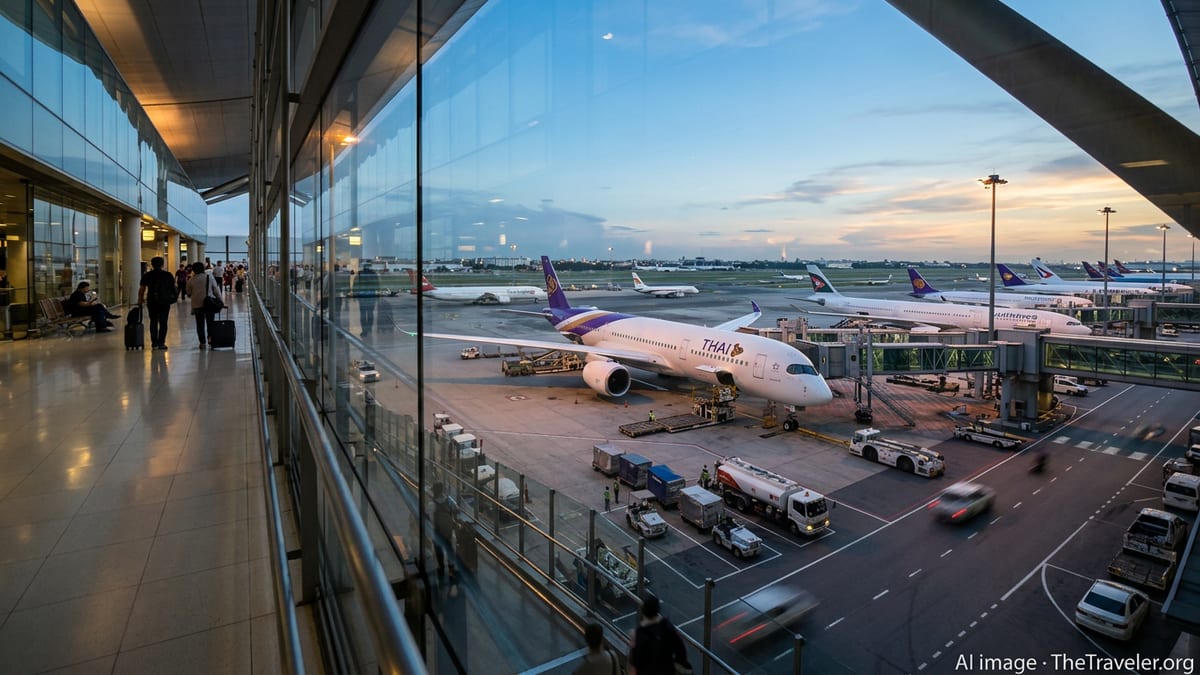
Thai Airways Bets Big on Bangkok as a Connecting Hub
Bangkok Suvarnabhumi is set to gain fresh prominence on intercontinental maps as Thai Airways rebuilds and expands its long-haul network. The carrier is using its modern widebody fleet to reconnect historic routes and deepen its reach into Europe and Oceania, with Bangkok at the center of those plans. For travelers, the result is a more competitive set of options for journeys that link the Netherlands and New Zealand with Southeast Asia and beyond.
Suvarnabhumi already functions as Thailand’s primary international gateway and one of Asia’s busiest hubs, handling more than 60 million passengers a year and served by over a hundred airlines. As Thai Airways layers new long-haul capacity on top of that existing ecosystem, the airport’s role as a through-connection point between Europe, Asia and the South Pacific is set to grow, particularly for itineraries that once required multiple connections or backtracking via the Middle East.
The strategy leans heavily on Thai’s renewed focus on efficient widebody aircraft. The airline has been deploying Airbus A350-900s and Boeing 787s on core intercontinental routes, supported by orders for more next-generation twinjets intended to replace older 777 and A330 models. That mix allows the carrier to match capacity to demand while promising lower emissions per seat and a quieter, more comfortable cabin experience on long sectors.
Industry data shows Thai already holds a leading share of seat capacity between Thailand and Europe, with Suvarnabhumi acting as a bridge for traffic flowing between secondary European cities and popular destinations across Southeast Asia and Australia. The new and returning routes announced for the 2026 northern summer schedule build directly on that foundation, with Amsterdam and Auckland standing out as key pillars in the network rebuild.
Daily Amsterdam Flights Restore a Dutch Gateway to Southeast Asia
Thai Airways will re-enter the Dutch market from July 1, 2026, with daily non-stop flights between Bangkok Suvarnabhumi and Amsterdam Schiphol. The move comes nearly three decades after the carrier last operated to Amsterdam, when it served the city as part of a combined routing via Zurich before withdrawing in the late 1990s. The new service returns Amsterdam to Thai’s European map as its twelfth destination in the region.
The relaunched route is scheduled as a daily rotation using Airbus A350-900 aircraft, configured with around 320 seats across business and economy cabins. Timings filed by the airline and industry sources show an early morning departure from Bangkok arriving in Amsterdam late morning, with the westbound leg returning mid-afternoon from Schiphol and arriving back in Thailand early the following day. The schedule is tailored to provide banks of connections on both sides.
From the Dutch perspective, Thai’s return adds a new full-service competitor on the Bangkok corridor, which is currently dominated by KLM and supplemented by one-stop itineraries via other Asian and Middle Eastern hubs. Capacity forecasts indicate that Thai’s daily A350 operation will lift overall two-way seats between Bangkok and Amsterdam by roughly half compared with current levels, easing a tight market and adding fare and schedule flexibility for both leisure and corporate travelers.
For long-haul flyers looking beyond Thailand itself, Amsterdam offers a major European entry point with extensive onward links across the continent and to the UK. Combined with Thai’s growing Southeast Asian and Australasian network from Bangkok, the 2026 restart effectively re-establishes a high-capacity bridge between northern Europe and key cities around the region, including those with strong ties to Dutch business and tourism interests.
Auckland Nonstop Plans Reconnect New Zealand With Thailand
On the other side of the world, New Zealand is preparing for the return of a direct Auckland to Bangkok link. Auckland Airport and Thai Airways have confirmed that non-stop services are planned to resume in the second half of 2026, restoring a connection that had been a staple of New Zealand’s long-haul network for more than 30 years before the pandemic forced its suspension.
Thai Airways is framing the Auckland relaunch as a key long-haul expansion, aimed at reconnecting New Zealand not only with Thailand but also with a wide swathe of Asia and Europe through Suvarnabhumi. Prior to 2020, the carrier used its Auckland flights to funnel travelers to destinations across Southeast Asia, India and Europe. With New Zealand visitor numbers to Thailand now back around pre-pandemic levels and Thai arrivals to New Zealand also recovering, both tourism and trade stakeholders view the reinstated service as a vital piece of aviation infrastructure.
Airport and government figures in New Zealand have highlighted the economic significance of the route, noting that direct connectivity shortens travel times, encourages higher-value tourism and supports business links across sectors from education to agri-exports. For Thai Airways, the market represents a chance to rebuild its footprint in Oceania and to position Bangkok as an alternative to traditional one-stop options via East Asia or the Middle East for New Zealanders heading to Europe.
While final schedules and aircraft type for the Auckland route have yet to be formally lodged, industry expectations center on the deployment of Thai’s latest-generation widebodies, which would align with the airline’s broader modernization drive. Once confirmed, the non-stop service will offer New Zealand-based travelers a single-connection pathway to a dozen European cities via Bangkok, while bringing Southeast Asian and European visitors directly into Auckland on a Thai-operated widebody.
Widebody Expansion Underpins New Connection Opportunities
The backbone of these network moves is Thai Airways’ expanding and modernizing widebody fleet. The airline has steadily built up a core of Airbus A350-900s and Boeing 787 Dreamliners, while planning to phase out older, less efficient jets. Fleet data compiled in 2025 showed more than 20 A350-900s already in service, complemented by a mix of 787-8 and 787-9 aircraft, with substantial additional 787 orders placed as part of a long-term renewal strategy.
For passengers, that shift translates into a more consistent onboard experience across long-haul routes. The A350-900, selected for the Amsterdam operation, offers a quieter cabin, higher humidity and larger windows than many older aircraft, as well as lie-flat seats in business class and updated seating and in-flight entertainment in economy. The anticipated use of similar new-generation aircraft to Auckland would give New Zealand and European travelers a comparable level of comfort on both sides of the Bangkok hub.
From an airline economics standpoint, these jets also open up thinner long-haul markets and make daily frequencies more sustainable. Lower fuel burn and maintenance costs per seat help support year-round schedules on routes that previously might only have been viable seasonally or via tag-on operations. That flexibility underpins Thai’s ability to commit to daily Amsterdam flights from launch and to plan a full non-stop return to Auckland, rather than rebuilding with more tentative part-week services.
Environmental considerations are another factor. New-generation twinjets promise double-digit reductions in fuel consumption and emissions relative to the aircraft they replace, which aligns with both Thai Airways’ stated sustainability goals and tightening regulatory expectations in Europe and Australasia. For increasingly climate-conscious travelers weighing route options, the choice of more efficient widebodies is becoming a more visible part of the decision-making process.
What the Changes Mean for Long-Haul Flyers
For long-haul passengers based in or traveling via the Netherlands and New Zealand, Bangkok’s strengthened hub role offers a broader range of one-stop itineraries across Southeast Asia and beyond. Dutch travelers will be able to fly non-stop to Bangkok and connect onward to destinations such as Singapore, Kuala Lumpur, Jakarta, Bali, Hanoi and Manila, as well as to major cities in North Asia and Australia, all on a single ticket and carrier.
New Zealand passengers, once the Auckland service is relaunched, will similarly gain streamlined access to Thailand’s beaches and cultural centers, but also to fast-growing markets across Asia and to European cities such as Frankfurt, London, Paris, Zurich and soon Amsterdam, through coordinated connections at Suvarnabhumi. For many routes, Bangkok provides a geographically logical midway point that can cut overall travel time and reduce the number of connections required.
The competitive landscape is also likely to shift. Established players from the Gulf and Northeast Asia have long dominated connecting traffic between Europe, Oceania and Southeast Asia. Thai Airways’ renewed focus on long-haul services, backed by a refreshed widebody fleet and a high-traffic hub, introduces additional choice in schedules, fares and service styles. That competition could encourage sharper pricing and improved product offerings across the board.
For now, the key dates to watch are July 1, 2026, when Amsterdam flights are scheduled to begin, and the yet-to-be-finalized launch window in the second half of 2026 for Auckland. As those milestones approach and schedules are firmed up, travelers planning trips between the Netherlands, New Zealand and Southeast Asia will have a clearer view of how Bangkok can serve as their central bridge in a newly connected long-haul network.