

More news on this day
Banyan Group is preparing to enter the United States with Banyan Tree Residences West Palm Beach, a waterfront luxury condominium project that will introduce the Singapore-based hospitality company’s flagship residential brand to the American market while tapping into South Florida’s surging demand for branded, resort-style living.
Get the latest news straight to your inbox!
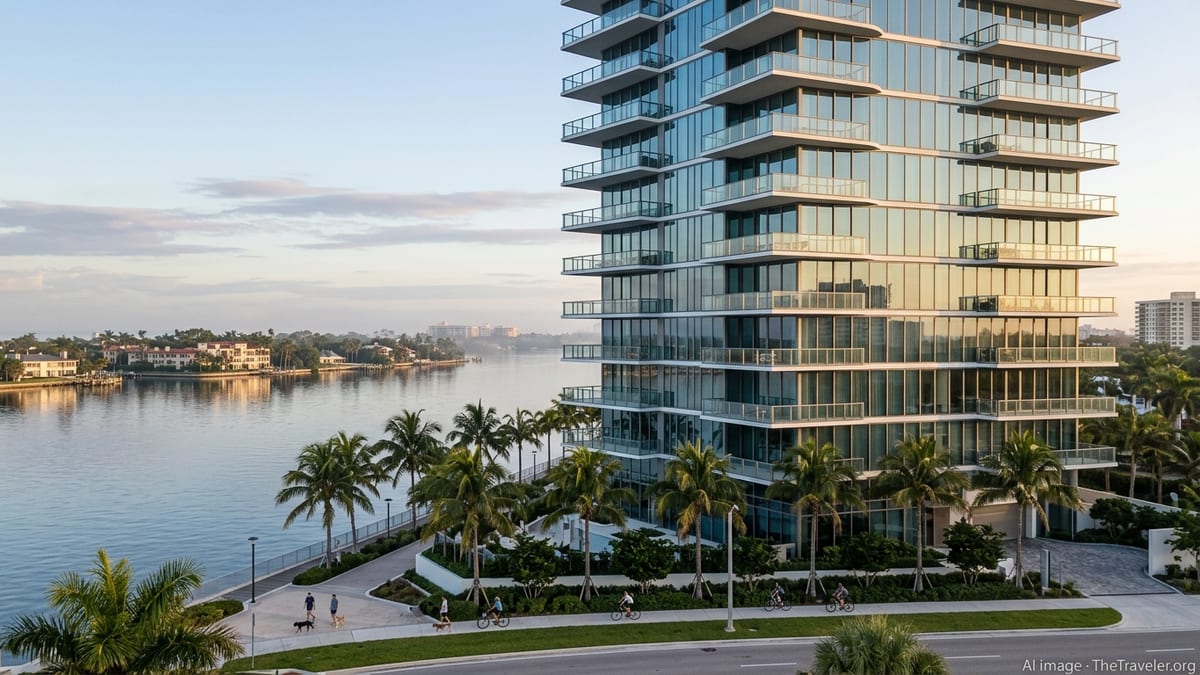
Banyan Group Brings Flagship Brand to a New Hemisphere
The move into West Palm Beach represents a strategic milestone for Banyan Group, which has spent three decades building a global portfolio of hotels, resorts and branded residences across Asia, the Middle East, Europe and Mexico. Publicly available information shows that the company, formerly known as Banyan Tree Group, has been gradually expanding its residential offerings alongside its resort network, positioning branded homes as a key growth engine.
Industry coverage indicates that Banyan Tree Residences properties in markets such as Phuket, Bangkok and Dubai helped establish the brand’s reputation for combining contemporary architecture with wellness-centric amenities and hotel-style services. Bringing this concept to South Florida signals confidence in both the region’s luxury real estate cycle and the long-term appetite for branded, service-rich living environments among US buyers.
Reports on Banyan Group’s recent strategy highlight a broader pivot toward a multi-brand model, with the Banyan Tree name reserved for flagship luxury experiences. Situating Banyan Tree Residences in West Palm Beach, rather than a more established US gateway such as New York or Los Angeles, underscores the company’s belief that Palm Beach County has evolved into an international address in its own right for high-net-worth individuals.
Market observers note that this US debut also reflects a wider trend of global hospitality groups using residential projects to diversify revenue and deepen customer loyalty. By pairing ownership with the familiar Banyan Tree brand, the group can reach American buyers who may already know its resorts abroad, while offering a lifestyle that aligns with its longstanding focus on nature, wellness and experiential travel.
Waterfront City Becomes a Magnet for Branded Residences
West Palm Beach has spent the past decade transforming from a regional business center into a magnet for finance, technology and professional services firms, supported by investments in Class A office towers, walkable districts and cultural venues. Development reports describe a skyline reshaped by new condominiums along Flagler Drive and the Intracoastal Waterway, mirroring demand from buyers who relocated to Palm Beach County during and after the pandemic.
The arrival of Banyan Tree Residences fits this trajectory, joining a wave of high-end branded and boutique residential towers that market proximity to the island of Palm Beach, waterfront promenades and expanding culinary and arts offerings downtown. Analysts say the city’s combination of year-round warm weather, favorable tax environment and enhanced air and rail links has helped it compete with older luxury hubs in South Florida.
Real estate data from recent years points to record-setting sales at neighboring trophy condominiums, reinforcing the appeal of large-format residences with resort-caliber amenities and open water views. In this context, a globally recognized hospitality name like Banyan Group adds another layer of differentiation, promising hotel-level service in a purely residential setting.
Urban planning documents and local coverage suggest that city leaders have encouraged higher-density residential development along key waterfront corridors, seeking to balance economic growth with public access and streetscape improvements. Banyan Tree Residences West Palm Beach is expected to align with this vision by contributing new housing at the upper end of the market while reinforcing the city’s emerging identity as a luxury residential destination.
Design Vision: Resort Aesthetic Meets Urban Waterfront Living
While detailed design documents for Banyan Tree Residences West Palm Beach are still emerging, the project is widely expected to draw on the brand’s hallmark design vocabulary of clean lines, natural materials and an emphasis on indoor-outdoor living. Architecture in previous Banyan Tree Residences developments typically features generous terraces, floor-to-ceiling glass and curated landscape elements that reference the company’s roots in tropical Asia.
Applied to West Palm Beach, this approach is likely to translate into a tower oriented to maximize views of the Intracoastal, Palm Beach Island and the Atlantic horizon, with residences designed as calm, contemporary retreats above a bustling urban waterfront. Industry commentary on similar branded projects indicates that layouts often prioritize expansive great rooms, spa-inspired bathrooms and flexible spaces that can double as home offices or wellness rooms, reflecting shifts toward hybrid work and health-focused lifestyles.
Design teams working in Palm Beach County also face specific considerations related to coastal resilience, including wind engineering, flood mitigation and the integration of robust glazing systems. Recent luxury towers in the region have responded with elevated podiums, impact-resistant windows and building systems tailored to hurricane-prone environments, and Banyan Tree Residences is expected to follow suit as it seeks to meet or exceed local standards while maintaining a refined aesthetic.
Observers note that the project’s landscaping and public realm will be closely watched, given Banyan Group’s long-standing emphasis on nature as a core component of its brand. Past developments have incorporated lush planting palettes, shaded outdoor lounges and water features that visually connect residences to their surroundings, an approach that could find new expression along West Palm Beach’s streets and waterfront paths.
Amenities, Services and the Branded Residence Proposition
Across the global market for branded residences, buyers typically look for a combination of strong design, hotel-level services and access to curated amenities. Coverage of Banyan Tree Residences in other countries highlights 24-hour concierge teams, valet service, in-residence dining, housekeeping options and dedicated wellness staff as common components of the offering.
In West Palm Beach, where competition among luxury towers is intensifying, Banyan Tree Residences is expected to lean heavily on this service culture, positioning itself as a full lifestyle environment rather than simply a collection of apartments. Amenities are likely to include resort-style pools, fitness and yoga studios, treatment rooms, resident lounges and spaces for private dining or small events, all framed by views of the water and city.
Analysts of the branded residence segment note that association with an established hospitality flag can support long-term value retention by anchoring the property in a broader ecosystem of loyal guests and owners. Purchasers at Banyan Tree Residences West Palm Beach may see appeal in being part of a global community of homeowners who can experience similar design language and service standards in multiple destinations.
For the developer and brand alike, recurring service revenue from property management, wellness programming and optional hospitality services can also help smooth earnings beyond initial sales. This aligns with Banyan Group’s stated strategy of developing an integrated portfolio across hotels, spas and residences, in which each component reinforces the others.
What Banyan Group’s US Debut Signals for Luxury Real Estate
The decision to introduce Banyan Tree Residences in West Palm Beach rather than a traditional gateway city underscores how the geography of global luxury real estate has shifted. Market reports from recent years show that Palm Beach County has attracted both corporate relocations and high-net-worth individuals from financial centers such as New York and Chicago, elevating demand for contemporary, service-rich housing.
Observers of the branded residence sector suggest that Banyan Group’s move could inspire further entries by international hospitality brands into secondary US markets that offer lifestyle appeal, accessible infrastructure and room for waterfront development. West Palm Beach, with its expanding rail connections, proximity to three major South Florida airports and improving cultural calendar, fits that profile.
For the local market, the introduction of a globally recognized luxury flag adds another proof point in the city’s evolution from a traditional downtown business district into a mixed-use urban waterfront with international resonance. Each new tower at the upper end of the market reinforces pricing benchmarks and attracts additional investment in retail, dining and public spaces, creating a feedback loop that amplifies the city’s appeal to both residents and visitors.
As plans for Banyan Tree Residences West Palm Beach advance, analysts will be watching sales velocity, buyer profiles and pricing to gauge how American purchasers respond to the Banyan Group brand in a purely residential context. The project’s performance is likely to inform the company’s broader US ambitions and could shape where and how the next generation of Banyan-branded properties take root on American soil.