

More news on this day
Barbados is aligning with a cluster of Caribbean states, including Grenada, St. Kitts and Nevis, Antigua and Barbuda, the Bahamas and Dominica, as the region recalibrates its approach to citizenship, mobility and consular services in response to Canada’s rising passport fees and broader pressure on so-called golden passport regimes.
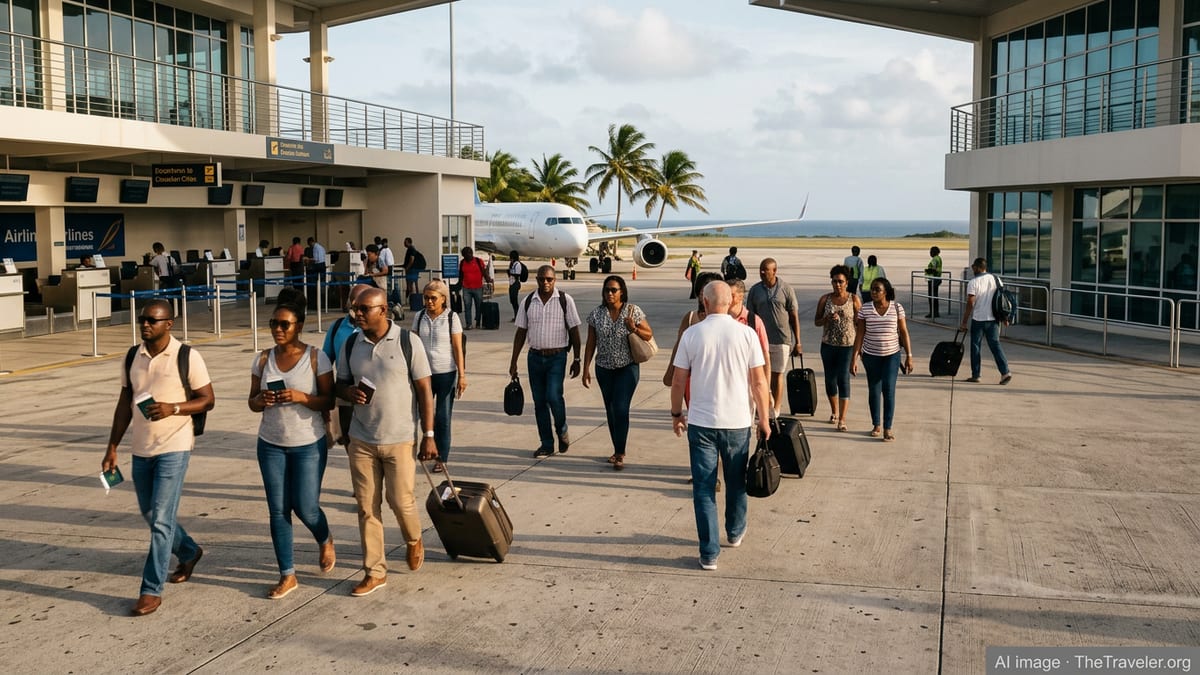
Canada’s Higher Passport Costs Ripple Through the Caribbean
Canada’s increased passport fees, introduced amid global inflation and heightened border-security demands, are reverberating across the Caribbean, where deep historical, family and economic ties to Canadian cities such as Toronto and Montreal translate directly into demand for travel documents. For Caribbean nationals who have resettled in Canada, renewing a Canadian passport has become noticeably more expensive, at the same time that Caribbean governments are under pressure to tighten and, in some cases, raise the price of their own citizenship offerings.
Officials and immigration advisers across the region say the fee hikes are being felt most acutely by dual nationals and frequent travelers who rely on Canadian documents for visa-free access to Europe and parts of Asia. Those costs are now part of a wider recalculation of the price of mobility, layered on top of growing scrutiny from Ottawa, Washington and Brussels of Caribbean citizenship by investment programs that have long marketed themselves to global investors seeking easier travel.
While Canada’s higher passport fees are framed domestically as necessary to cover processing and security costs, Caribbean policymakers view them in the context of a tightening global environment for second citizenships. The result is a complex feedback loop in which Canadian policy shifts influence Caribbean pricing and regulatory reforms, which in turn affect how Caribbean and Canadian citizens plan their travel, residency and long-term investment strategies.
Barbados Repositions as Regional Mobility Pressures Mount
Barbados, whose passport already ranks among the strongest in the Caribbean for visa-free and visa-on-arrival access, has not historically relied on a formal citizenship by investment program in the way some of its Eastern Caribbean neighbors have. Instead, it has built its reputation on political stability, a services-driven economy and an expanding network of air links with North America and Europe. That foundation is now being tested as the cost and complexity of international travel increase for its citizens and diaspora.
Officials in Bridgetown have been watching closely as Canada, one of Barbados’s most important tourism and migration partners, raises passport fees and tightens vetting standards. Barbadian nationals living in Canada, many of whom retain strong family and property ties back home, are increasingly weighing the rising expense of maintaining a Canadian passport against the relative affordability of relying on their Barbadian travel documents for regional trips.
At the same time, Barbados is conscious that its own consular and border management costs are climbing. Service upgrades, digitalization of passport systems and enhanced security checks all require investment. While the government has not announced dramatic headline price hikes comparable to those now seen across Caribbean citizenship by investment markets, senior officials acknowledge privately that the overall cost of maintaining world-class travel documents is rising and will ultimately need to be passed on, at least in part, to applicants.
Grenada, St. Kitts and Nevis, Antigua and Barbuda, Dominica and Others Raise the Bar
Elsewhere in the region, the response to mounting international pressure has been more explicit. Grenada, St. Kitts and Nevis, Antigua and Barbuda and Dominica have all moved to increase the minimum financial contribution required to obtain citizenship through investment, converging around a floor of at least 200,000 US dollars. For Dominica and Antigua and Barbuda, those changes have in some cases doubled the cost of a second passport compared with previous thresholds.
In practice, that means the headline price of a so-called Caribbean golden passport has risen at the same time that Canada has made its own passports more expensive to issue and renew. For high net worth individuals considering a Caribbean citizenship as a complement to Canadian residency or as a hedge against geopolitical risk, the total bill for global mobility is now significantly higher than it was just a few years ago.
Regional leaders stress that these increases are not simply about revenue. They are a direct response to warnings from Canada, the United States and the European Union, which have flagged security and due-diligence concerns around investor citizenship schemes. By raising price floors, tightening background checks and harmonizing standards, Grenada, St. Kitts and Nevis, Antigua and Barbuda, Dominica and other participants hope to protect hard-won visa waivers and keep their programs off future sanctions lists.
The Bahamas, which does not operate a classic citizenship by investment program, has nonetheless taken note. Nassau has signaled that any residency and naturalization pathways tied to major investment will be carefully calibrated to avoid jeopardizing its own strong travel privileges, including to Canada. That cautious posture reflects a wider Caribbean recognition that the era of cheap, lightly regulated second passports is coming to an end.
Caribbean Citizens Face Tougher Choices on Cost of Mobility
For ordinary Caribbean citizens, including thousands of dual nationals in Canada, these parallel fee increases are narrowing options. Someone with roots in Barbados or Dominica and a life built in Toronto, for example, may now juggle higher Canadian passport renewal fees alongside rising costs to maintain or obtain a Caribbean passport for family members back home. The calculus around which document to prioritize, and when, is growing more complex.
Travel agents and migration lawyers across the Eastern Caribbean report that some clients are delaying new second-citizenship applications or scaling back multi-family plans in light of the higher thresholds. Others, especially entrepreneurs who value flexible access to Europe and Asia, are proceeding but with sharper questions about long-term program stability, given the evident willingness of Canada and its allies to use visa policy as leverage.
In diaspora communities, community leaders say there is a subtle but noticeable shift in tone. Where dual citizenship once felt like an inexpensive, almost routine mobility tool, it is now framed increasingly as a premium product that requires careful budgeting and risk assessment. Rising passport costs on both the Canadian and Caribbean sides are turning what was once a straightforward administrative chore into a strategic household decision.
Regional Diplomacy and Travel Industry Watch Long-Term Impact
Regional tourism boards and airlines are also closely tracking how the new economics of passports could affect traffic flows. Canada is a critical source market for winter sun travel to Barbados, the Bahamas, Antigua and Barbuda, Grenada, Dominica and other islands. So far, higher Canadian passport fees have not produced a dramatic drop in demand, but industry executives worry that, over time, any perception of travel becoming more expensive or administratively cumbersome could dampen growth.
Caribbean governments, for their part, are engaging Canada in quiet diplomacy aimed at preserving and, where possible, expanding travel facilitation. That includes discussions on digital border processes, pre-clearance, electronic travel authorizations and trusted traveler programs that could offset some of the friction created by rising document costs. Officials insist that a stable, predictable framework for mobility is in the mutual interest of Canada and the Caribbean, given the importance of tourism, remittances and educational links.
Behind the scenes, the conversation increasingly touches on questions of equity and sovereignty. Caribbean leaders argue that while they respect Canada’s right to adjust its passport fees and vetting standards, the cumulative effect of external pressure on their citizenship regimes must be balanced against their own development needs. As Barbados joins its neighbors in rethinking how it prices and protects access to its nationality, the region is sending a clear message that the era of cheap, low-scrutiny passports is over, and that the true cost of mobility in and out of Canada’s orbit is still being written.