

More news on this day
London’s Barbican Centre is repositioning itself as more than a leading arts venue, with a growing slate of creative wellness and community focused activities reshaping how visitors experience this landmark cultural district.
A Cultural Icon Embraces Wellbeing Tourism
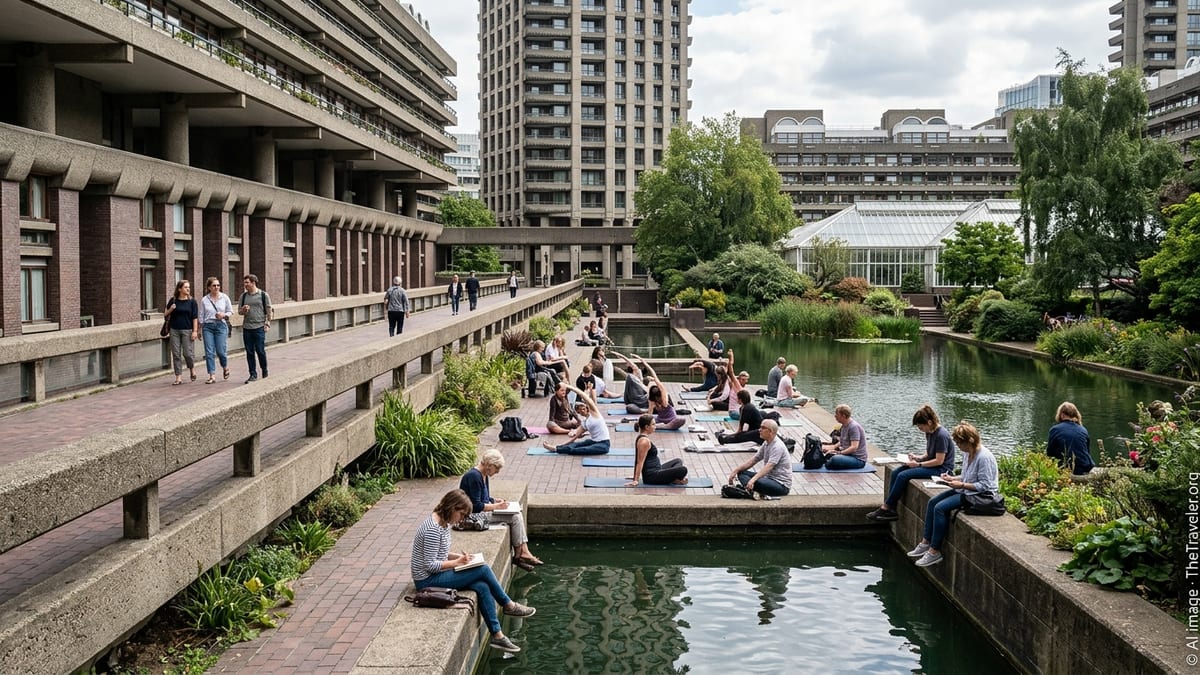
Recent programming at the Barbican Centre indicates a clear shift toward experiences that blend culture, creativity and wellbeing, aligning the landmark with fast rising trends in urban wellness tourism. Publicly available information shows that the City of London Corporation has backed a major investment package for the Barbican, with ambitions that include expanding community and learning activity and making the complex more welcoming and inclusive for a wider range of visitors.
This shift is visible in how the Barbican’s public spaces, from foyers to the conservatory, are increasingly used for reflective, restorative and participatory events rather than solely traditional performances. Seasonal guides for 2025 highlight cross arts programming that invites people to “retreat from the noise” of the city through creative workshops, guided experiences and nature focused encounters inside the concrete complex’s lush indoor gardens.
For international travelers, these developments position the Barbican not only as an architectural landmark of brutalist London, but also as a destination to experience contemporary ideas around mental health, social connection and creative self care within a major cultural institution.
Creative Neighbourhoods and Communities in Residence
Alongside headline exhibitions and concerts, the Barbican has been steadily building long term relationships with local groups through initiatives such as Creative Neighbourhoods and Communities in Residence. According to published programme information, Creative Neighbourhoods aims to ensure the Barbican plays an active role in supporting the “ecologies of culture and creativity” in the surrounding districts, working with neighbors in the City and nearby boroughs on collaborative projects.
The Communities in Residence strand goes further by dedicating space and time inside the centre for community partners whose work intersects creativity, care and social inclusion. Past and current collaborators range from brain injury charity Headway East London to Flourishing Lives, a coalition of arts and wellbeing organisations focused on people over 55. At the Barbican, Flourishing Lives curates a free series of quarterly workshops and activities that encourage older residents and visitors to explore art making, performance and reflection as routes to improved wellbeing.
These programmes deepen the Barbican’s local roots and give visitors an opportunity to see how a major arts venue can support grassroots creativity. Travelers who engage with these events encounter a side of London life centred on participation and shared experience, rather than purely on consumption of culture.
New Nightlife and Social Wellness Experiences
Wellness at the Barbican is not confined to quiet contemplation. A new wave of after dark and nightlife programming is reframing club culture and social connection as part of a broader wellbeing agenda. Design and culture coverage in early 2026 reports that the Barbican is launching a late night party series titled Anyone Can Dance, transforming its underground foyers into an inclusive dance floor that celebrates global club sounds and diasporic scenes.
The series, developed with collectives such as Eastern Margins, is positioned as an accessible space for joy, release and community building, extending the centre’s hours and inviting audiences who may not typically attend classical concerts or gallery shows. Previous collaborations, including the temporary conversion of a Barbican car park into a music venue in partnership with contemporary platforms, have hinted at a willingness to reimagine the complex’s concrete infrastructure as social space.
For visitors, these events offer a distinctly urban form of wellness, where movement, music and shared nightlife are treated as valuable counterpoints to work focused city life. Combined with the Barbican’s existing cinema, music and exhibition schedule, the new late nights help create a 24 hour cultural ecosystem that can anchor a stay in the City of London for younger, experience driven travelers.
Nature, Mindfulness and Slow Experiences in the Concrete Garden
The Barbican’s conservatory and terraces are playing an increasingly prominent role in its wellness narrative. Spring 2025 programming described by the City of London’s own cultural newsletters highlights a series titled Concrete Garden, with workshops and events that invite participants to focus on growth, transformation and creative introspection within the centre’s iconic indoor jungle.
These sessions include writing, drawing and sound based activities that foreground slowness and sensory awareness, set among tropical plants and filtered daylight beneath the Barbican’s glass roof. Public materials emphasize intentional community building and the idea of stepping away from the city’s pace, suggesting a curated antidote to the surrounding financial district’s intensity.
For tourists, the conservatory has long been a photogenic hidden gem. With the addition of structured creative and mindfulness sessions, it is also becoming a site where visitors can engage more deeply with their environment, connecting the architecture, planting and programmed activity into a cohesive wellness themed experience.
Linking Local Residents and Global Visitors
As London focuses on post pandemic recovery and the return of international travel, the Barbican’s community first approach is increasingly aligned with the city’s broader cultural and social wellbeing strategies. City reports on cultural participation and wellbeing stress the importance of libraries, community centres and arts venues, including the Barbican Library within the complex, as spaces where residents can access both cultural enrichment and low cost social support.
Initiatives such as the City Living programme and resident cards, which highlight discounts on fitness and wellbeing services in the Barbican area, signal an effort to tie the centre’s cultural offer to a wider urban fabric of health, exercise and social contact. The Barbican’s collaborations with older people’s organisations, disability swim clubs and walking groups show how its influence extends beyond ticketed events into everyday life for those who live and work nearby.
For overseas visitors, this context adds depth to a trip to the Barbican. Attending a morning workshop in the conservatory, exploring a major exhibition in the galleries, and returning at night for an inclusive dance event now form part of a continuum that reflects how London is reimagining culture as a driver of social connection and wellbeing. As new seasons are announced through 2025 and 2026, the Barbican appears set to remain at the forefront of creative, wellness oriented and community grounded tourism in the British capital.