

More news on this day
Barcelona–El Prat Airport faced a day of severe disruption on March 5 as Emirates, Qatar Airways, El Al, Blue Bird, and Etihad scrapped 21 flights and triggered more than 300 delays, snarling long haul links between Spain and the Middle East and leaving thousands of passengers facing missed connections and overnight stays.
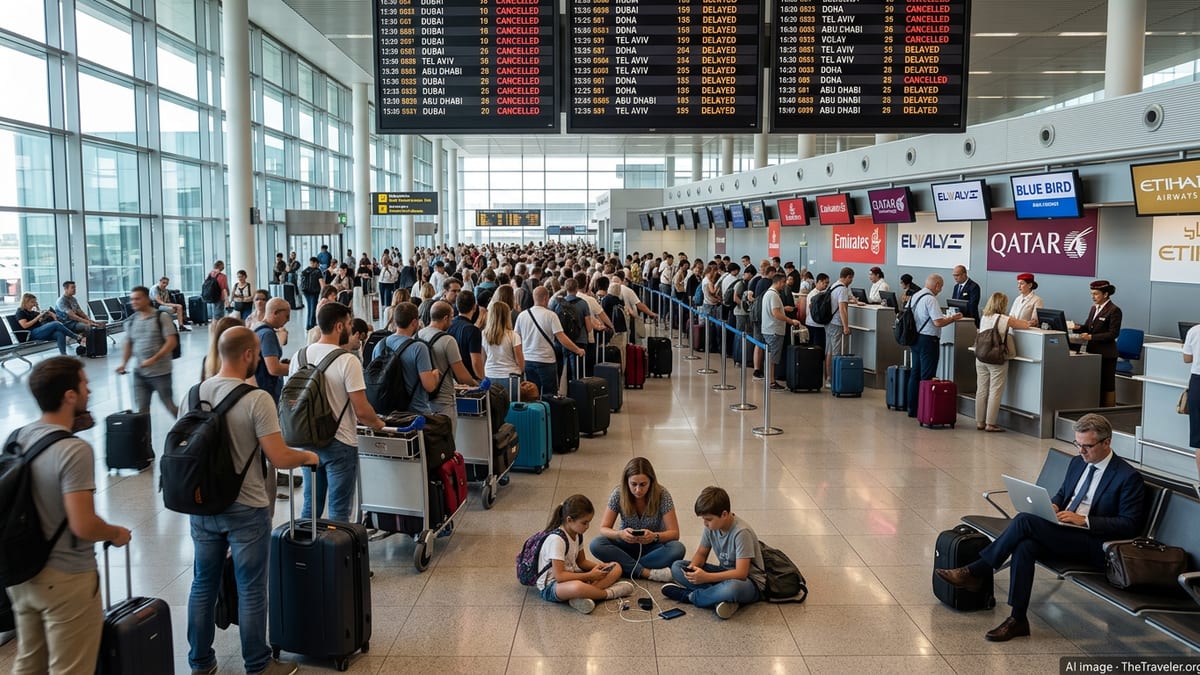
Middle East Airspace Turmoil Hits Barcelona Hard
The disruption at Barcelona unfolded against the backdrop of widespread airspace closures and restrictions across parts of the Middle East following renewed regional tensions. Routes linking Spain with Dubai, Doha, Tel Aviv and Abu Dhabi rely heavily on Gulf and Israeli carriers, placing Barcelona squarely in the path of the cascading operational fallout.
Airport operations data and airline advisories indicated that by late afternoon 21 departures and arrivals operated by Emirates, Qatar Airways, El Al, Blue Bird and Etihad had been cancelled at Barcelona, primarily on high demand corridors to Dubai, Doha, Tel Aviv and Abu Dhabi. Knock on effects rippled across the schedule, with more than 300 flights experiencing significant delays as aircraft and crews fell out of position.
While low cost and European legacy carriers continued to operate most intra European services, Barcelona’s role as a long haul gateway to the Gulf and eastern Mediterranean meant the suspension of a relatively small number of daily flights had an outsized impact on connectivity. Travellers heading onward to Asia, Africa and Australia via Middle Eastern hubs were among the hardest hit.
Spain’s airport operator confirmed that overall traffic at Barcelona remained well below pre crisis projections for early March, even before Thursday’s disruption, as days of cancellations between Spain and key Middle Eastern destinations continued to mount.
Passengers Face Long Queues, Confusion and Missed Connections
Inside Terminal 1, the sudden wave of cancellations translated into long queues at check in islands and transfer desks for the affected airlines. Families returning from winter breaks, business travellers bound for Asia and pilgrims heading to or from the Holy Land formed snaking lines as they sought rerouting options, refunds or hotel accommodation.
With many flights through Dubai, Doha and Abu Dhabi either suspended or running on a sharply reduced schedule, rebooking proved challenging. Airline agents focused first on passengers with immediate onward connections and those who had already endured several days of rolling delays from previous cancellations across the network.
Some travellers arriving in Barcelona on unaffected European flights found their onward long haul segments cancelled at short notice, forcing them to collect baggage and clear immigration before being re accommodated. Others were handed meal vouchers and hotel bookings as overnight stays became unavoidable, particularly for those scheduled to travel to destinations where airspace remained closed.
Information screens throughout the terminal cycled through waves of red marked cancellations and “delayed” notices. Public address announcements repeatedly urged passengers booked on Middle Eastern carriers to verify their flight status with the airline before proceeding to security, underscoring the fluid nature of the operating plan.
Key Gulf and Israel Routes Severed or Reduced
The carriers at the heart of Thursday’s turmoil collectively sustain some of Barcelona’s most strategically important long haul links. Emirates connects Barcelona with Dubai, providing one stop access to a vast network stretching across Asia, Oceania and eastern Africa. Qatar Airways offers a similar role through Doha, while Etihad’s Abu Dhabi service supports both point to point demand and onward traffic to South Asia and Australia.
El Al and leisure operator Blue Bird have in recent years underpinned the Barcelona–Tel Aviv market, carrying a mix of tourists, visiting friends and relatives traffic and business passengers between Spain and Israel. The combined cancellations on these routes effectively severed direct links for the day, just as forward bookings into the Easter travel period were beginning to build.
Even where some limited operations continued, extensive rerouting around restricted airspace added flight time, cut into schedules and led to rolling knock on delays. Airlines were forced to juggle scarce aircraft and crew resources, sometimes prioritising repatriation and essential travel over standard commercial services.
Spanish travel agents reported a surge in enquiries from customers seeking alternative routings via European hubs such as London, Paris and Frankfurt. However, capacity on those corridors is finite, and seats in premium cabins in particular proved difficult to secure on short notice at anything approaching normal fares.
Spain’s Wider Aviation Network Feels the Strain
Although Barcelona was the most visibly affected Spanish airport on March 5, the turbulence was part of a broader pattern hitting the country’s long haul operations. Madrid Barajas, Ibiza and other airports had already seen days of disruption on flights to the Gulf and eastern Mediterranean as carriers reacted to evolving airspace notices and security guidance.
The cancellations at Barcelona added further pressure on Spain’s aviation network, as some passengers diverted to Madrid in search of alternative long haul departures and domestic services were used to reposition travellers and crews. Slots, gates and ground handling resources, already finely balanced at the start of the spring season, came under renewed strain.
Industry analysts noted that while the absolute number of flights affected remained small compared with Barcelona’s total daily movements, the concentration on high yield, long haul services carries outsized economic implications. Cargo capacity was also squeezed, with Emirates, Qatar Airways and Etihad normally accounting for a significant share of high value freight uplift from Barcelona on sectors to the Gulf.
Tourism stakeholders in Catalonia expressed concern that prolonged uncertainty around Middle Eastern connectivity could dampen inbound arrivals from markets that rely on these carriers, particularly high spending visitors from the Gulf and Asia who often travel via Dubai, Doha or Abu Dhabi.
Uncertain Outlook as Airlines Adjust Schedules
As of Thursday evening, airlines were reluctant to provide firm commitments on when full schedules to and from Barcelona would resume, citing the need to monitor evolving airspace conditions and security assessments. Provisional timetables for the coming days showed a patchwork of limited services, ad hoc repatriation flights and ongoing cancellations.
Emirates, Qatar Airways and Etihad signalled that passengers with existing bookings should wait to be contacted directly rather than heading to the airport without confirmation, while El Al and Blue Bird continued to review their Tel Aviv operations in line with national and regional directives. All carriers reiterated that customers are entitled to rebooking or refunds when flights are cancelled, although processing times remain under pressure.
Operationally, airlines and Barcelona airport managers are drawing up contingency plans for a staggered return to normality, which is expected to generate further short term congestion as backlogs are cleared and displaced passengers finally travel. Travel experts warn that even after airspace restrictions ease, residual delays and occasional cancellations are likely to persist as complex international networks slowly re synchronise.
For now, passengers planning to use Barcelona as a gateway to the Middle East or beyond are being advised to build in extra flexibility, check flight status frequently and consider alternative routings where feasible. With geopolitical tensions still elevated, the prospect of further sudden schedule changes cannot be ruled out, keeping Barcelona and Spain’s wider aviation sector on edge at the start of the peak travel season.